What is in this guide
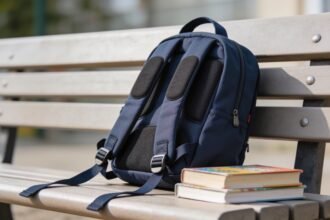
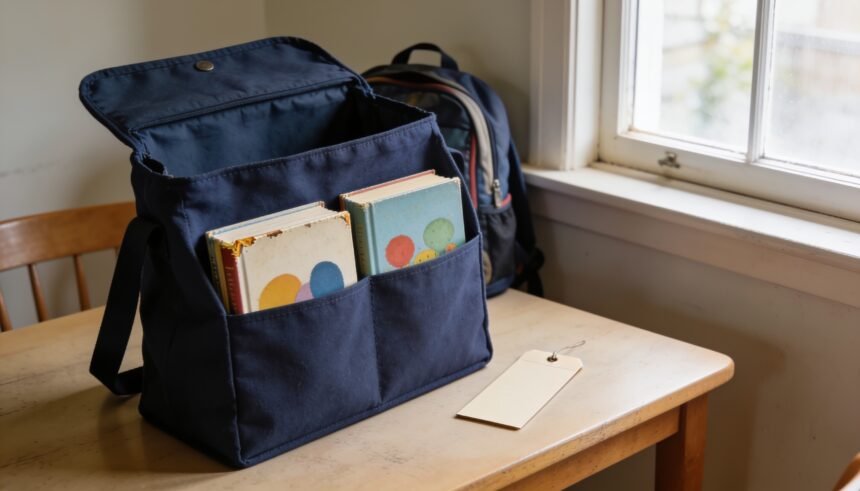
A school library bag needs the books being returned, any item your school specifically asks for, and enough spare room for the next loans. Keep lunch, drink bottles and general school supplies elsewhere; a well-packed bag should be easy to empty at the library desk and refill without forcing the books inside.
Pack these essentials before library day
Use this short checklist, then adjust it to your school’s instructions:
- Books being returned: Check the titles against any borrowing reminder, including books still beside the bed or in another household.
- School-requested items: Add a borrowing card, reading record or signed note only if the school asks children to bring it in this bag.
- A flat bookmark, if wanted: Choose a loose paper or card bookmark that can sit inside the book without adding bulk.
- Space for new books: Leave room for the books coming home, including a picture book that may be wider than the ones going back.
- The child’s name on the bag: Check that the existing label is still readable and belongs to the child using it now.
The bag itself should be empty of yesterday’s wrappers, loose pencils and unrelated papers before the books go in. A library bag does not need a full pencil case or a second collection of school supplies unless the teacher has requested them.
Check which books are actually going back
Put returning books together on the table before packing them. Look for the school library label or borrowing information, rather than treating every book in the house as a return. A book from the local council library belongs to a different borrowing account; keep it out of the school return pile.
If a child wants to finish a book, check the renewal arrangements rather than assuming that leaving it at home extends the loan. Point Clare Public School’s library guidance specifically encourages renewal of books still being read. Your school’s process may involve asking the teacher librarian or bringing the book along.
Returning books can also affect the next borrowing session. Gregory Hills Public School, for example, asks students to return books before borrowing new ones. That is a reason to read your school’s reminder carefully, not a rule to apply to every Australian school.
Avoid packing an extra home book just to fill the bag. The empty space has a job: carrying the next loans.
Keep home readers separate unless the school combines them
A take-home reader and a library book may both be books, but they need not travel through the same classroom routine. Follow the teacher’s instructions for the reader folder, reading record and library bag.
If the school uses separate folders, keep them separate. If it asks for a reading record in the library bag, place that record flat beside the books so it is easy to find. Do not add exercise books, homework sheets or permission notes merely because there is room.
For the broader handover, use the guidance on getting kids to pack their own bag. Here, give the child a specific job: identify the library returns and place them in the library bag, then let an adult check any school-requested extras.
Make the books fit without squeezing them
Place books with their covers closed and their edges inside the bag. If a corner catches as you close it, reposition the books rather than pulling the closure harder. Try the bag with the largest book currently on loan, while allowing for a different shape next time.
Check seams, handles and the closure before loading it. Gregory Hills asks for a sturdy bag and explicitly says a school logo is not necessary. Check your own school’s requirements before replacing a plain bag that still does the job.
Put the library bag into the school backpack where it can be taken out as one piece. Keep the drink bottle in its designated compartment and lunch in its own container. Point Clare’s guidance describes separating books from food, drinks and other school-bag contents as a purpose of the library bag.
Do not assume a fabric library bag will keep rain out. For the separate question of protecting the outer backpack and its contents, see cleaning a school bag and preparing it for rain. Keep wet-weather protection compatible with the bag’s instructions.
Give each child’s loans a clear home
Choose one dry storage spot for the library bag and books between reading sessions. Point Clare recommends keeping them in the same place and organising them the night before library day. A shelf or basket can serve this purpose without needing a new piece of furniture.
With siblings, give each child a distinct place or clearly named bag. Before packing, check whose borrowing reminder lists each title. Similar covers are not enough to identify the right return pile.
Check the name label when a bag is handed down. The guide to labelling school belongings covers the wider job; for library day, concentrate on making this bag identifiable. Avoid writing a child’s name inside borrowed books.
Deal with a missing or damaged book before departure
If a listed book is missing, check the usual reading places and any other home it travels to. Pack the books you have found and contact the teacher librarian about the missing title. Point Clare asks families to notify the teacher librarian about lost or damaged books.
For damage, set the book aside from the ready-to-return pile and ask the school how it wants it returned. Let the librarian advise on any repair. Do not promise a child that bringing the remaining books guarantees another loan; borrowing arrangements belong to the school.
Make library day the extra item in your evening preparation before a school day. Tonight, confirm the day, gather the correct returns and put the library bag beside or inside the backpack that will leave the house.
How we checked this
Checked on 6 October 2026 against the library guidance published by Point Clare and Gregory Hills public schools. Their rules are examples, not national requirements. The packing checklist and household arrangements are editorial recommendations; no bag or packing method was tested.
The one-page family week
One printable page that holds the whole week: meals, school, activities and who is doing the pickup. Free, and we send one useful email a week.
One email a week. No spam, unsubscribe in a click.