What is in this guide
Label school gear one child at a time, working through clothes, bags, lunch gear and stationery in separate batches. Decide the name format before you start, keep unfinished items apart, and pack only after checking each batch. You do not need to solve every awkward surface in the same sitting.
When sorting school labels for kids, start with the belongings you already have. Put the school list beside them and leave ordering more labels until you know what needs a name. For the wider preparation jobs, use the back to school checklist alongside this labelling session.
Decide what to write before making a batch
Read the school’s naming instructions first. Use the requested name format consistently on belongings rather than switching between a nickname, initials and a surname as you work. If the instructions are unclear, ask the school before preparing a large batch.
Write the chosen wording on a scrap of paper beside your supplies. This gives anyone helping the same reference, including the spelling and spacing. For siblings, finish one child’s batch before bringing out the next child’s labels.
Keep a class or teacher’s name separate from the child’s name if the school asks for that detail. You can then update the class information without redoing the main name. Avoid adding a year level to every item just because there is room for it.
NSW Department of Education advises parents to name school things and practise packing and unpacking the school bag. The batch routine below is a suggested way to organise that job, rather than a school requirement.
Make a working pile and a finished pile
Use a clear section of table, a tray or a laundry basket for each stage. There is no need to spread the entire school kit across the house. Bring out one group, name it, check it and put it away before starting another.
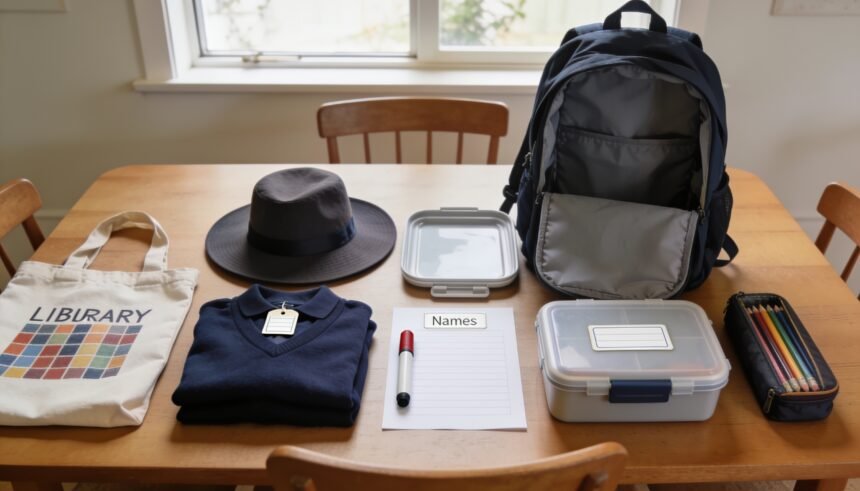
Work through these groups against your own school list:
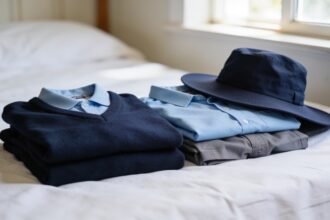
- Uniforms, jumpers, jackets, hats and spare clothes.
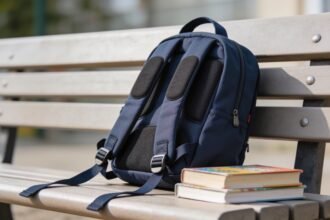
- Backpack, library bag and any separate activity bags.
- Lunchbox, bottle and the loose containers sent with them.
- Pencil case, stationery and other individually assigned equipment.
Add a small pending pile for anything needing a different label, a wash or clarification from school. Write down what is missing. An item in this pile is unfinished, even if most of the kit is ready.
If you run out of time, complete the belongings going to school tomorrow before working on spare sets. Keep the rest on the written list rather than relying on memory.
Finish clothes and bags before tackling small pieces
Check existing names before adding new ones. A jumper passed down from a sibling needs the current owner’s name, not another mark beside the previous one. Where possible, remove or clearly cover the old identification using a method suitable for that garment.
Choose a consistent place to look, such as the garment’s designated name panel or an inside tag. Keep care instructions readable. For bags, use the built-in name panel if there is one; otherwise choose an accessible inside position that your child can show someone.
Match the marking method to its stated use. Check that a pen is intended for fabric before writing on clothing, and follow clothing-label instructions about placement and application. Do not assume an ordinary stationery sticker is suitable for a uniform. If the instructions are missing, put that item aside until you can check them.
Include the spare clothes kept in the school bag and the second jumper sitting in the laundry. Tick off individual pieces, not just a heading called uniforms. If you are still deciding which pieces to keep or replace, the guide to planning school uniform spending covers that separate decision.
Treat detachable pieces as separate belongings
Open each bag and container before declaring it finished. Ask what could be handed back separately: a lunchbox lid, an inner tub, a pencil case or an activity pouch. Give reusable loose pieces their own identification where the item and label instructions allow it.
Count those pieces before buying a label pack. The number of objects on the table may be different from the number of places needing a name. Leave off anything the school has told you to supply unlabelled or for shared use.
For fiddly placement decisions, follow the focused guides to labelling pens, rulers and calculators and labelling lunchboxes and drink bottles. Keep this session moving by setting awkward pieces aside with a note about what they need.
Read any application and waiting instructions before packing newly labelled gear. Follow the instructions supplied for your particular labels; there is no single waiting time to apply to every product. Record when an item will be ready if it needs to stay out of use.
Let your child check the finished kit
Once the gear is ready, ask your child to find the name on each main item. Show them where to look rather than asking them to memorise every label position. If a name is difficult to find or read at home, move or rewrite it where practical.
Then unpack and repack the bag together. Have your child match loose containers with their lids and put each pouch in its usual place. An older child can check their own kit against the school list while you deal with clothing or unresolved items.
For belongings moving between two homes, agree on the same naming format and share the pending list. Record which home holds spare uniform pieces so both households know what still needs attention. Avoid marking an item complete until someone has actually checked it.
Keep replacements out of the pending pile
Store the remaining labels, their instructions and the appropriate marker together with school supplies. When a replacement bottle or jumper arrives, make naming it part of putting it into use.
Use an existing task as your reminder to check names: packing the school bag, putting away clean uniforms or sorting gear before a new term. Look for missing labels, unreadable writing and an old owner’s name. Leave clear, current identification alone.
If the same label repeatedly comes away, check the application instructions and whether it is intended for that surface before applying another. If belongings still go missing, ask where the school keeps lost property and arrange a check with your child.
For tonight, gather one child’s daily essentials and make the two piles. Finish the straightforward items, write down the exceptions and pack the checked gear. The remaining list is your next session, not a reason to start the whole job again.
The one-page family week
One printable page that holds the whole week: meals, school, activities and who is doing the pickup. Free, and we send one useful email a week.
One email a week. No spam, unsubscribe in a click.