What is in this guide
The uniform list a school hands out tells you what is required. It does not tell you how many of each thing a child actually needs, and that is where most of the overspending happens.
Families routinely buy five polo shirts and one jumper, when the jumper is worn every day from May to September and two of the shirts are still in the drawer with tags on in December.
How many of each, realistically
This depends on how often you do washing, which is the variable nobody mentions. The figures below assume washing about twice a week.
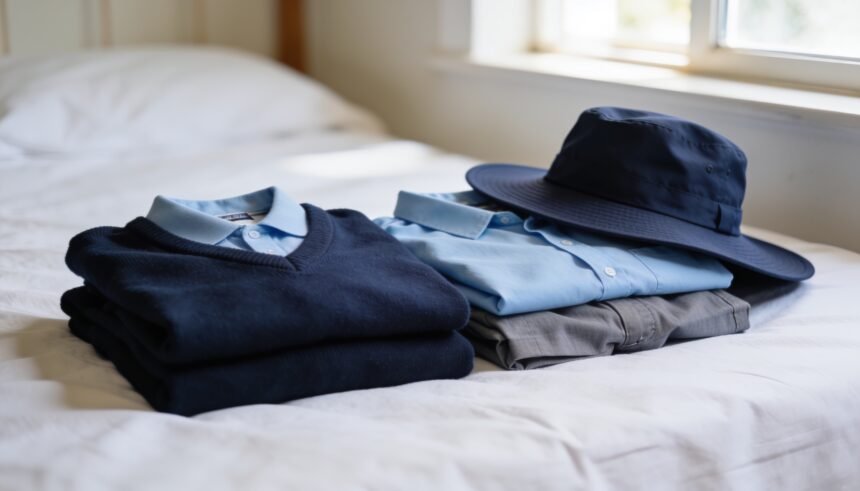
- Shirts or polos: four to five. This is the item that gets dirty daily and the one worth having enough of
- Shorts or skirts: three. Two in rotation, one in the wash
- Trousers, where required: two
- Jumper or fleece: two. One is not enough, because it is worn every day in winter and gets left at school
- Sports uniform: two sets if sport is more than one day a week, otherwise one
- Hat: two. Australian schools with a no hat, no play rule mean a lost hat costs a lunchtime, and hats are lost constantly
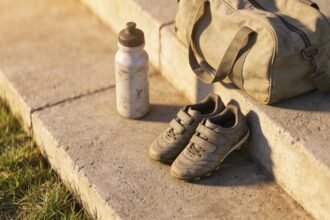
- Shoes: one pair, plus sport shoes if required separately
- Socks: more than you think. Six pairs minimum
Buy one size up for winter items bought at the start of the year, because a jumper bought in January is being worn in July on a child who has grown.
Do not buy the full list before term starts. Buy the minimum, see what the school actually enforces and what the child actually wears, and fill the gaps in week three. Some items on a list are effectively optional in practice and the uniform shop will not tell you which.
Where secondhand works, and where it does not
Secondhand uniforms are the single biggest saving available, and most schools already run the market for you. Many Australian schools and their parent associations operate a second-hand uniform shop, and there are also national services for exchanging used uniforms between families.
Buy secondhand without hesitation:
- Winter jumpers and jackets, which are expensive and outgrown fast
- Blazers, which are the most expensive single item and often worn twice a term
- Sports uniforms, which are worn less often than daily uniform
- Anything for a child in a year level they will outgrow quickly
Buy new, usually:
- Shoes. Fit matters more than price and a shoe that has moulded to another child’s foot is not a bargain
- Anything worn against the skin that has thinned or lost its shape
- Hats, if the school requires a specific sun protection rating, because a faded hat may no longer meet it
When to go to the secondhand shop. The best stock appears at the end of the school year, when families clear out what no longer fits. Going in late January means picking through what is left, and December is already the month everything else lands in, which is the argument in Christmas without the January hangover.
The assistance most families do not know about
Every state has some form of uniform assistance, and it is consistently under-used because it is not advertised at the point where families feel the cost.
In Victoria, State Schools’ Relief provides uniforms, footwear and other essential school items to families experiencing financial disadvantage, delivered through the Affordable School Uniforms Program, either as items directly or as a voucher redeemable with uniform suppliers. Students starting prep or year 7 who are eligible for the Camps, Sports and Excursions Fund can receive uniform support automatically.
In New South Wales, many schools hold a supply of welfare uniforms for families who need financial assistance, arranged through the school administration rather than through an application process.
Across the country the pattern is the same: the school office is the entry point, and asking is a normal administrative conversation rather than a special request. Schools also frequently offer payment plans and hardship arrangements that are not printed on the list you receive.
Every state and territory runs its own scheme with its own name and eligibility, so the specific thing to search for is your state education department plus school uniform assistance.
Ask early. These schemes are busiest in January and stock is finite.
Making them last
Uniform spending is partly a laundry problem.
- Label everything, in every item, including the jumper that gets taken off at lunch. Unlabelled jumpers are the single most commonly lost item in an Australian school
- Treat stains the day they happen. School uniform stains covers what actually shifts each type
- Wash winter items less often and air them more. Fleece and wool jumpers degrade in the wash faster than they get dirty
- Check the hems. Letting down a hem buys a term or two on trousers and skirts that are otherwise still good
- Repair rather than replace knees and cuffs while the rest of the garment is sound
Selling them on
At the end of a year, outgrown uniform in good condition is worth returning to the school’s secondhand shop, where it either earns you a little or is passed to a family who needs it. Some shops pay a percentage, some take donations only, and it is worth asking which yours does before you drop off a bag.
If you would rather sell it yourself, uniform is one of the more reliably saleable categories of used kids gear, which is covered properly in selling secondhand kids gear.
The short version
Buy fewer shirts than the list implies and more jumpers. Buy blazers and winter items secondhand, shoes new. Label everything. Go to the secondhand shop in December rather than January. And if the cost is genuinely difficult, ask the school office, because there is a scheme in your state and it exists for exactly this.
What the rest of the year costs, beyond uniform, is covered in what back to school actually costs per child.
The one-page family week
One printable page that holds the whole week: meals, school, activities and who is doing the pickup. Free, and we send one useful email a week.
One email a week. No spam, unsubscribe in a click.