What is in this guide
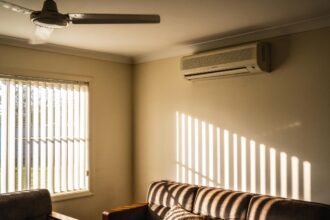
A reverse cycle air conditioner is the cheapest way to heat a room in every Australian state, and the margin over a plug-in electric heater is large rather than marginal. CHOICE puts reverse cycle ahead nationally, and published running cost comparisons put a 3.5kW reverse cycle unit at roughly $0.28 to $0.36 an hour against $0.50 to $0.79 an hour for an electric panel heater.
That gap is not about brand or model. It is physics, and it is worth understanding because it tells you what to do with the heater you already own.
Why the gap exists
Every plug-in electric heater is exactly 100 per cent efficient. A fan heater, an oil column, a panel heater and a bar radiator all turn one unit of electricity into one unit of heat. There is no better version. Marketing that claims otherwise is describing how the heat is distributed, not how much of it there is.
A reverse cycle unit does something different. It does not generate heat, it moves it, extracting warmth from the outside air and pumping it inside. That is why reverse cycle units on the Australian market run at 300 to 600 per cent efficiency, delivering three to five times more heat per unit of electricity.
So the cheapest plug-in heater and the most expensive plug-in heater cost roughly the same to run. The difference between them is comfort and distribution, not cost. The only way to get a meaningfully cheaper hour of heat is to change the technology.
Rough running cost order
Cheapest to most expensive, for heating a living area:
- Reverse cycle split system. Around $0.28 to $0.36 an hour for a 3.5kW unit heating a room. The cheapest option in every state.
- Ducted gas. Roughly $0.50 to $0.72 an hour, and highly dependent on gas pricing in your state, which has moved considerably.
- Electric panel, oil column, fan heater. Roughly $0.50 to $0.79 an hour. All in the same band, because they are all doing the same thing.
- Ducted electric resistance heating. The most expensive common option, for the same reason.
These figures come from published Australian comparisons and are indicative. Your actual cost depends on your tariff, your room, your insulation and how long the unit runs before it cycles. Check your own bill against them rather than assuming.
Do the free things first
Before buying anything, the changes that cost nothing usually recover more than an appliance upgrade.
Heat the room you are in, not the house. Close the doors to rooms nobody is using. Heating four rooms to warm one is the single most expensive habit in Australian winters.
Block the draughts. Under doors, around older windows, through unused chimneys and vents. A rolled towel under the door of the room you are heating costs nothing and works. Draught proofing is consistently ranked among the highest-return changes because a heated room that leaks air is being reheated continuously.
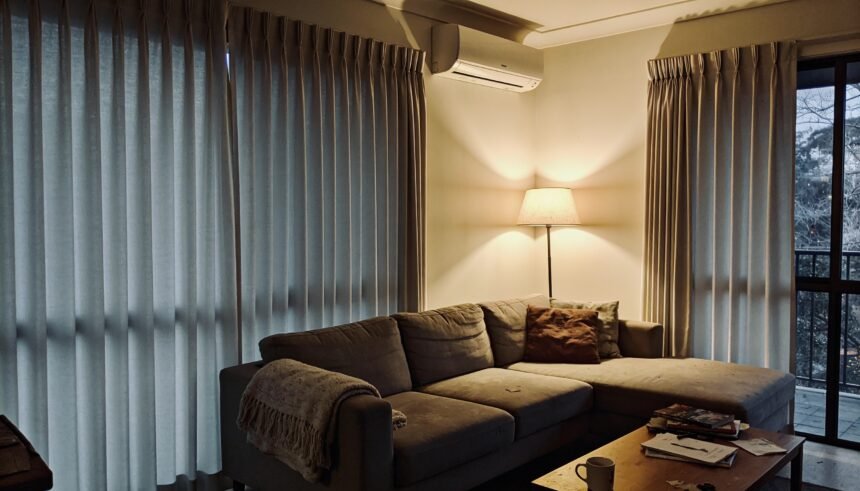
Close curtains at dusk and open them in the sun. Glass is the weakest point in most Australian houses. Heavy curtains with a pelmet, or even just curtains that reach the floor rather than the sill, hold a surprising amount of heat in.
Set the thermostat and leave it. Around 18 to 20 degrees is the usual recommendation for living areas. Every degree above that costs more, and turning it to 28 does not heat the room faster, it just overshoots.
Use the timer rather than the boost. Warming a room from cold uses more energy than holding it. If the unit has a timer, having it come on twenty minutes before you need the room is cheaper than blasting it when you walk in.
When buying a unit makes sense
If plug-in electric heaters are your main heat source, the case for a reverse cycle split system is strong. Published estimates put installation of a split system at around $2,000 on average, with a wide range from roughly $600 to $5,500 plus a few hundred for installation, and suggest it pays for itself in two to four years on running cost savings alone against portable electric heating.
Those numbers are indicative and the payback depends heavily on how much you currently run heating. A household that heats one room for two hours an evening will take much longer to break even than one heating a living area all evening every day through a cold winter.
Two practical points if you do buy:
- Size it to the room, not to the house. An oversized unit cycles badly and costs more to run, not less.
- The star rating is per size class. A five-star small unit and a five-star large unit are not equivalent. Compare the annual energy figure on the label, not just the stars.
What about the cheap options people ask about
Oil column heaters. Popular because they are silent and feel gentle. Running cost is the same band as any other plug-in electric heater. Genuinely good for a bedroom with the door closed. Not a cheap way to heat a living area.
Heated throws and electric blankets. Genuinely cheap, because they heat a person rather than a room. For sitting on the couch or sleeping, they are the lowest cost option available and underrated.
Portable gas heaters. Cheap to run in some states but they release moisture and combustion products into the room, which brings ventilation and condensation into play. Unflued gas heaters carry specific safety requirements and are restricted in some circumstances. Check the current rules for your state before relying on one.
Wood heaters. Can be very cheap to run if you have access to free wood, and expensive if you do not. Local council restrictions apply in many areas.
The order that actually saves money
- Close doors and heat one room.
- Block the draughts in that room.
- Curtains closed at dusk.
- Thermostat at 18 to 20, on a timer.
- Heated throw or blanket for sitting and sleeping.
- Then, if you are still running plug-in heaters daily, look at a reverse cycle unit.
Most households stop after step one and find the bill has already moved.
Next: cooling costs and running air conditioning sensibly is the summer half of the same question, and bathroom mould is what a sealed-up winter house produces if you get the ventilation wrong.
The one-page family week
One printable page that holds the whole week: meals, school, activities and who is doing the pickup. Free, and we send one useful email a week.
One email a week. No spam, unsubscribe in a click.