What is in this guide
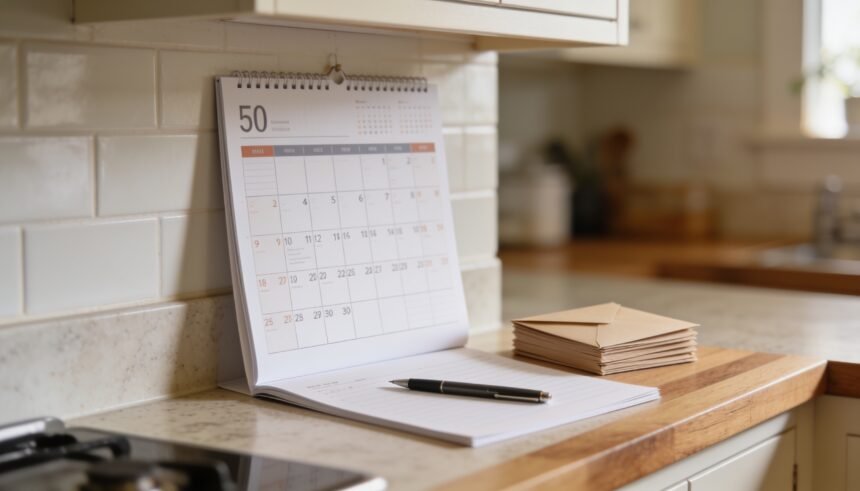
Most missed bills are not a money problem, they are a visibility problem. The money to pay them is usually there; the bill simply was not somewhere anyone was looking on the day it fell due. A bill calendar fixes that by putting every due date in one place, checked on a fixed schedule, rather than trusting memory or a pile of paper and emails.
One system, whatever the cycle
Household bills rarely arrive on the same schedule. Some are monthly, some quarterly, some annual, and a few turn up only once a year when you least expect them. Trying to remember which is which is the actual failure point, not forgetfulness in general.
The fix is a single calendar, digital or paper, that holds every bill regardless of its own cycle. Use whichever calendar your household already checks daily. A second, separate “bills calendar” that nobody opens is worse than no system at all.
Add the entry the day the bill arrives
The single habit that makes this work: create the calendar entry the moment a bill arrives, not later. A bill sitting in an inbox or a drawer “to deal with later” is exactly how due dates get missed. The entry takes seconds:
“ Electricity bill due - $[amount] - pay via [method] “
Set the calendar reminder for a few days before the actual due date, not on the day itself, so there is time to act if something is short that week.
Handling the irregular ones
Quarterly and annual bills are the ones that cause the most trouble, because the gap between them is long enough to forget the pattern entirely. Two things help:
- Note the pattern when you first see it. The first time a quarterly bill arrives, add a placeholder entry roughly three months ahead as well as the current due date, so the next one is not a surprise even before the actual bill shows up.
- Flag annual bills at the start of the year. Car registration, insurance renewals and similar once-a-year costs are worth a single pass at the start of each year, adding a rough reminder a month before each one is expected, to be firmed up once the real notice arrives.
The weekly five-minute check
Pick one fixed day each week (whichever day your household already reviews mail, email or admin) to glance at the coming fortnight on the calendar. This is not a budgeting session, just a check for anything due soon that has not yet been paid or scheduled.
If a bill on the calendar has already been paid, mark it done rather than deleting it. A visible record of what has and has not been paid this cycle is more useful than a calendar that only ever shows what is still owing.
What to leave off the calendar
- The amount owed on every bill, precisely. A rough figure is enough for the calendar entry; the actual bill or provider portal is the source of truth for the exact amount.
- Budgeting decisions. This system tracks when bills are due, not whether the household can afford them or where to cut spending; that is a separate exercise.
- Automatic direct debits with no risk of being missed, unless you still want visibility over what is leaving the account and when. Some households track these anyway, precisely so nothing on the bank statement is a surprise.
When the system slips
A calendar entry that gets snoozed repeatedly is a sign the reminder date is too close to the due date, not that the household is disorganised. Move the reminder earlier rather than adding more reminders to the same date.
If bills are still being missed despite the calendar, check whether they are actually being entered the day they arrive. The calendar only works as well as the habit of adding to it immediately; a calendar that only gets updated during the weekly check is missing entries for anything that arrived and was forgotten in between.
Add this month’s bills to the calendar today, and start the habit of entering the next one the moment it lands in the mailbox or inbox.
How we checked this
Reviewed on 27 September 2026. This package is Dovelyne editorial organisation method, not individualised financial advice, and makes no claims about any specific provider’s fees, payment terms or hardship provisions.
The one-page family week
One printable page that holds the whole week: meals, school, activities and who is doing the pickup. Free, and we send one useful email a week.
One email a week. No spam, unsubscribe in a click.