What is in this guide
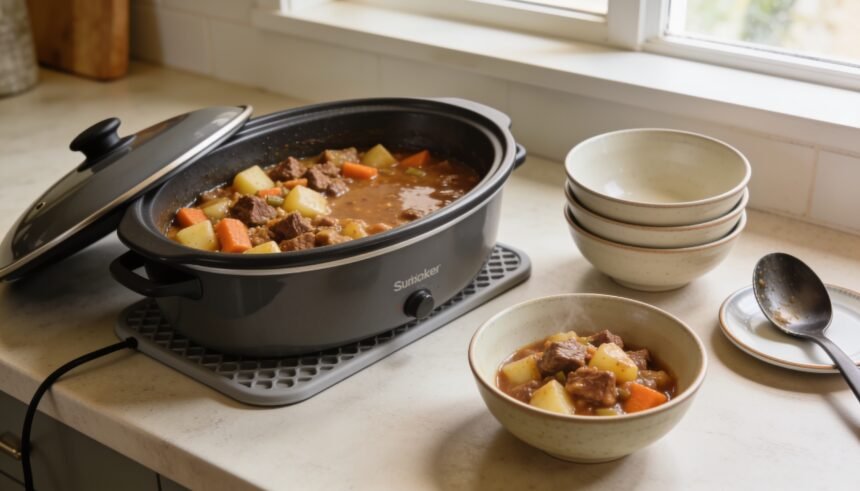
For slow cooker one-pot meals, choose a recipe that puts the whole dinner in the cooker, then check its capacity, cooking schedule and final additions before starting. A casserole containing its own potatoes and vegetables fits that brief more closely than a sauce that still needs a saucepan of pasta.
The useful question is what you will need to do when you get home. A meal can use one pot yet require several timed additions. Another can need a frying pan at the start but almost nothing at dinner time. Decide which job you are trying to reduce before choosing the recipe.
1. Define what counts as dinner in your household
Write down what you expect to put in each bowl. Include the main ingredients, vegetables and whatever substantial base your household wants with it. This is a planning check, rather than a rule about what every meal must contain.
If your chosen curry needs separately cooked rice, it is a slow cooker main with a second cooking job. You may be perfectly happy with that. If the aim is strictly one cooking vessel, search for a complete slow cooker recipe that includes its accompaniment, rather than adding rice to an unrelated curry recipe.
Check the serving suggestion before putting a recipe on the shopping list. Words such as “serve with mash” can conceal the very job you wanted to avoid. Put the complete dish into your weekly family meal plan, including any bread or other ready-to-serve accompaniment, so dinner is accounted for.
2. Choose a meal shape before choosing flavours
Use a short list to narrow the recipe search. These are meal ideas to look for in a reputable recipe source, not instructions to combine ingredients without quantities or timings.
| If your household wants | Look for a complete recipe with | Check before choosing |
|---|---|---|
| A chunky casserole | A main ingredient, potatoes and vegetables in the same pot | Whether the recipe still expects mash or another side |
| A substantial soup | Vegetables and the recipe’s specified filling ingredients | Whether bread alone suits your household as the accompaniment |
| A bean and vegetable stew | Tinned beans, vegetables and a defined sauce | Whether the suggested rice is an extra cooking job |
| Pasta in sauce | Pasta explicitly included in the slow cooker method | When it goes in and whether you will be home for that step |
Choose the version people are likely to eat. If one child dislikes a particular garnish, leaving that garnish for the table may be easier than changing the whole recipe. Keep any optional additions separate from the cooking method, which should stay as written for the first attempt.
3. Read the method with your actual day in mind
Before buying ingredients, read from preparation through to serving. Mark every point that asks someone to return to the kitchen. Compare those points with school pick-up, work, sport and whoever will actually be home.
Good Food notes that pasta, rice and fresh herbs often belong near the end of slow cooking. A recipe with a late addition can still suit a one-pot dinner, provided someone can make that addition. It is a poor match for a night when everyone arrives home wanting to eat immediately.
Make a separate note of any browning step. Good Food describes browning as useful for colour, rather than essential for every dish. If avoiding another pan matters, select a recipe written without that step instead of silently removing it from a method that relies on it.
For preparation before the cooking day, use the separate slow cooker prep-ahead guide alongside your appliance instructions. This article’s task is choosing the whole meal, not setting an overnight storage method.
4. Check the cooker before scaling the recipe
Match the recipe’s stated cooker size and serving quantity to your appliance. Read your model’s manual for its permitted load and operating instructions. Avoid assuming that a family recipe can be doubled simply because the ingredients appear to fit under the lid.
Write the recipe’s setting and cooking window beside the intended serving time. Use those instructions rather than borrowing a schedule from another dish. If the timing does not fit your day, choose a different recipe before starting.
Keep the first attempt close to the original quantities. Changing the vegetables, adding extra pasta and increasing the sauce at once makes it difficult to work out which change affected dinner. Put proposed variations in a note for a later batch.
5. Assemble in the recipe’s order
Measure the specified liquid and account for ingredients the recipe says to drain. Good Food explains that slow cookers retain liquid; copying a stovetop sauce quantity can therefore give a different result. Start with a slow cooker recipe rather than inventing a conversion on a busy morning.
Follow its preparation and layering directions. Good Food notes that root vegetables can take longer than other ingredients and recommends placing them near the bottom. Keep any ingredients reserved for later clearly identified so they do not go into the pot by habit.
Once cooking, leave the lid in place except where the method calls for an addition or check. Opening it releases heat. Schedule the recipe’s required attention instead of repeatedly checking because dinner looks unattended.
6. Keep the finish small and deliberate
Write a dinner-time list before you start: the recipe’s final addition, its finishing step and serving. If that list already looks too demanding, return to recipe selection. Owning a slow cooker does not oblige you to accept a complicated finish.
Set out serving bowls and utensils when convenient. If people want different garnishes, offer a small choice at the table. Avoid turning a simple stew into a meal that requires several separately prepared toppings unless that is how you want to spend the evening.
If the finished sauce needs attention, the watery slow cooker sauce guide explains the difference between reducing liquid and thickening it. Do not add an unplanned handful of pasta as a general repair: that introduces another ingredient and its cooking requirements.
7. Save the version worth repeating
After dinner, record whether the servings suited your household, which final jobs were awkward and whether the accompaniment worked. Keep flavour preferences separate from scheduling problems. A meal everyone liked might simply need a different night.
Add a successful dish to a rotating family dinner plan, with its final addition written beside its name. For your next shop, choose one complete slow cooker recipe and read its last three steps first. Those steps will tell you whether it delivers the evening you are planning for.
The one-page family week
One printable page that holds the whole week: meals, school, activities and who is doing the pickup. Free, and we send one useful email a week.
One email a week. No spam, unsubscribe in a click.