What is in this guide
- 1. Describe exactly what you want to hang
- 2. Find the instructions for the whole mounting arrangement
- 3. Identify what is known about the wall
- 4. Read beyond the no-drill label
- 5. Check the rental process for this particular proposal
- 6. Review the location with the installer
- 7. Plan removal before installation
Before hanging anything heavy on a rental wall, check the object’s full weight, its mounting instructions, the proposed wall and the local rental modification process. Gather those details before choosing fixings; if the wall or mounting method is uncertain, make that a question for an appropriately qualified installer rather than a guess.
1. Describe exactly what you want to hang
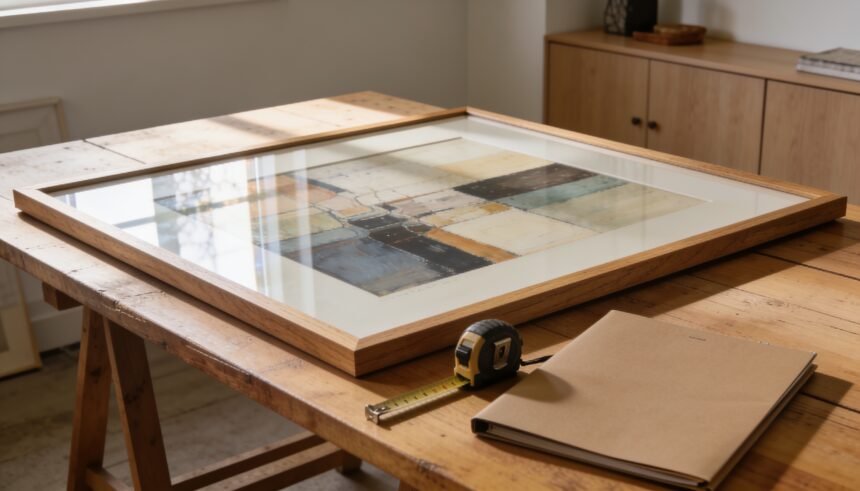
Start with the object, not the packet of hooks. Write down what it is, its dimensions, its model if there is one, and where you want it to go. A large framed print, a mirror and a shelf should each have their own entry, even when they are going on the same wall.
Find the manufacturer’s stated weight or arrange to have the complete item weighed. Include the frame, glass and attached components rather than using a figure for an empty frame. For a shelf, tell the installer what you intend to put on it as well as supplying the shelf’s own details. For a television, provide the television and bracket models together.
If you do not know the weight, mark it as unknown. “Quite heavy” is a useful reason to investigate, but it is not enough information for selecting a mounting system. Keep the item unmounted while you collect the missing details.
2. Find the instructions for the whole mounting arrangement
Gather the instructions for the object and any proposed bracket, hanger or attachment product. Check that they refer to the actual model you have, rather than something similar from the same brand. Photograph the existing attachment points on the back of the item so an installer can see what they are working with.
Look for answers to these questions:
- What wall types or supporting materials do the instructions specify?
- What item dimensions, weights or uses do they cover?
- Are particular fixings supplied, required or excluded?
- Are there restrictions on where the item can be mounted?
- Is professional installation specified?
Record gaps instead of filling them with advice from a different product. If an old mirror has no instructions and an unidentified wire or hanger, describe that clearly when asking for an assessment. Do not treat a previous installation elsewhere as confirmation that the same arrangement suits this rental.
3. Identify what is known about the wall
Photograph the proposed location from across the room and close up. Include any existing holes, brackets, patches, cracks or peeling finish in the record. Ask the property manager whether there is information about the wall construction, previous mounting work or surface finish.
Give that information to the installer, then ask what needs confirming on site. Useful questions include what supporting material is present, whether the proposed mounting system suits it, and how concealed wiring, pipes or other services will be checked before any work. This checklist does not identify a drilling location or prescribe a fixing.
An existing hook is another thing to investigate. Ask who installed it, what it was intended to hold and whether it should be assessed before reuse. Its presence does not answer the questions about your new item.
If the wall already needs attention, keep that repair separate from your decorating proposal. The guide to organising repairs in a rental covers how to raise the property problem, so it does not get buried inside a request to hang a picture.
4. Read beyond the no-drill label
If you are considering adhesive attachments, read the actual product instructions before deciding they belong on your shortlist. Check the stated surface requirements, weight limits, item restrictions, preparation, waiting periods and removal method. 3M Australia’s Command instruction pages, for example, tell users to check the package for the correct weight limits and provide separate instructions for different products.
Take a photograph of the packet and save the instruction sheet. Ask the manufacturer about the intended object and wall finish if either is unclear. Treat a load figure as information for that specified product and arrangement, not permission to improvise with additional hooks or strips.
Avoid choosing adhesive solely because drilling is inconvenient. The unresolved questions still include whether the system is intended for this object, whether the proposed surface is suitable, and what removal involves. “Removable” is a feature to investigate through the instructions, not a promise this article can make about your paintwork.
5. Check the rental process for this particular proposal
Use your state or territory tenancy authority’s current guidance on alterations or modifications alongside your agreement. NSW Fair Trading’s page specifically addresses picture hooks, nails and screws. Consumer Affairs Victoria has its own modification guidance. These are places to check the actual proposal; a rule copied from another jurisdiction is not a national answer.
Prepare the questions before contacting the property manager: what permission process applies, who should arrange installation, and are there conditions about the location, installer or eventual removal? If the agreement and response leave the position unclear, take the wording to the relevant tenancy authority or tenants’ advice service.
Make the request specific. Include the item details, location photographs and mounting instructions. Ask for the proposed installation and removal arrangements to be recorded in writing. A reply about hanging one framed picture should not be filed as though it also settles a shelf or television bracket elsewhere.
6. Review the location with the installer
Explain how the room is used, including where people sleep, sit and walk, and whether children or pets use the space. Ask the installer to assess the location against the item’s instructions and proposed mounting arrangement. A photograph can begin that conversation, but leave the physical assessment to the person responsible for the work.
Keep permission and technical suitability as separate entries on your checklist. An agent’s reply answers the rental question it addresses; ask the installer to answer the wall and mounting questions. If either remains unresolved, pause that proposal and consider a different item or location for assessment.
Do not turn “we cannot drill here” into an automatic adhesive substitution. Return to the instructions and ask what options, if any, are appropriate for the actual object.
7. Plan removal before installation
Ask whether the mounting components will stay or be removed when you leave, who will do that work and what restoration arrangements need recording. Keep any original parts, instructions and installer paperwork together. Note which components belong to you and which belong to the property.
Save the before photographs, correspondence and finished-work photographs in the same folder. The family paperwork filing system provides a practical home for those records beside the lease and condition report. Give the folder a name another household member can recognise without opening every attachment.
Revisit the removal arrangements before moving day, while there is time to clarify questions or book work. The wider bond-return preparation guide covers the handover separately. Your mounting records document the proposal and work; they do not guarantee a bond outcome.
Choose one item today and prepare its brief: object details, full weight, instructions, location photographs and unanswered questions. Send that information for the rental and installation checks before buying a bag of fixings.
How we checked this
Checked on 7 October 2026 against NSW Fair Trading and Consumer Affairs Victoria modification guidance and 3M Australia’s attachment instructions. The checklist is editorial planning advice. No object, wall or mounting product was tested or inspected, and no individual tenancy was assessed.
Related reading: Childproofing a rental without voiding the lease.
The one-page family week
One printable page that holds the whole week: meals, school, activities and who is doing the pickup. Free, and we send one useful email a week.
One email a week. No spam, unsubscribe in a click.