What is in this guide
Give children one small, prepared vegetable patch to manage, with a repeatable check and clear limits on what they decide. Adults still handle setup, unusual problems and backup care; children can own the ordinary decisions about checking plants, reporting changes and doing the jobs they have practised.
The useful handover happens after planting. If you are still choosing a site or starting from bare ground, use the guide to starting a vegetable patch with kids first. Here, the aim is to stop being the person who issues every instruction once the patch is growing.
1. Agree on what belongs to the child
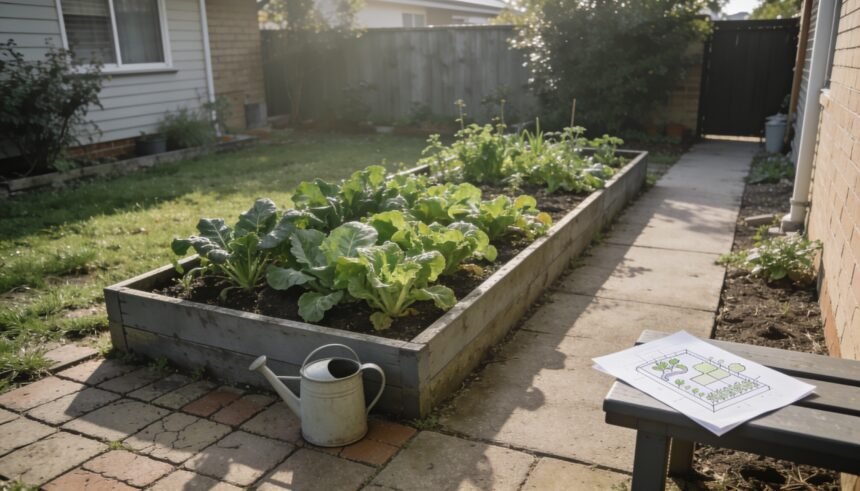
Choose one existing container or a clearly marked part of a bed. Let the child reach every plant from the path. Keep the rest of the garden outside their responsibility so a missed job does not become a discussion about the whole backyard.
Containers are a practical option for a courtyard or rental garden. The Royal Horticultural Society’s school gardening guidance describes them as manageable spaces for children, while noting that the size of the crop must match the container. A small responsibility does not have to mean a tiny pot.
Write down the division of work together:
- The child checks the patch, waters when needed using the method you have shown, and reports changes.
- The adult handles heavy lifting, potting mix, feeding products, plant supports and any treatment decisions.
- Harvesting starts as a shared job until the child can recognise what is ready and remove it without damaging the plant.
There is no fixed birthday when all these jobs become independent. Watch the child do each task before handing it over. A younger child might make the observations while you stay beside them; another might manage the familiar routine with you available nearby.
2. Leave a simple map of what is growing
Draw the container or bed on paper and mark each crop. A sketch is enough. Add a photo of each plant if written labels are not useful for your child.
The map gives them something to compare with the patch. Agree that unfamiliar seedlings stay in place until you look together. That avoids making weed identification part of the first handover.
If you are replacing a finished crop, offer two locally suitable choices rather than an unrestricted seed catalogue. Lettuce, radishes and dwarf beans appear in RHS container guidance, but check the packet’s regional sowing advice before choosing. The child can decide which option they want to grow and where it goes within the available space. Keep the spacing instructions with the map.
3. Practise a check before setting a watering job
Make the regular task “check the patch”, with watering as one possible result. This gives the child a decision to practise instead of an instruction to empty a can every day.
Walk through the same sequence together:
- Look for changes since the last visit: new leaves, fallen stems, chewed edges or a plant leaning over.
- Check moisture below the surface with a finger, as you have demonstrated for that bed or container.
- If watering is needed, apply water gently to the soil using a can the child can comfortably carry.
- Tell the adult about anything unfamiliar, then put the can away.
Show the difference between soil that still feels moist and soil that needs water. Do this on several visits so the child has something real to compare, rather than relying on the appearance of the surface alone.
RHS watering guidance recommends keeping soil or potting mix evenly moist and warns that container crops may need watering once or twice daily in summer. A single after-school visit therefore cannot be the whole care plan in hot weather. The adult needs to check whether extra attention is required. Check local garden watering rules before settling on the household method and timing.
4. Give the routine a visible finish
Attach the patch check to a household event, such as arriving home from school. Use a paper card with three spaces: checked, watered if needed, told an adult about changes. A tick for checking should count even when no water was required.
If your household already uses a chart, add one garden task to it. The advice on making a usable chore chart can help keep the record simple. Avoid separate scores for plant height, harvest size or perfect leaves; those are not tasks a child can complete on demand.
For siblings, name one person responsible for each check and rotate turns at an agreed point. They can garden together, but “someone will do it” leaves the job unassigned. Keep the record by the door so either child can see what happened last.
5. Make asking for help part of ownership
Agree on a few reasons to fetch an adult: a plant has collapsed, a support has fallen, leaves look suddenly different, or the child cannot decide whether the soil needs water. They can take a photo or point out the change without diagnosing it.
Wash hands after gardening and keep picking food as an agreed task. Children should ask before tasting an unfamiliar plant or using anything from the garden cupboard. These boundaries belong in the handover conversation, alongside where the watering can lives.
When a check is missed, inspect the patch together and decide the next action. Avoid treating a dead seedling as evidence that the child cannot garden. You can reduce the area, change the check time or return to doing the routine together.
6. Arrange cover before anyone goes away
Put the adult’s name against days when the child is away, ill or unable to do the check. Before a family trip, nominate the person who will care for the patch and show them the routine. Do not assume a good watering before departure covers the absence.
At the end of a crop, ask the child what they want to keep doing and which job needs help. Offer the choice to replant the same space, change crops with local advice, or pause. Start the handover today by doing one complete patch check together and agreeing who owns tomorrow’s visit.
The one-page family week
One printable page that holds the whole week: meals, school, activities and who is doing the pickup. Free, and we send one useful email a week.
One email a week. No spam, unsubscribe in a click.