What is in this guide
Run the same short pass through four spots every night, in the same order, and stop when the ten minutes are up. The order matters more than the speed: kitchen first because it is the one place mess compounds fastest, bags and shoes second because tomorrow depends on them, tomorrow’s plan third while it is still fresh, and a single surface last as the visible sign that the reset happened.
This is not a clean-the-house routine. Skip anything that is not one of the four spots. If the ten minutes run out before you reach the last one, stop anyway and pick it up the next night.
The four spots, in order
- Kitchen bench and sink. Clear what is actually in the way of tomorrow’s breakfast: dishes into the dishwasher or sink, bench wiped once, bins not overflowing. Ignore the fridge, the pantry and anything that needs more than a wipe.
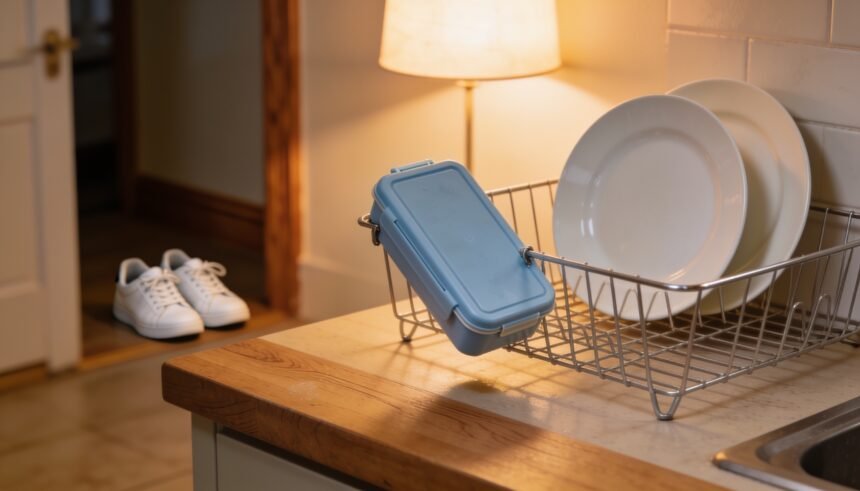
- Bags, shoes and school gear. Everything that needs to leave the house tomorrow gets found now, not at the door. Lunchboxes out and rinsed, bags by the exit, shoes paired. If a form or note needs signing, put it where it will be seen, not where it will be found next week.
- Tomorrow’s plan. A thirty-second look at what is different about tomorrow: an early start, something to bring, a pickup that is not the usual one. This is a glance at an existing calendar or command centre, not a planning session. The family command centre is where that information should already live if you have one set up.
- One surface. Choose a single table or bench that everyone sees first in the morning and clear only that one. It is a visible marker that the reset ran, more than it is meaningful tidying on its own.
Keeping it to ten minutes
Set a timer the first few times. The point of the timer is not urgency, it is a stopping rule: when it goes off, the reset ends, even mid-task. A reset that regularly overruns will get skipped altogether once it stops feeling short.
If a spot is going to take longer than its share most nights, that is information, not a failure. A kitchen that never fits in two or three minutes might need a different daytime habit, not a longer reset.
Splitting it across people
A ten-minute reset does not need one person doing all four spots. Assign spots rather than time: one adult or older child owns the kitchen pass, another owns bags and shoes, and the plan check can be whoever is near the calendar. Rotating who owns which spot week to week avoids one person becoming the default owner of the least popular one.
For a household with younger children, involve them in one spot they can genuinely finish, such as shoes by the door, rather than assigning a fair share of all four. Raising Children Network’s guidance on family routines notes that routines work best when the roles in them are clear and feel fair to the people doing them, and that is as true for a ten-minute reset as for anything bigger.
What to leave out on purpose
- Laundry. It has its own cycle and does not belong in a nightly pass; a sorting system that stops the laundry mountain is a separate habit.
- Meal planning. A ten-minute reset is not the moment to decide what tomorrow’s dinner is.
- Paperwork filing. Move a form to where it will be seen, but leave the actual filing decision to the family paperwork system, which runs on its own schedule.
- Deep cleaning of any kind. If a spot needs more than a wipe or a quick sort, it is outside the scope of the reset, not a sign the reset failed.
When it stops happening
Treat a skipped night as data rather than a broken habit. If the kitchen pass keeps being the one that gets dropped, it may need to move earlier, before dinner mess builds up rather than after. If nobody does the plan check, put it somewhere more visible than a mental note, such as directly on the command centre.
A reset that only survives when one adult is home is worth naming as that: a single point of failure rather than a shared habit. Fixing that is a matter of practising the other spots with whoever else is around, not adding more steps to the routine.
Start tonight with whichever spot is currently the most out of control, run it for ten minutes, and add the remaining spots over the following nights rather than all four at once.
How we checked this
Reviewed on 27 September 2026 against Raising Children Network’s guidance on family routines. The four-spot order, timing and handoff suggestions are Dovelyne editorial recommendations, not a measured or tested program.
The one-page family week
One printable page that holds the whole week: meals, school, activities and who is doing the pickup. Free, and we send one useful email a week.
One email a week. No spam, unsubscribe in a click.