What is in this guide
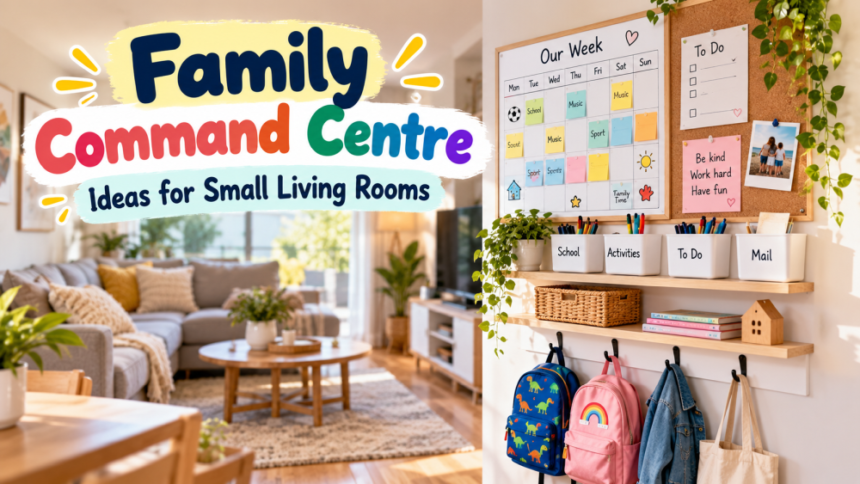
For a small living room, try a family command centre on one section of an existing shelf, inside a closed folder or in a portable tray. Keep the weekly plan easy to reach, give incoming paper one destination and choose where everything goes when the room is used for relaxing.
The useful question is how much of the system needs to stay visible. If adults check a shared calendar on their phones, the living room may only need a short packing list and a folder. If people plan together in the room, a weekly sheet can stay out during the week.
1. Reserve a footprint before choosing a layout
Pick an existing surface or storage space and empty only the part you intend to use. Try the arrangement with the actual folder, paper and pen before adding anything else. Leave room to take the folder out without shifting a lamp, stack of books or television remote.
Sit in the usual seats, open nearby cupboard doors and walk through the room carrying a school bag. Check whether the station takes over somewhere people already need. A coffee table that must be cleared for dinner or homework is a poor place for a permanent paper pile, but it can be a temporary planning surface.
Set a physical boundary: one shelf section, one closed folder or one tray that fits inside an existing cupboard. Treat that as the limit for the first version. The general family command centre guide covers the wider planning system; this setup is about making its everyday pieces fit into the room.
2. Compare three compact arrangements
Choose according to how the living room is used, rather than how an organisation display looks in a photograph.
| Layout | Try it when | What belongs there | Main trade-off |
|---|---|---|---|
| One section of an existing shelf | People want to glance at the plan while passing | Weekly sheet, slim incoming folder and pen | The plan remains visible during leisure time |
| Closed folder in a cupboard | The room needs to look clear after household admin | Weekly plan at the front, action papers behind it | Someone must open it to check the plan |
| Portable tray stored between checks | The room also hosts meals, homework or guests | Folder, clipboard and pen together | The tray needs an agreed home after use |
For the shelf version, keep the sheet in front of its supporting folder rather than spreading several pages across the shelf. For the cupboard version, choose a position you can access without unpacking other belongings. For the portable version, carry the whole set to the table when needed and return it together.
Avoid adding furniture during the trial. If none of these arrangements fits, reduce what the living room station holds before looking for another storage unit.
3. Separate the visible plan from the working papers
Choose a few entries that someone needs to act on this week. A suggested sheet might include a library return, a swimming bag reminder and which adult is handling a changed pickup. These are examples, not a recommended schedule for every family.
Keep the full school newsletter, booking confirmation and contact details inside the folder or in their existing digital location. Write the action on the visible sheet rather than pinning up the entire document. If visitors can read the display from the sofa, consider which names, appointments and arrangements you want on view.
Keep one complete calendar as the reference for dates. If the weekly sheet copies selected entries, agree who updates it when the plan changes. Confirm a changed pickup with the adult involved through your usual communication channel; the sheet records that agreement.
A living-room station can stay small even when the family schedule is complicated. It only needs the part of the plan that people use here.
4. Give paper a route out of the living room
Use one pocket or envelope for paper awaiting attention. Avoid giving each type of notice its own tray unless you have a clear need for that separation. A folder with an incoming section and an action section is a reasonable starting proposal.
When a paper arrives, decide what happens next:
- Read it and identify whether anything needs doing.
- Put the date or action in the agreed calendar or list.
- Name the person handling any unfinished step.
- Move completed return forms into the relevant bag.
- Move records to their proper filing place and remove paper no longer needed.
The school notices system covers how notices become actions. For deciding which documents belong in longer-term storage, use the family paperwork guide. The living-room folder is a working space, so do not let it become the household archive.
Keep bulky departure items elsewhere. A library book can go straight into a school bag once its return is agreed. If the family needs a dedicated outgoing area, the front-door command centre guide deals with that separate handoff.
5. Adapt the arrangement to shared use
If children do homework in the living room, store the planning folder separately from exercise books. Otherwise, clearing the table can move both into the same pile. Put the folder back in its assigned spot before homework begins.
For a room used by visiting relatives or overnight guests, try the closed-folder or portable version. Keep the folder’s usual storage place available even when the sofa bed is open. A system that depends on spreading out across the guest’s sleeping space needs another checking spot for those nights.
Where adults work different shifts, agree how the folder will be checked without requiring everyone to sit down together. Leave an action with an owner and a due date, and use your usual direct communication for anything that needs an answer promptly.
If someone cannot comfortably reach or read the proposed spot, bring the folder to an accessible table for checking. Ask each regular user to find their next action. Change the position or wording if that is difficult.
6. Decide what happens when planning is finished
Give the station a clear end state. For an open shelf, that might mean the current weekly sheet at the front, the folder closed behind it and the pen in its holder. For a portable tray, it means the complete set back inside the cupboard.
Choose a checking moment that fits the household, such as when school bags are unpacked or when the next work roster arrives. At that check, remove completed items, deal with incoming paper and refresh the short visible list. Leave unfinished tasks with a named person rather than simply moving their papers around.
Try the layout through an ordinary week before changing the storage. Notice the specific problem: a folder nobody opens, a sheet hidden by remotes, or paperwork that never leaves. Change that part first. If the station repeatedly spreads beyond its boundary, remove an unused section or move archived material out.
Start with a folder you already own and one sheet for the coming week. Choose its storage spot, write the first useful reminder and show the people who will use it where it belongs.
How we checked this
Reviewed on 18 October 2026 against the topic scope and adjacent Dovelyne coverage. Layouts, comparisons and trial steps are editorial recommendations. No household trial, product testing or measured space-saving assessment was conducted.
The one-page family week
One printable page that holds the whole week: meals, school, activities and who is doing the pickup. Free, and we send one useful email a week.
One email a week. No spam, unsubscribe in a click.