What is in this guide
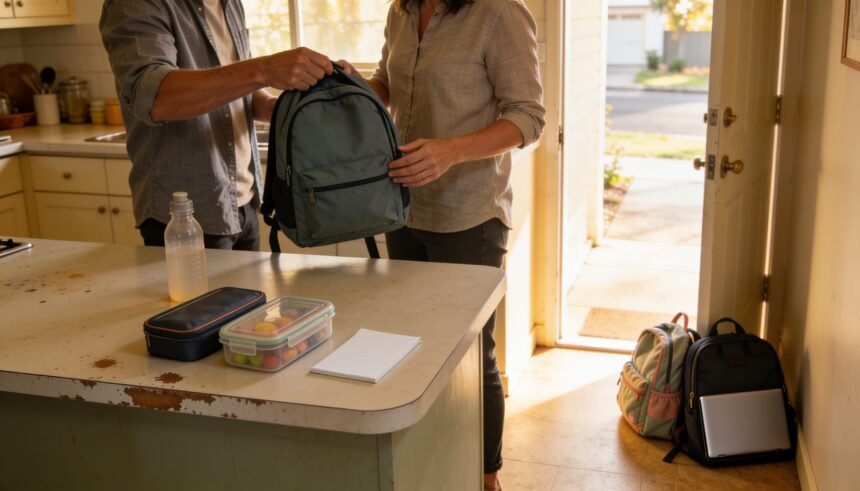
Agree who takes responsibility for the children when the first parent starts work, then pass on what is finished, what remains and who handles pickup. Use one short note and an explicit reply so both parents know the handover has happened before anyone leaves or opens a work call.
The routine below is a suggested household method. Adapt it to your actual departure times, care arrangements and working hours, including days when neither parent has much flexibility.
1. Choose the moment responsibility changes
Pick a handover point before the earlier work commitment. That might be after breakfast, before one parent catches the bus, or before a home-based parent begins their first meeting. Give it a time or a clear event rather than leaving it at “when you’re ready”.
Name who is responsible on each side of that point. For example: “Alex handles breakfast and getting dressed until 7.30 am. Sam takes over at 7.30 am and does the school run.” These are example times, not a recommended timetable.
Taking over includes the remaining preparation and departure, unless you agree otherwise. If one child goes to childcare and another to school, name a parent for each journey. Avoid assigning both children to “whoever finishes first” when you already know the destinations.
For a parent working from home with school-age children, use the same clear boundary. Being in the house should not be the household’s only basis for deciding who is available. Write down when that parent can actually take over.
2. Prepare the note the night before
Raising Children Network recommends separating things you can do the night before from things that must happen in the morning. It also suggests reminders for equipment needed on particular school days. Use those two ideas to prepare the factual part of your handover before the morning starts.
Check the next day’s school or childcare plans, the adults’ departure times and any unusual equipment. Put the information in one place both parents already use: a shared note, a sheet on the bench or a household message thread. Choose one rather than copying the same plan across several places.
Keep the note short enough to read while standing beside the school bags. You do not need to record every completed task. Include anything the next parent must act on or might otherwise misunderstand.
3. Use the same five lines each morning
Copy this blank structure and replace the prompts with names and actual details:
| Line | What to record |
|---|---|
| Taking over | Parent’s name, handover time and children or journey covered |
| Ready | Anything prepared that still needs locating or collecting |
| Still to do | Unfinished jobs and the person doing each one |
| Later today | Pickup parent, place and any change from the usual arrangement |
| If plans change | Who to contact first and the agreed alternative to check |
A filled-in example might read: “Sam takes over both children at 7.30. Bags are by the door; lunches are still in the fridge. Sam fills the bottles and takes the library bag. Alex collects from after-school care. If Alex is delayed, call Sam to confirm whether Sam can collect.”
The example deliberately says where the lunches are. “Lunches done” leaves open whether they are packed, on the bench or waiting in the fridge. Use ordinary descriptions that tell the next person what to do.
Keep children’s instructions separate from the adult note. Raising Children Network recommends displaying the agreed morning routine where everyone can see it. A picture-based morning checklist can hold the child’s sequence while your handover records who is responsible for helping and leaving.
4. Get a clear reply before moving on
Read out the exceptions and ask the incoming parent to confirm the important parts: “I’ve got both drop-offs, the lunches and the library bag.” There is no need to repeat a familiar timetable word for word.
If the incoming parent cannot take over yet, settle the gap before the other parent leaves or starts an unavailable period. Change the departure plan, the work arrangement or the care arrangement explicitly. An unread message is not confirmation that someone has accepted responsibility.
For shifts with no overlap, agree the arrangement beforehand and leave an updated note. A note carries information; it does not cover a period when no adult is available to care for the children. If your work patterns repeatedly leave that gap, the broader guide to asking for flexible work may help you prepare a separate workplace conversation.
5. Decide how to handle a changed morning
Use the same structure when the usual plan falls apart, but rewrite the affected line instead of adding a trail of corrections underneath it.
- One parent has an earlier start: move the handover earlier only if the other parent agrees and is available. Otherwise make a different care plan before that morning.
- A child cannot attend school or care: name who stays with them and who contacts the service. Recheck the other child’s journey too.
- Transport falls through: confirm who can make the trip and what that changes about their work start. Do not assume the parent with a car can leave immediately.
- Pickup changes during the day: contact the other parent directly and get confirmation. Check any collection requirements with the school or care service before using a different collector.
Keep a fallback realistic. A relative who sometimes helps is an option to ask, not a confirmed booking. Record an alternative only once the person has agreed to that day’s arrangement.
6. Review the part that needed rescuing
After a few mornings, look at the jobs that remained unclear. If both parents thought the other had packed the bag, give that job a named owner. If the handover keeps happening during a call, move it to a point when both adults can respond.
Notice who maintains the note as well as who does the school run. Each parent can update their own work changes and responsibilities. If one person still has to discover, list and delegate everything, use the wider method for sharing the invisible household load to review that division outside the morning rush.
For tomorrow, write the five lines together and agree the handover point. Leave out routine details you both already understand, but keep every unfinished job attached to a name.
How we checked this
Reviewed on 28 September 2026 against Raising Children Network’s school-morning guidance. That source supports preparation, equipment reminders and a visible routine. The adult handover structure and examples are Dovelyne editorial suggestions, not a tested programme or a promise of particular results.
The one-page family week
One printable page that holds the whole week: meals, school, activities and who is doing the pickup. Free, and we send one useful email a week.
One email a week. No spam, unsubscribe in a click.