What is in this guide
To reduce food waste in your family, record what gets thrown away for a week, then change one purchase or meal habit that keeps producing waste. Measure the saving through food you no longer need to buy, using your own receipts rather than a promised annual figure.
The useful question is specific: which food are you paying for repeatedly without getting the meals you expected from it? A half-used packet may call for a smaller purchase. An untouched ingredient may need a different meal plan. Neither requires a complete kitchen overhaul.
Step 1: Record what leaves the kitchen for a week
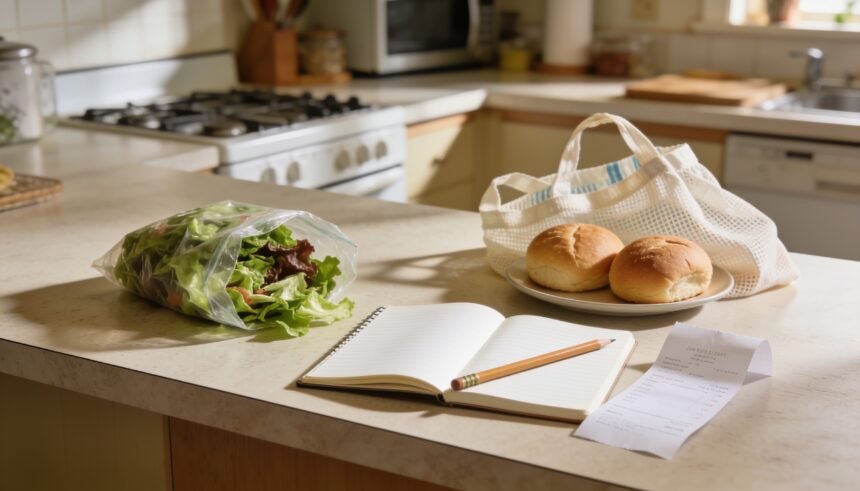
NSW Love Food Hate Waste recommends keeping a diary for at least a week, including what was discarded, how much, its possible cost and why it went. Use a shared phone note or paper beside your shopping list. Make the entry when you discard something; there is no need to keep discarded food for this exercise.
Keep each entry short enough that another person can add to it. These are suggested fields, not a requirement to weigh every scrap:
| Write down | Detail that helps the next decision |
|---|---|
| Food and amount | Half a bag of salad, two bread rolls, an unopened yoghurt |
| What happened | Meal cancelled, bought twice, nobody wanted it, served more than was eaten |
| Purchase cost | Receipt price if available; otherwise leave it unknown |
| Next change to consider | Smaller quantity, different meal slot, remove from repeat order |
Separate food you bought intending to eat from ordinary preparation scraps such as bones. The first group is the starting point for reviewing purchases. Do not interpret a lighter scraps bin as proof that the grocery bill fell.
Record circumstances too. Visitors, illness or several evenings away can make a week unusual. Keep that note with the diary so you do not redesign regular shopping around an exceptional few days.
Step 2: Choose one repeat loss to work on
At the end of the week, look for an item or reason that appears more than once. If nothing repeats, choose one purchase you would like to understand better and observe it during the next shop cycle.
Ask what decision came before the waste. Was a large packet bought because it looked economical? Did two adults each buy bread? Was a meal planned for an evening when nobody had time to cook it? Write the cause as a purchasing or scheduling problem you can change.
For example, if salad repeatedly goes unused because the planned dinners do not include it, try removing the automatic salad purchase. Put it back on the list when a specific meal calls for it. If the household wants salad but leaves part of every bag, compare the available quantities instead.
Choose a change that fits your circumstances. Buying smaller quantities on extra trips may be impractical without a car, near a distant supermarket or with delivery fees. Adjusting the regular order could be more useful than adding another shopping day.
Step 3: Change the quantity or give the food a job
NSW Love Food Hate Waste advises checking existing stock before shopping and writing quantities against a list matched to planned meals. Apply that advice to your chosen item first.
For a duplicate purchase, agree where the household records what is needed and who updates it. For an ingredient without a planned use, choose a familiar meal before buying it again. The guide to planning meals around food already at home explains how to allocate ingredients without promising the same food to several dinners.
For repeated cooked surplus, decide whether you want an extra meal from that cooking session. If you do, nominate who will eat it and which meal it replaces. For help with that decision, see using leftovers so they actually get eaten. If nobody wants an extra meal, make a note to adjust the recipe quantity next time using your usual recipe.
Make only one deliberate change during the next comparison period. Otherwise, if the waste falls, you will have several possible explanations and little guidance about which habit to keep.
Step 4: Calculate discarded value without calling it savings
Use the amount paid on your receipt, including any discount. For part of a packet, estimate the fraction discarded and multiply the packet cost by that fraction. Discarding a quarter of a packet represents a quarter of its purchase cost. This is an estimate of money spent on uneaten food, not money recovered.
Avoid false precision. For a mixed cooked dish, you would need the ingredient costs and the share discarded to estimate its value. If that is too much work, record the portion and leave its dollar value unknown. A useful diary can contain blanks.
Keep three outcomes separate:
- Less food discarded: The selected item produces less waste during the comparison period.
- A purchase deferred: You still have enough and can move its next purchase to a later shop.
- Spending avoided: You buy less over comparable shopping cycles because the food already purchased covers those meals.
A deferred purchase may help this week’s cash flow without changing the longer-term total. Food still sitting in the cupboard is unfinished evidence, so check again after it has been used or discarded.
The broader background belongs in what household food waste costs. For this exercise, keep the calculation tied to your household’s receipts and actual purchases.
Step 5: Compare the next shop fairly
Repeat the diary over another ordinary week or your usual shopping cycle. Compare the chosen item, the amount discarded and the quantity purchased. Note how many people ate at home in each period.
Check replacements before claiming a saving. If buying less of one ingredient led to buying another, subtract the replacement cost from the spending avoided. Include extra ingredients bought solely to use up the original food. A recipe that empties one packet but requires several new purchases needs that full comparison.
Do the same with extra travel or delivery charges if the change required them. Record additional cooking time separately, even if you do not give it a dollar value. A small grocery reduction may not be worth a routine that adds work on an already crowded evening.
For the whole bill, use setting a workable family grocery budget. Here, judge the selected purchase first: a supermarket total also includes other foods and possibly cleaning products, toiletries or a bulk restock.
What if less waste does not mean a cheaper shop?
Keep the result honest. You may have eaten more of what you bought without reducing purchases yet. A smaller packet may cost more per unit but less at the checkout; it may also run out sooner and need replacing. Compare enough shopping cycles to see which happened.
If the change adds effort without solving the repeat loss, try another quantity or stop buying the unwanted item for a while. Do not make finishing food a family obligation just to improve the diary. The decision under review is what to buy and prepare next.
Start with the next item you discard: record what it was, why it went and one purchase decision you could change. Keep the receipt from that shop beside the note for the follow-up.
The one-page family week
One printable page that holds the whole week: meals, school, activities and who is doing the pickup. Free, and we send one useful email a week.
One email a week. No spam, unsubscribe in a click.