What is in this guide
A dog that is comfortable being touched all over copes with brushing, nail trims, ear checks and vet visits without a fight. The way to get there is short, calm handling sessions at home, done well before the next groom or appointment, so the dog is not meeting new sensations for the first time under pressure.
Handling training is separate from grooming itself. It is practice at being touched, held and restrained gently, with nothing being trimmed, brushed or cleaned while the dog is still learning to accept it.
Why this matters more than the grooming technique
Most grooming problems are not really about clippers, brushes or shampoo. They are about a dog that has never had its paws held, ears lifted or mouth opened outside of the one stressful moment when it actually matters. The dog’s first experience of restraint becomes the groom itself, which is the worst possible time to be learning it.
Building tolerance in advance, in short low-pressure sessions, means the dog already knows what a held paw or a lifted ear feels like by the time a groomer, vet or owner needs to actually do something with it.
Where to start
Pick one body part and one minute. Paws, ears, tail base, mouth and collar area are the places grooming and vet checks touch most. Choose the one your dog minds most and start there, for no longer than a minute at a time.
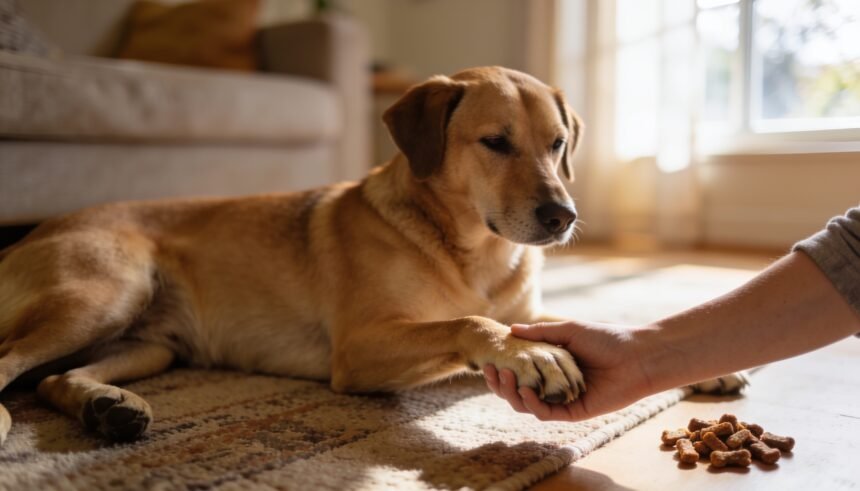
Touch, treat, release. Touch the area briefly, give a treat, then let go. The release matters as much as the treat, because a dog that is never let go has no reason to relax into being held.
Build duration before you build intensity. A light one-second hold that earns a treat, repeated many times, gets further than one long hold the dog has to endure.
Use a marker if you have one. A clicker or a consistent word marks the exact moment of good behaviour, which speeds up learning considerably. The same timing principle sits behind clicker training.
Working through paws, ears, mouth and tail
Paws are usually the hardest part, and the same gradual approach used to rebuild a dog for nail trimming applies here: touch, then hold, then separate the toes, all before a clipper is ever involved.
Ears can be lifted and looked into for a second, then released and rewarded. This mirrors what a vet does at a routine check, so it is worth practising even for dogs with no current ear problems.
Mouth and teeth benefit from lifting the lip for a second rather than forcing the jaw open. A dog that allows a lip lift will usually tolerate a vet doing the same.
Tail and rear end matter for bathing and for a dog that already struggles at bath time, since this is often the area a dog is most protective of.
Coat and brushing pressure are worth practising separately if your dog has a longer or double coat, and the seasonal approach in brushing a double-coated dog builds directly on the same handling foundation.
Making it part of normal life
Fold it into things you already do. A hand on the collar before dinner, a paw held for a few seconds during a cuddle on the couch, an ear lift while watching television. Frequent and brief beats occasional and long.
Watch the body language, not just the behaviour. Lip licking, turning the head away, stiffening or a tucked tail mean the dog has had enough for that session, even if it has not pulled away yet. Reading dog body language covers these early signals.
Stop before the dog struggles, not after. Ending a session on a calm note, even a short one, teaches the dog that handling ends well.
When it is more than training
A dog that growls, snaps, freezes rigidly or tries to bite when touched in a particular area needs a qualified trainer or veterinary behaviourist, not more home practice. Pain is a common and treatable cause of a sudden new reaction to touch, so a dog that used to tolerate handling and now does not should see a vet before any behavioural work continues.
Next: pick the body part your dog minds most, practise it for one minute today, and add the next body part once that one feels easy.
The one-page family week
One printable page that holds the whole week: meals, school, activities and who is doing the pickup. Free, and we send one useful email a week.
One email a week. No spam, unsubscribe in a click.