What is in this guide
Start with separate spaces, then arrange a short, supervised meeting suited to the animals: neutral ground for two dogs, gradual indoor introductions for cats. Let their behaviour set the pace, and have a way to separate them before the meeting begins. Arriving home does not mean they need to meet immediately.
Prepare somewhere each pet can be alone
Before collection day, decide where the newcomer will sleep, eat and rest without the resident pet entering. Keep the established pet’s familiar resting place available. RSPCA Australia recommends separate retreats for dogs; Cats Protection recommends a quiet starting room for a new cat.
For a cat, that room needs food, water, a litter tray, somewhere to hide and a suitable sleeping place. Keep the tray away from food and water. Let the cat emerge from the carrier and investigate without being pulled out or presented to the other pet.
In a small rental, a bedroom may be more useful than the open-plan living area. Choose the room you can actually close off while still caring for both pets. If there is no workable separation, resolve that before bringing the animal home.
Write down who will manage doors and where each animal goes when you leave. This turns a vague intention to supervise into an arrangement everyone in the household can follow.
For two dogs, meet away from the resident dog’s usual territory
RSPCA Australia’s sequence begins with familiarity with the other dog’s scent, followed by supervised contact on neutral ground. Where practical, let each dog explore an area the other has occupied while the other dog is elsewhere.
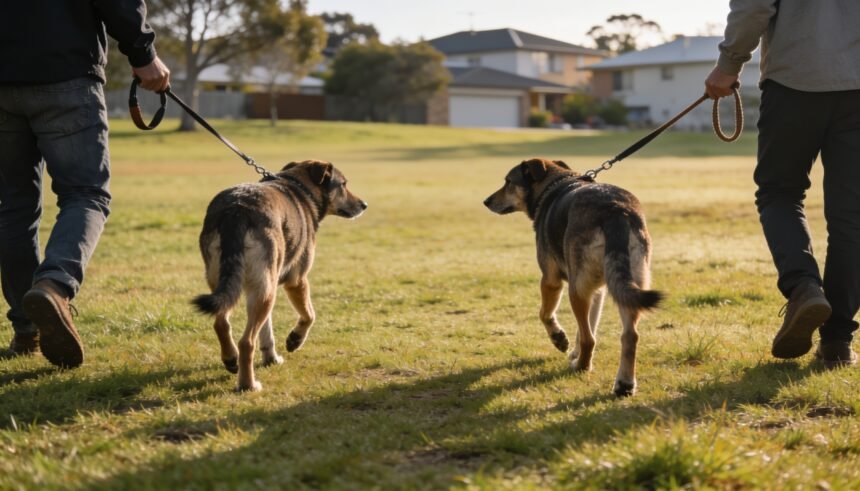
For the outdoor meeting, arrange one adult per dog, with both dogs on leads. Start far enough apart that neither is being pushed into a greeting. Reward calm behaviour and reduce the distance only while both remain comfortable. Walking in the same direction can lead into walking alongside each other.
The useful outcome is comfortable proximity, not a forced nose-to-nose hello. Reading dog body language helps you pay attention to the whole animal rather than treating a wagging tail as permission to move closer.
RSPCA notes that some dogs react differently on lead, so this general method needs individual judgement. If controlling the lead is already difficult, review ways to work on lead pulling before organising a meeting that needs careful handling.
If you live alone, arrange a friend or the rehoming organisation’s help. Until that is available, keep the dogs apart rather than trying to manage both leads yourself.
For two cats, delay the face-to-face meeting
Cats Protection recommends separate spaces first, then scent exchange, visual contact through a secure barrier and finally short meetings. A cat settling into a new room has enough to investigate without another cat approaching.
Use a separate clean cloth for each cat’s scent and place it where the other can investigate voluntarily. Move towards visual contact when they are comfortable with the scent. A secure mesh or glass barrier lets them see each other without direct access. Check that neither can slip through or climb around it.
When meetings eventually happen, both cats need a route away and access to height. Do not carry one over to the other. If a stage goes poorly, return to the previous arrangement. Keep essential resources separate so meeting the newcomer does not also mean competing for dinner or a resting place. Making indoor life work for a cat covers the wider home environment.
For a dog and cat, give the cat control over approaching
RSPCA Australia advises letting a new cat settle separately before meeting the family dog. Prepare a dog-free retreat and high resting places the cat can reach safely.
At the first shared-room session, keep the dog on a secure lead with an adult, and let the cat choose whether to approach. Reward calm behaviour. Do not restrain the cat for a greeting. Remove the dog if excitement builds, and keep sessions short. Cats Protection also advises scent exchange before this meeting.
A kitten needs particular care around barriers and size differences. Use the dedicated guide to introducing a kitten to an existing cat or dog for that situation.
End the meeting before extending access
Battersea stresses that meeting outside and living together are different experiences. After a calm dog greeting, return to separate resting spaces at home. Feed dogs separately and put prized toys and chews away from shared areas. Keep the household quiet while routines develop, and give each dog individual attention.
Do not turn one uneventful session into unsupervised access. RSPCA recommends continued supervision for dogs and cats until their comfort and safety are established. When you cannot watch, use the separation you prepared.
If either pet is distressed, pause the introduction. Persistent dog conflict warrants a vet or veterinary behaviourist; introductions that continue to go poorly need professional behaviour support. A changed appetite or prolonged difficulty settling is also a reason to contact your vet, rather than simply scheduling another meeting.
Before the newcomer arrives, choose the separate spaces and organise the adults needed for the first session. Those are decisions you can make now, without asking either animal to accept more than it is ready for.
The one-page family week
One printable page that holds the whole week: meals, school, activities and who is doing the pickup. Free, and we send one useful email a week.
One email a week. No spam, unsubscribe in a click.