What is in this guide
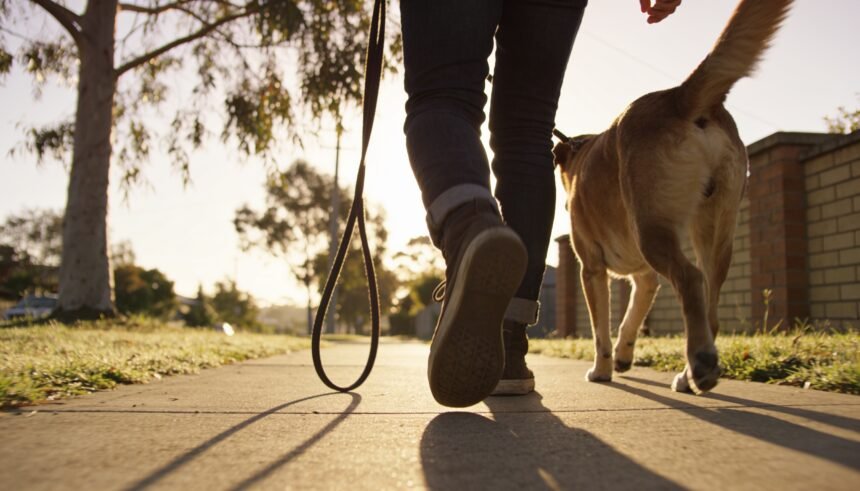
Dogs pull because pulling works. The dog wants to get to the tree, it pulls, and it arrives at the tree. Every walk where that happens is a training session teaching the dog to pull, run by you.
That is the whole mechanism, and it is why the fix in every approach below comes down to the same principle: pulling must stop producing forward movement, and not pulling must produce it.
Everything else is a variation on how you deliver that.
Management versus training
These are different jobs and confusing them is why people feel stuck.
Management makes today’s walk bearable. Equipment mostly sits here. It changes what the dog can do, not what the dog has learned.
Training changes what the dog chooses to do. It is slower and it is what actually resolves the problem.
You need both. A dog that pulls hard needs management immediately so that walks can happen at all, and training over weeks so the management eventually becomes unnecessary. Doing only management means the dog still pulls in three years. Doing only training means several weeks of miserable walks.
Approach 1: Stop and wait
The method: the moment the lead goes tight, stop completely. Do not pull back, do not say anything. Wait. The moment the lead slackens, even slightly, walk on.
Why it works: it makes pulling the thing that stops the walk, immediately and every time.
Realistic timeframe: the first few walks go almost nowhere, and that is expected rather than a sign it is not working. Most households see a meaningful change within two to three weeks of consistency.
Where it fails: inconsistency. If pulling works three times in ten, the dog learns to keep trying, and intermittent success produces a more persistent behaviour than consistent success does. This approach demands more discipline from the human than the dog.
Best for: a dog that pulls out of enthusiasm rather than anxiety, and a household that can accept short, slow walks for a fortnight.
Approach 2: Change direction
The method: when the lead tightens, turn and walk the other way. Calmly, without jerking. The dog ends up behind you and has to catch up, and the tension releases.
Why it works: same principle, delivered differently. Pulling produces the opposite of what the dog wanted.
Realistic timeframe: often faster to show initial results than stopping, because the dog is not left standing still.
Where it fails: if it becomes a jerk on the lead rather than a turn. The turn should be your body moving, with the dog following, not a correction applied to the dog’s neck.
Best for: high energy dogs that find standing still intolerable, and walks where you have space to turn.
Approach 3: Reward the position
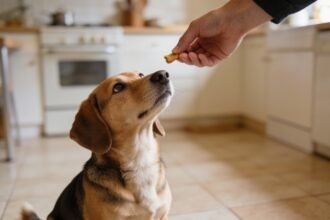
The method: actively teach and pay for walking beside you. Reward, with food, at the exact moment the dog is in the position you want, frequently at first. Start in the house, then the yard, then a quiet street, then the real world.
Why it works: the other two approaches remove the reward for pulling. This one adds a reward for the alternative, and a dog that has been paid for a behaviour will offer it.
Realistic timeframe: slowest to start and the most durable result, because the dog has learned what to do rather than only what not to do.
Where it fails: starting in a difficult environment. A dog that cannot walk beside you in your hallway will not do it on a street with other dogs. The progression is the method.
Best for: everyone, eventually. This is the approach that produces a dog that walks nicely rather than one that has stopped pulling. Combining it with approach 1 or 2 is standard.
Clicker training in ten minutes a day covers marking the moment precisely, which is what makes this approach work well.
Equipment, honestly
No equipment trains a dog. Equipment changes leverage. It is management, and it is legitimate as management.
Front-attaching harnesses change the mechanics of pulling by redirecting the dog rather than applying pressure to the throat. They are widely used and widely recommended by Australian animal welfare organisations as a humane management option.
Flat collars are standard and adequate for a dog that does not pull hard. For a dog that pulls hard, pressure on the throat is a genuine concern.
Head halters give considerable control and need careful introduction, because most dogs dislike them at first and a dog that has had one put on badly will fight it indefinitely.
Retractable leads teach pulling. The mechanism rewards tension continuously, which is the exact opposite of every method above. They are also a recognised injury risk to handlers.
Aversive equipment, including check chains, prong collars and electronic collars, is not recommended here. RSPCA Australia advises against aversive training equipment, it addresses the symptom rather than the cause, and it carries real risk of physical harm and of worsening fear-based behaviour. Some of these devices are restricted or prohibited in some Australian states and territories, so check your own state’s legislation. This article recommends none of them.
No specific product is named in this article because no product has been verified, and equipment recommendations in this category are frequently commercial rather than considered. Fit matters more than brand, and measuring a dog for a harness covers getting that right.
What makes any of them work faster
Exercise first, briefly. A dog that has had five minutes in the yard is easier to train than one that has been inside since morning. But a properly under-exercised dog will not learn anything on a lead, and how much exercise does my dog actually need covers the underlying deficit that makes lead work impossible.
Train on short walks, manage on long ones. Trying to train for forty minutes is how both of you give up. Ten minutes of real training and then let the walk be a walk.
Use better food than you think. Training a dog in the presence of a street full of smells requires payment that competes with the street.
Let the dog sniff, deliberately. Build sniffing time into the walk as something the dog gets rather than something it has to pull for. A walk with no sniffing is a walk the dog has every reason to fight you over.
Everyone in the household uses the same method. A dog walked one way by one person and another way by another learns nothing except that it depends who is holding the lead.
When it is not pulling
A dog lunging, barking or fixating on other dogs, people or traffic is not a lead-pulling problem and none of the approaches above will fix it. That is reactivity, it is usually fear-based, and it needs a qualified behaviourist. Applying pressure or correction to it reliably makes it worse.
A dog that has suddenly started pulling or behaving differently on lead should see a vet, since pain changes gait and behaviour.
Next: clicker training in ten minutes a day covers marking the behaviour, stopping a dog from destroying things when left alone covers the other common complaint, and how much exercise does my dog actually need covers the cause underneath both.
The one-page family week
One printable page that holds the whole week: meals, school, activities and who is doing the pickup. Free, and we send one useful email a week.
One email a week. No spam, unsubscribe in a click.