What is in this guide
There are two completely different problems here and they leave identical wreckage.
One is boredom. A dog with nothing to do and a long day finds something to do. This is straightforward to improve and largely a management problem.
The other is separation-related distress. A dog that is genuinely panicking when left. This is a welfare issue, it needs professional help, and several of the standard boredom fixes make it worse.
Treating distress as boredom is the most common mistake in this whole area, and it is why many households spend months on puzzle feeders with no improvement.
The diagnostic: film it
Do this before you change anything. A phone propped on a shelf, a laptop camera, or an old device. Record the first thirty minutes after you leave.
That recording will tell you which problem you have, and nothing else will. Damage found later looks the same either way.
Boredom looks like: the dog settling first, sleeping for a while, then getting up later and finding something to do. Damage is usually exploratory and spread around. The dog is not distressed, it is occupied.
Distress looks like: escalation starting within minutes of the door closing. Pacing, whining, howling, drooling, panting, scratching at doors and windows specifically, attempts to escape through exit points, toileting indoors in a house-trained dog, and damage concentrated at doors, windows and the point where you left.
The two most telling signs of distress are damage focused on exits rather than spread around, and the behaviour beginning immediately rather than after a settled period.
If what you see is distress, stop here and read the last section. Everything in the middle of this article is for boredom.
If it is boredom
The fix is a day with something in it, plus a house that offers fewer opportunities.
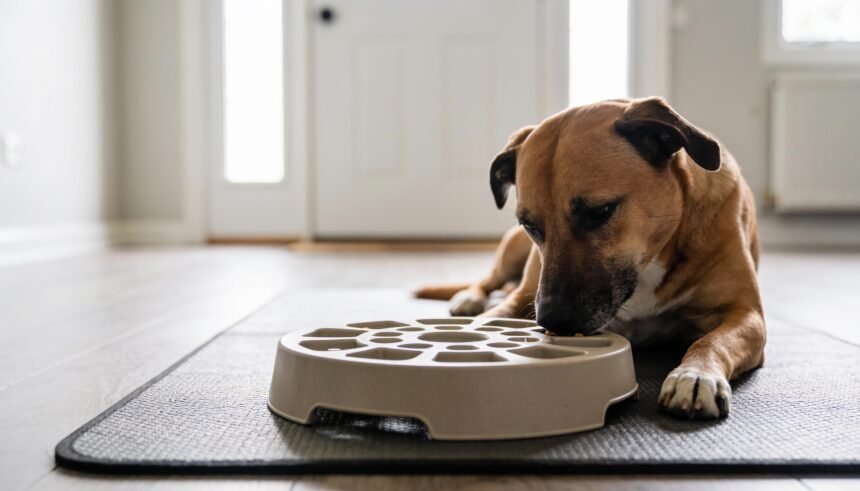
Feed the dog from something other than a bowl. A bowl of food is gone in ninety seconds. The same food in a puzzle feeder, scattered in grass, frozen into something, or hidden around a room is twenty to forty minutes of work. This is the single highest value change available, it costs nothing extra, and most households do not do it.
Give a genuinely long-lasting chew, appropriate for that dog and given with supervision established beforehand. Chewing is calming for dogs and a long chew occupies a real part of the morning. What is safe to give varies by dog, and a vet is the right source, since some chews present fracture, choking or obstruction risks.
Exercise before you leave, not after you get home. A dog that has been out in the morning sleeps through much of the day. And the useful exercise is mental rather than distance, as covered in how much exercise does my dog actually need.
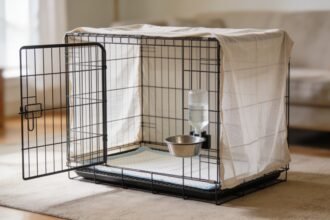
Reduce the opportunity. Close doors. Remove the specific items being destroyed. A dog confined to a smaller, dog-proofed area with its own things is not being punished, it is being set up to succeed.
Leave something that smells of you and something to look at. Some dogs settle better with a radio on, which also masks the outside noises that get a dog up.
Rotate what is available, because the same three toys become invisible. Enrichment works on novelty.
Break up the day if you can. A midday walk, a neighbour, a dog walker, or a visit home at lunch. A ten-hour stretch is a long time for any dog.
What not to do, either way
Do not punish the dog when you get home. The dog cannot connect a telling off now with something it did four hours ago. What it does learn is that your return is unpleasant, which makes a distressed dog considerably worse and confuses a bored one.
Do not assume a second dog will fix it. Sometimes it helps. Sometimes you have two dogs doing it, and a dog with separation-related distress is usually attached to a person rather than seeking company generally.
Do not leave a dog outside all day as the solution without considering heat, shade, water, escape risk and noise. In Australian conditions heat is a genuine welfare and safety issue, and a bored dog outside becomes a barking dog, which becomes a council matter.
Do not use aversive devices. They suppress the behaviour rather than addressing the cause, and with a distressed dog they add fear to panic.
If it is distress
This is not a training problem and it should not be managed alone.
Separation-related distress is a welfare condition. The dog is panicking, and leaving a panicking animal alone for eight hours a day while attempting a home protocol is both unkind and unlikely to work.
Step one is a veterinarian. Pain, illness and cognitive decline can all present this way, and a vet can rule those out and, where appropriate, discuss whether medication has a role alongside behavioural work. That is a veterinary decision and this article does not offer any view on it.
Step two is a qualified behaviourist or veterinary behaviourist, who will build a graduated plan specific to your dog. RSPCA Australia publishes guidance on separation-related behaviour and on finding appropriate help.
In the meantime, arrange for the dog not to be left alone for long periods where that is possible: a friend, a neighbour, a family member, day care, or a changed schedule. This is genuinely hard and it is the honest answer.
What not to attempt: flooding the dog by leaving it alone for progressively longer without a plan, punishing the behaviour, or working through internet protocols on a dog that is panicking. Each of these commonly makes things worse.
The overlap
Plenty of dogs have some of both, and a dog with mild distress that is also under-occupied benefits from the enrichment changes above as well as professional support.
The camera is still the thing that tells you. If you are unsure after watching it, show the recording to your vet, who sees this frequently and can tell you what they are looking at.
Next: clicker training in ten minutes a day covers the mental work that fills a day, lead pulling: three approaches compared covers the other common complaint, and how much exercise does my dog actually need covers what most under-occupied dogs are short of.
The one-page family week
One printable page that holds the whole week: meals, school, activities and who is doing the pickup. Free, and we send one useful email a week.
One email a week. No spam, unsubscribe in a click.