What is in this guide
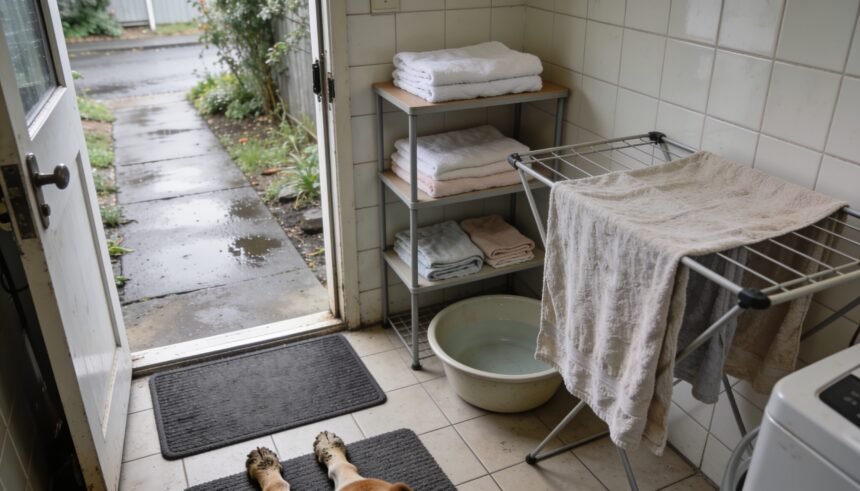
A practical muddy dog paws solution is a stopping spot beside the back door, with cleaning cloths and dry towels already within reach. Set it up so you can clean and dry your dog’s paws before moving into the house, then put the used gear straight into its own place.
1. Choose where you will stop
Pick a sheltered spot on the route your dog actually uses. That might be just outside the back door or inside a tiled laundry. Allow enough room for the dog to stand and turn while you reach the kit, without blocking the door or balancing over a step.
Start with a washable mat that lies flat and stays put on that surface. Check that the door opens fully over it. Treat the mat as the place to pause, not a substitute for cleaning the paws.
In a rental, keep the setup freestanding. A small existing shelf or caddy beside the doorway can hold the kit without drilling holes. If the back door opens straight onto carpet, identify a suitable washable area nearby and plan the shortest practical route to it.
2. Put the whole kit within reach
Gather what you already own before deciding whether anything is missing:
- A washable mat for the stopping spot.
- Soft cleaning cloths, kept separate from kitchen cloths.
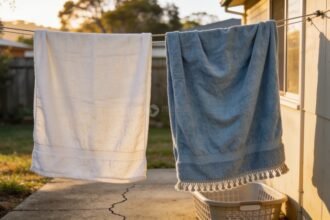
- A clean towel for drying, plus a spare if you have one.
- Access to water for mud that needs rinsing.
- A place to put used cloths and a rail or rack for spreading wet towels.
Store clean textiles above the floor and apart from used ones. Keep the water container empty between uses rather than leaving a filled bucket in the doorway. Bring water to the station when needed, or use your planned washing area.
Avoid filling the caddy with every grooming item in the house. The useful kit is the one you can reach while standing beside the dog. Put less frequently used equipment elsewhere.
3. Clean, then dry, before moving on
For an ordinary muddy return, pause at the mat and assess the paws before reaching for a towel. The American Kennel Club’s paw-care guidance explains that washing the paws does not require a whole-body bath. It also notes that dirt can collect between the toes and pads, and recommends thorough drying after cleaning.
Gently remove the visible mud with water and a soft cloth, checking between the toes and pads rather than wiping only the top of each foot. Rinse away remaining dirt where needed, then use a clean, dry towel. Keep the handling gentle; do not turn the doorway routine into a struggle to finish quickly.
Use the same sequence each time: stop, clean, dry, move on. This is a suggested household routine, not a claim that every dog will immediately accept it. If the dog will not settle in the chosen space, reconsider the location and handling before adding more equipment.
4. Reset before the next trip outside
Put used cloths aside for washing, empty and rinse the water container, and spread wet towels out rather than leaving them bundled in the caddy. Follow the towels’ and mat’s care labels for laundering and drying. Put a clean, dry towel back in the ready position.
Lift the mat and check the floor beneath it. Deal with any water or mud using the floor’s own care guidance before returning the mat. If the mat is dirty or wet, clean and dry it as its instructions allow.
For a dog that heads straight to its bed afterwards, check that resting place separately. The guide to keeping a dog bed from smelling covers the cover, filling and surface underneath rather than treating them as one washable item.
What if paw prints still appear?
Use the first remaining print to choose one adjustment:
| What you notice | What to change next |
|---|---|
| Mud between the doorway and the mat | Move the stopping spot earlier on the route, where practical. |
| Prints immediately after cleaning | Check whether mud remains around the toes and pads, then finish drying. |
| The towel is already wet when needed | Put the spare in the ready position and finish the laundry reset. |
| Everyone steps around the mat | Reconsider its position and keep the doorway clear. |
| The floor stays dirty farther inside | Check the rest of the route rather than enlarging the door station automatically. |
For the wider floor routine, use dog fur, floors and a clean house. If the remaining problem is a room that smells rather than visible mud, a practical pet-odour cleaning routine helps you choose the next area to inspect.
Before the next outing, choose the stopping spot and place a clean towel where you can reach it. Add only what that first return shows is missing.
How we checked this
Checked on 22 September 2026 against the American Kennel Club’s published paw-cleaning guidance. The station layout and reset are editorial suggestions, not tested cleaning results. This guide covers ordinary mud and household organisation; each mat, towel and floor retains its own care instructions.
The one-page family week
One printable page that holds the whole week: meals, school, activities and who is doing the pickup. Free, and we send one useful email a week.
One email a week. No spam, unsubscribe in a click.