What is in this guide
If your dog bed smells, separate the cover, filling and any blanket before washing: check which part still carries the odour. Clean only the parts their care labels allow, then dry them completely before reassembling. Washing the cover again is little help when the smell remains in an untreated inner.
Find the layer that needs attention
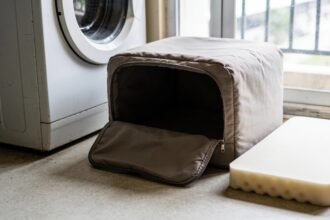
Move the bed from its usual spot and take off any loose blanket. If the design allows it, unzip the cover and remove the cushion or foam sections. Keep the pieces apart while you inspect them, rather than treating the assembled bed as one washable item.
Check the sleeping surface, seams, underside and exposed inner separately. Look for a damp patch or visible soiling as well as noticing where the odour remains. Also check the floor or mat underneath. This is a practical way to narrow down the cleaning job, not a way to identify the biological cause of a smell.
Use what you find to choose the next step:
- Only the blanket smells: start with its own wash instructions and check the bed underneath before putting it back.
- The cover smells but the inner seems clean and dry: remove the cover for cleaning rather than wetting the whole bed.
- The inner also smells: find its separate care instructions. A washable cover does not establish that the filling can be washed.
- The bed seems clean away from its usual spot: inspect and clean the surface beneath it using that surface’s care guidance.
Let the label choose the wash
There is no single correct dog-bed wash temperature or dryer setting. Kazoo’s published care guide for one foam bed specifies removing the foam, washing the cover gently in cool water with mild detergent and air drying. Snooza’s washing page gives different instructions for its listed covers, cushions and foam body, including cool tumble drying for some components and spot cleaning for the foam.
These instructions demonstrate why you should check your particular model. Neither set should be copied onto an unrelated bed. If the label has disappeared, find the model’s care page or ask the manufacturer before soaking the inner.
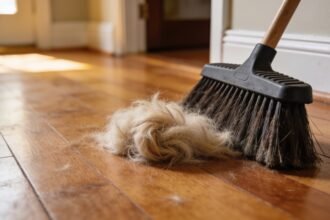
For a washable component, remove loose hair first. Maytag’s care guide recommends vacuuming or shaking it out before laundering. Pay attention to the seam around the sleeping area, then use the wash cycle, detergent and drying method permitted by the label. Follow the detergent’s dose instructions rather than adding extra because the bed smells strong.
If the whole bed is too bulky for your machine, check the appliance’s loading guidance before proceeding. Handwashing is an option only when the bed’s care instructions permit it. Moving an unsuitable foam inner from a washing machine to a bath does not make soaking appropriate.
Check the inside before putting the cover back
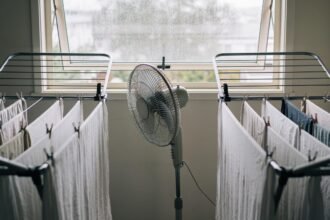
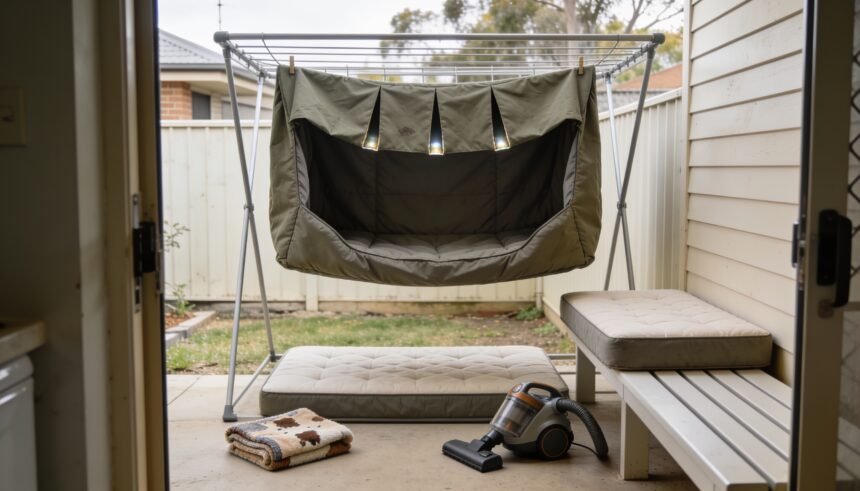
Plan where the pieces will dry before starting the wash. For an air-dry-only cover, arrange space on a rack rather than discovering afterwards that the dryer is prohibited. In wet weather or a flat without a yard, keep a clean alternative sleeping place available while the bed is out of use.
Dry each washed component fully, including the inside of any washable cushion. Do not assume a dry outer surface means the whole piece is ready. Check thick seams, folds and the underside before reassembly, and leave any damp component out to finish drying. There is no reliable universal number of hours for every bed and home.
Once everything is dry, check each piece again. If the cover now smells clean but the inner still carries the original odour, another cover wash is not the next useful experiment. Return to the inner’s care instructions.
Make the next clean easier to fit in
As a household reminder, inspect the bedding weekly and deal with visible soiling when you notice it. That is an editorial starting point, not a claim that every dog bed needs the same wash schedule. Decide what needs washing from its condition and care instructions.
A washable blanket over the sleeping surface gives you a separate layer to remove. Still inspect underneath it: adding a clean blanket should not become a way to overlook a dirty bed. If you already have a compatible spare cover, rotate it while the washed one dries. Check model compatibility before assuming a replacement cover is available.
For the surrounding room, dog fur, floors and a clean house covers the wider cleaning job. If the carpet underneath still smells after the bed is removed, getting pet smell out of carpet covers that separate surface.
When the inner still smells
If odour persists after the permitted cleaning and complete drying, ask the manufacturer whether the affected inner can be cleaned further or replaced separately. For a spot-clean-only inner with extensive soiling, repeated soaking is not a sensible substitute for that answer.
Before your next wash, photograph the care labels and identify exactly which component needs cleaning. That gives you a repeatable starting point and avoids washing parts that did not need to get wet.
How we checked this
Checked on 19 September 2026 against published Australian bedding care instructions and an appliance manufacturer’s cleaning guide. This is an editorial troubleshooting sequence; no beds or cleaning methods were tested. Model-specific care labels take precedence over general guidance.
The one-page family week
One printable page that holds the whole week: meals, school, activities and who is doing the pickup. Free, and we send one useful email a week.
One email a week. No spam, unsubscribe in a click.