What is in this guide
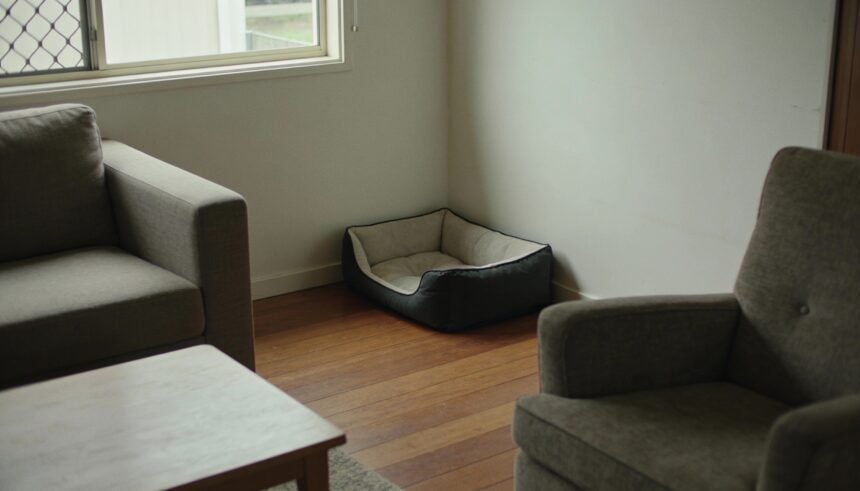
Put it in a corner of the room the household actually uses, against a wall, clear of the main walking path. In a small house that is usually the hardest corner to give up, which is exactly why most dog beds end up in the wrong place: wherever was left over.
A dog’s underlying preferences do not change because the house is small: our companion guide on where to put a dog bed and why it matters covers what a dog is actually choosing between, and why heat and traffic matter more than the bed itself. This article is about the separate problem: meeting those preferences when there is no spare room, laundry or mudroom to hand the job to.
Start with what floor space you are prepared to lose
A small house forces the trade-off that a bigger one hides. Before choosing a spot, decide how much floor area you can permanently give up, because a bed that gets moved every time someone needs the space will not get used.
A quarter of a square metre in a corner of the living room is usually realistic. A whole side of a hallway is not, because it becomes an obstacle within a week. Work from the space you will actually protect, not the space that looks available on a quiet afternoon.
Furniture-based spots that do not cost floor space
Under a console table or hall table. The dead space under a table nobody walks through is usable floor that is not competing with anything else, provided the dog can get in and out without ducking under a low shelf.
The end of a bench seat or a couch, rather than the middle of a room. A couch already backs onto a wall, so a bed pushed against its end gets a protected back for free.
A stair landing or the base of the stairs, if the household passes it without needing to step over it directly. This only works for a young, mobile dog; an older dog and stairs is its own problem.
A cut corner rather than a rectangle. A corner-shaped or triangular bed uses a dead corner a rectangular one would leave half-empty, the same logic that works for a litter tray in a tight bathroom.
Stackable or fold-flat beds for a household that reclaims the space during the day and puts the bed back for the evening. This suits a dog that is genuinely flexible about timing, not one that is anxious about routine changes.
Where it fails faster in a small house
The one hallway. A small house often has a single corridor connecting every room, and a bed there is stepped over dozens of times a day regardless of how good the spot looks otherwise.
Directly inside the front door. Convenient for nobody, including the dog, who is disturbed every time someone arrives.
A shared bathroom floor, which is usually damp, cold, and in use several times an evening.
Squeezed into a walk-in robe or a linen cupboard to get it out of sight. Out of sight in a small house usually means out of use as well, since the household is rarely in that room.
Two or three small beds beats one large one
The advice that solves most small houses is not a better single bed, it is more than one modest one. A flat mat-style bed by the couch for the evening and a second, smaller one in a bedroom corner for overnight take up less combined space than one large bed positioned to try to serve both, and let the dog use whichever is actually free.
This is the same logic as a feeding station in a small kitchen: a small footprint used correctly beats a generous one used badly.
Renting
No fixtures and no cut-outs into furniture that is not yours. A freestanding bed, a corner shape and a floor mat achieve the same result without altering the property.
Protect the floor underneath, particularly on floorboards or carpet, since a bed that is not waterproof-backed can mark a rented floor over time.
Next step
Pick one corner using the constraints above, watch where the dog actually settles for a week, and only then decide whether a second small bed solves more than moving the first one would. If the bed itself needs replacing rather than repositioning, washable dog beds covers what to look for, and crate bedding: what goes inside covers the crate version of the same question.
The one-page family week
One printable page that holds the whole week: meals, school, activities and who is doing the pickup. Free, and we send one useful email a week.
One email a week. No spam, unsubscribe in a click.