What is in this guide
Two things come before the packing and they matter more than any of it.
Sun. Australian UV is high enough for long enough that sun protection is not a summer consideration, it is a year round one. Hats, covering clothing, shade and sunscreen, following Cancer Council and state health guidance, which is the authority rather than this article.
Water. If there is water, an adult is watching, constantly, within reach for young children. At a beach, swim between the flags at a patrolled beach and follow lifeguard direction. Royal Life Saving Australia, Surf Life Saving Australia and state water safety authorities publish Australian guidance and it is worth reading before the season rather than at the water’s edge. This article gives no water safety instruction and readers should go to those sources directly.
With that settled, here is the packing.
The nine that decide whether it works
1. More water than you think. The single most common cause of an early departure. A drink bottle each, plus a spare large bottle in the car. In an Australian summer this is not optional.
2. Food, and more of it than seems reasonable. Children eat constantly outdoors. Packed food also turns an expensive day into a free one, which is the point made in free things to do with kids these school holidays.
3. Shade you bring yourself. Australian playgrounds are frequently unshaded and the shade at a beach is whatever you carried in. A beach shelter, an umbrella or even a sheet and two chairs changes how long the day lasts.
4. Hats, and a spare. Hats are lost. A spare in the bag costs nothing and saves the day ending early.
5. Sunscreen, applied before you leave and reapplied according to the product’s instructions.
6. A full change of clothes each, whether or not water is planned. Children find water. This is the item most often skipped and most often needed.
7. Towels, even for a park. They are a picnic rug, a nappy change mat, a sunshade and a towel.
8. A bag for wet and sandy things. Otherwise everything in the car is wet and sandy.
9. Basic first aid. A few adhesive dressings, wipes and any medication your child needs, including anything for a known allergy carried exactly as your family’s plan specifies. What belongs in it and how to use it is a matter for your GP and for a first aid course, not for a packing list.
The four most commonly forgotten
The spare change of clothes. Named twice because it is forgotten most.
A rubbish bag. Many Australian parks and beaches have limited bins and some have none, and the expectation is that you take it out with you.
Insect repellent, particularly near water, near dusk and after rain.
Something for the drive home. A tired, sunburnt, sandy child in a car seat is the worst part of the day, and a snack and water for the trip prevents most of it.
The car bag that removes the problem
The single best system here is a bag that lives in the car permanently.
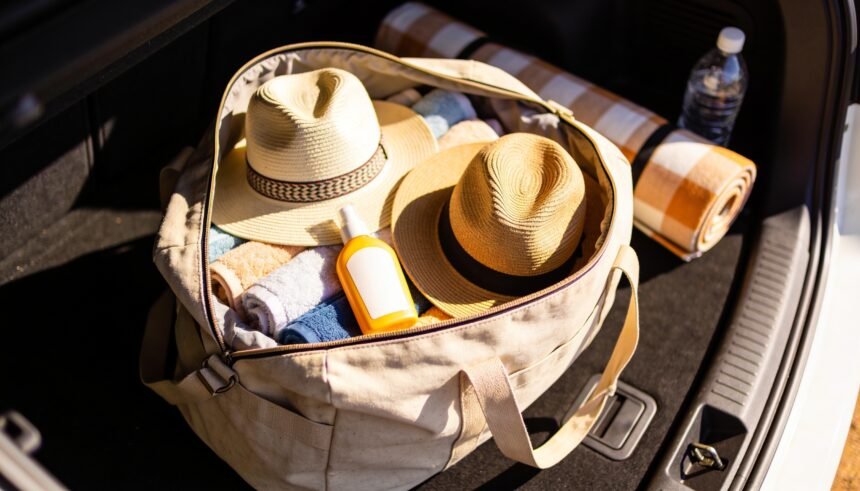
In it: spare hats, a towel each, sunscreen, a few plastic bags, insect repellent, a picnic rug, basic first aid supplies, spare clothes in the current sizes.
Then a day out requires food, water and getting in the car, which is the difference between a spontaneous outing and one that does not happen.
Check it seasonally. Clothes get outgrown, sunscreen has an expiry date, and repellent runs out. Do not leave sunscreen in a hot car for months, since heat affects it and the product instructions will say so.
For a beach specifically
Check the conditions before you go, including the forecast, the tide and any warnings.
Go to a patrolled beach and swim between the flags.
In northern Australia, marine stingers are a seasonal and serious consideration, and the relevant state authorities publish current advice and stinger season information. Follow local signage and advice without exception.
Add: rash shirts, which do more than sunscreen for extended water time, thongs or reef shoes for hot sand and rocks, a bucket and spade, and more water again.
Hot sand burns feet, which surprises people every summer.
For a park specifically
Check whether it is fenced if you have a runner or a toddler. Fenced playgrounds are the difference between a relaxing hour and constant vigilance, and fenced playgrounds for runners and toddlers covers finding them.
Check for shade and toilets before driving twenty minutes, since both determine how long you can stay.
Playground equipment gets extremely hot in the Australian sun. Metal slides, rails and rubber softfall can cause burns on a hot day. Test surfaces with your hand before children use them, and treat the middle of a hot day as unusable.
Add: a ball, scooters or bikes with helmets, and a picnic rug.
Timing the day
Early or late, not the middle. In most of Australia for a large part of the year, the middle of the day is not usable outdoors, and the good hours are before about ten and after about four.
Shorter than you think. A two hour outing that ends while everyone is enjoying it is remembered better than a five hour one that ends in exhaustion.
Watch for the turn. Children go from fine to finished quickly outdoors, and leaving ten minutes before that point is the whole skill.
Next: free things to do with kids these school holidays covers finding places to go, a free week of school holidays puts a week together, and what to pack for a family camping trip covers the longer version.
The one-page family week
One printable page that holds the whole week: meals, school, activities and who is doing the pickup. Free, and we send one useful email a week.
One email a week. No spam, unsubscribe in a click.