
The late afternoon is hard for a structural reason: everyone in the house runs out of capacity at the same time.
The children have been concentrating since nine and have nothing left. The adult has been working and now has to produce a meal. Everyone is hungry. Nobody has the patience they had at eleven in the morning.
It is not a behaviour problem and it is not a shortage of activity ideas. It is a depletion problem, and the things that help are the things that address depletion.
The six that actually work
1. Feed them at half past three.
This is the single highest value intervention and it resolves a large share of the problem on its own.
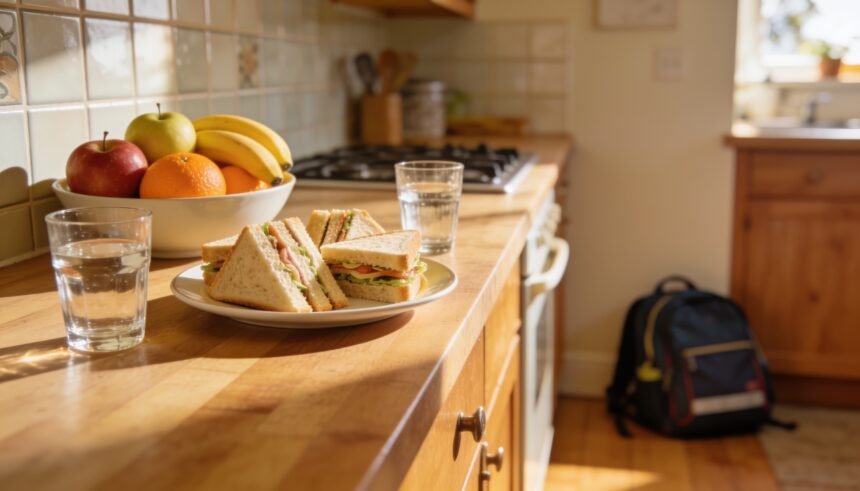
A hungry child at four o’clock has no reserves for anything. A substantial afternoon snack, not a token one, changes the next two hours completely.
Substantial means real food: a sandwich, cheese and crackers, fruit and yoghurt, leftovers. Not a biscuit.
It does not spoil dinner if it is at half past three and dinner is at six. If dinner is at five, it might, and in that case move dinner rather than skipping the snack.
Have it ready before they arrive, on the bench, so it happens without a negotiation.
2. Get outside, if the weather allows.
Twenty minutes outside after school does more than an hour of indoor activity. Movement, light and space reset a depleted child faster than anything you can do inside.
In an Australian summer this is a timing question. Four o’clock is still hot in much of the country in February, so it may be five, or it may be shade and water rather than a park.
It does not have to be organised. The backyard, the footpath, the local park. Backyard activities that cost nothing has options that need no preparation, and the long-running ones on that list are exactly what this window needs.
3. Give them something with a defined end.
Open-ended time in a depleted state produces friction. A task with a beginning and an end gives structure without requiring supervision.
Things that work: a jigsaw, a colouring page, a construction task, a job that is genuinely useful, a specific number of pages, an audiobook with headphones.
Jobs work particularly well because children take real work more seriously than invented activity: setting the table, feeding a pet, unpacking the dishwasher, watering the garden.
4. Cook earlier, or not at all, at this hour.
The dinner preparation is half of the problem, so remove it.
The slow cooker is the direct answer, because the work happened at eight in the morning.
Batch cooked food from the freezer removes it as well.
Prep at lunchtime, if you are home, so five o’clock is assembly rather than cooking.
Or accept a very simple dinner on the hardest days. Beating the 5pm what-is-for-dinner panic covers the eight fast options and the structural fixes.
5. Lower the stimulation rather than raising it.
The instinct is to find something exciting. The opposite usually works better.
Lights lower, music instead of television, fewer people talking at once. A house that is loud and busy at five is a house with more meltdowns at six.
A bath early, which is a genuinely underused reset for younger children and moves a bedtime job out of the way.
6. Use a screen deliberately rather than in defeat.
A defined, agreed screen block in this window is a legitimate tool. Twenty or thirty minutes, agreed in advance, with a clear end, while dinner is made.
The difference between this working and not working is entirely whether it was decided or surrendered to. An agreed block ends when it ends. An unplanned one ends in an argument, which is worse than not having it.
The two that make it worse
Starting something new and demanding. A craft activity requiring supervision and setup at five o’clock adds a job to the adult and a demand to the child. Save it for a morning.
Reasoning with a depleted child. Extended discussion about behaviour at this hour does not land and consumes the small amount of patience left in the room. Short, calm, minimal words, and deal with anything substantial the next day.
When it is rain rather than routine
A wet afternoon removes the outdoor reset, which is the second most useful intervention.
Substitute movement indoors, because the physical component is what was lost. An obstacle course down the hallway, dancing, a cushion pile, races.
Water in a different form. An early bath, washing up at the sink, or a tray of water and containers on a towel for a younger child.
Building. Blocks, cardboard, a fort out of the lounge furniture. Long-running and it absorbs the whole window.
Baking, if you have the capacity, which some days you will not.
A wet week in the Australian tropics or during a southern winter is a different proposition to one wet afternoon, and a household facing it needs a rotation rather than one idea.
The daylight saving complication
In the states that observe it, the window changes character twice a year.
In summer, four o’clock is bright and hot. The afternoon feels longer, outdoor time moves later, and bedtime becomes harder because it is still light, as covered in getting kids to bed without the two-hour battle.
In winter, it is dark by five in much of the country. The outdoor option disappears entirely and the whole window is indoors.
Both transitions unsettle the routine for a week or so and are worth expecting rather than being surprised by.
The honest part
Some days it will be bad regardless. A poor night’s sleep, a difficult day at school, the end of a term, a cold coming on. On those days the goal is getting to bedtime without it escalating, not running a good afternoon.
Lower the standard deliberately on those days. Toast for dinner, an early bath, and an early bedtime is a completely reasonable response to a bad afternoon, and it is usually the right one.
Next: beating the 5pm what-is-for-dinner panic covers the dinner half, backyard activities that cost nothing covers the outdoor reset, and getting kids to bed without the two-hour battle covers what comes next.
The one-page family week
One printable page that holds the whole week: meals, school, activities and who is doing the pickup. Free, and we send one useful email a week.
One email a week. No spam, unsubscribe in a click.