
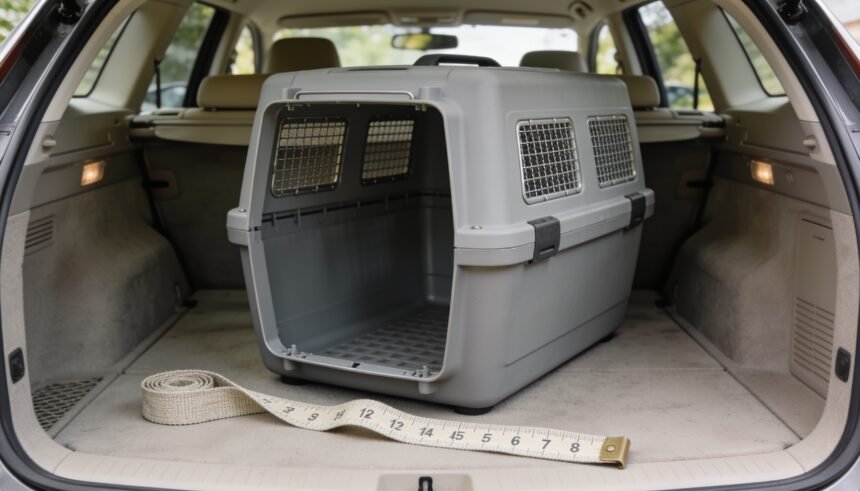
Measure your pet standing, turning and lying down before checking any size guide, then check ventilation, how it secures in your car, and whether it suits your actual travel type. A carrier that is the right size for your pet today may already be tight in a year.
The checklist
- Measure your pet properly. Measure length from nose to base of tail, height from floor to the top of the head or ears when standing, and width across the shoulders. A carrier should let your pet stand fully upright, turn around and lie down flat.
- Check ventilation on more than one side. Mesh or grille panels on at least two sides help airflow, particularly important in an Australian summer where a car interior heats quickly.
- Check how it secures in your vehicle. Some carriers include a seatbelt strap or ISOFIX-style attachment point; others are designed to sit flat in a boot or footwell. Check this matches your actual car and seating arrangement before buying, not after.
- Check the door and latch mechanism. A latch that is easy for you to operate one-handed while also being secure against an anxious pet pushing on it from inside is worth testing in person where possible.
- Check weight and your own ability to carry it loaded. An empty carrier’s weight is only part of the story; add your pet’s weight and consider stairs, car boots and airport terminals if that is part of your travel.
- Check airline or transport rules separately, every time. If flying is part of the plan, airline carrier dimension and weight rules vary and change, so check the current rules on the airline’s own site close to your travel date rather than relying on a general figure.
- Check the base for spills. A removable, washable base tray matters more than it seems the first time a nervous pet is sick or has an accident mid-trip.
What to skip
Skip a carrier sized only for your pet’s current weight if you have a growing puppy or kitten; buying slightly ahead of current size, within reason, avoids replacing the carrier within months. Skip a soft-sided carrier with no rigid frame if you need it to double as secure car restraint, since a floppy structure offers little protection in a sudden stop.
Fit matters more than features
A carrier with every extra feature is still the wrong choice if it does not fit your pet or your car. Work through sizing and securing first, then treat ventilation quality, latch design and washable liners as the tie-breakers between options that already pass the basics.
Road trips with a dog: the realistic version covers the wider trip planning once the carrier itself is sorted, and packing list for a weekend away with a dog is the next practical step for a short trip.
Your next step: measure your pet today, standing and lying flat, and keep those numbers on hand before comparing any carrier’s size chart.
The one-page family week
One printable page that holds the whole week: meals, school, activities and who is doing the pickup. Free, and we send one useful email a week.
One email a week. No spam, unsubscribe in a click.