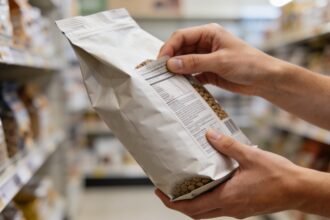
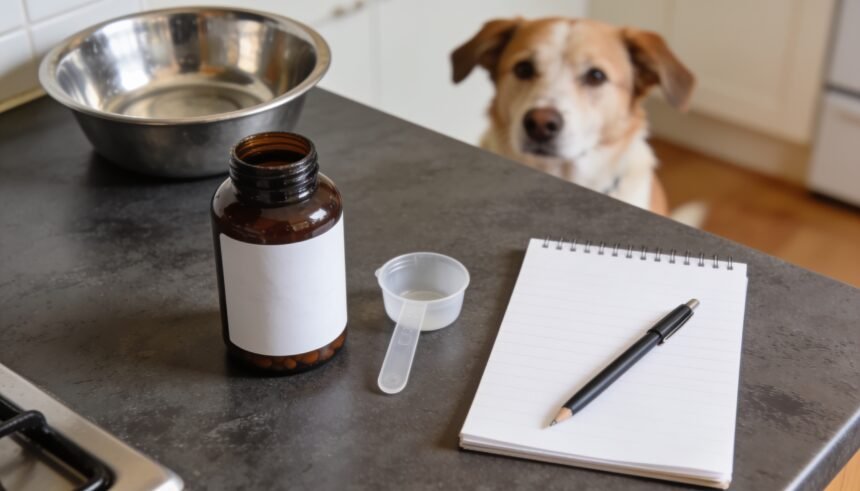
Before you buy, check what the product claims to do, who has assessed that claim, what is actually in it, whether the dose fits your pet, and whether your vet has a view. If you cannot answer most of these from the packaging, that is useful information on its own.
The checklist
- What specific problem does it claim to solve? A vague promise like “supports overall wellness” is not the same as a claim about a named condition. Note the exact wording on the label or listing.
- Is it a registered veterinary chemical product, or a general pet food? The APVMA is the Australian Government regulator of agricultural and veterinary chemical products, and products that make a therapeutic claim generally need APVMA registration before they can be legally sold here. Some nutritional pet products are excluded from that registration if they meet specific labelling and ingredient conditions. If a product makes a treatment claim, check for a registration or approval number rather than assuming one exists.
- What is actually in it, and in what amount? Look for a full ingredient list with quantities, not just a headline ingredient on the front of the pack. If the active ingredient amount is missing, you cannot compare it with anything else.
- Does the dose match your pet’s size? Many joint, skin and digestive products are dosed by body weight. A product without a clear weight-based dosing table is harder to use correctly.
- Is there a use-by or best-before date, and a storage instruction? Wellness products, especially anything containing oils or live cultures, can lose effect well before an unmarked pack looks obviously wrong.
- What does your vet think? A five-minute question at your pet’s next visit, or a phone call to the clinic, tells you whether a product is worth trying for your specific animal, and whether it might interact with anything your pet already takes.
What to skip
Skip anything that only lists effects in customer reviews rather than on the product information itself, and skip anything you cannot find an ingredient list for before paying. A product that will not show you what is inside it before purchase is not one you can properly evaluate afterwards either.
Why this order matters
Working through the claim before the ingredients, and the ingredients before the dose, stops a confident label from setting the terms of the decision. The vet question sits last because it is most useful once you already know what you are asking about, rather than as a vague “is this okay” at the counter.
None of this replaces your vet’s advice for an actual health problem. Reading an Australian pet food label covers the food-specific version of this same reading skill, and if you are working out where a wellness product fits in a new pet’s overall budget, gives the wider picture.
Your next step: before your next purchase, find the ingredient list and the claim wording, and take a photo of both to show your vet.
The one-page family week
One printable page that holds the whole week: meals, school, activities and who is doing the pickup. Free, and we send one useful email a week.
One email a week. No spam, unsubscribe in a click.