What is in this guide
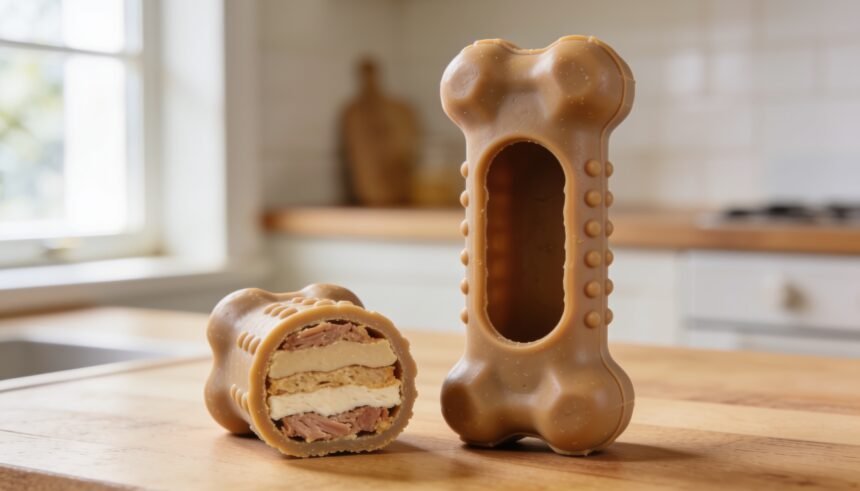
The filling matters less than the method. A hollow rubber toy packed loosely with dry kibble empties in under two minutes. The same toy layered, plugged and frozen can occupy a dog for twenty to forty minutes. This is a packing technique with some filling ideas attached, not a list of things to drop in.
Everything here uses food the animal already eats. Nothing here is a substitute for veterinary advice on diet, weight or an individual animal’s health.
The layering method
Plug the small hole first. A stuffable toy has one wide opening and one narrow one. Push something sticky and hard to dislodge into the narrow end, such as a smear of peanut butter or a small piece of cheese. This stops loose filling falling straight through.
Pack in layers, wet to dry. Alternate a wet layer (wet food, mashed pumpkin, plain yoghurt) with a dry layer (kibble, small dog biscuits) so the dry pieces stick rather than rattle loose. Press each layer down with a spoon handle before adding the next.
Cap the wide end. Finish with something that sets hard, such as a smear of peanut butter or a dab of mashed banana, then freeze. The cap is what turns a five-minute toy into a proper occupier, because the dog has to work through a hard plug before reaching the loose layers underneath.
Freeze for at least four hours, overnight if the toy is packed dense. Frozen filling takes several times longer to work through than filling straight from the fridge.
Three ratios by size
Small dog or cat, under 10kg: a small stuffable toy, roughly a quarter cup of filling, one wet layer and one dry layer, capped with a small amount of soft filling. A whole meal’s worth of filling in a toy sized for a small mouth is a choking risk rather than an upgrade.
Medium dog, 10 to 25kg: a standard toy, half to three-quarters of a cup, two or three alternating layers, capped and frozen.
Large dog, over 25kg: a large toy, up to a full cup, three or four layers, and consider two toys rather than one oversized serve so the exercise lasts longer without becoming one enormous meal.
Use part of the day’s actual food allowance, not food added on top of normal meals. Swapping a portion of the daily kibble ration into the toy keeps the exercise from becoming extra calories.
Filling ideas that work
- Plain cooked pumpkin or sweet potato, mashed, as a wet layer
- Plain yoghurt with no added sugar or xylitol, checked on the label
- A small amount of peanut butter with no xylitol, used as the plug and the cap rather than as the bulk of the fill
- Mashed banana, as a cap layer
- Wet dog food or soaked kibble, the simplest wet layer and the one that costs nothing extra
- Small pieces of cooked plain chicken or fish, unseasoned, mixed through a wet layer
- A dry biscuit or two pressed into a wet layer so it does not rattle loose immediately
Rotate what goes in from week to week. The same filling every day is less interesting than the toy itself.
What never goes in
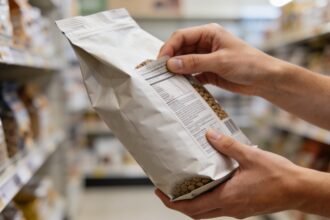
Chocolate, grapes and sultanas, onion and garlic, macadamias, and anything containing xylitol are toxic to dogs, and a stuffable toy is exactly where a household improvises with whatever is in the fruit bowl or the baking cupboard. Check the label on peanut butter specifically, since xylitol-sweetened versions are sold in Australian supermarkets.
Cooked bones and very hard chews carry a choking and dental fracture risk and are a separate category from a soft stuffed filling. A frozen fill that has set rock hard around the plug can present a similar risk for a small or elderly mouth, so test the give with a thumbnail before handing it over.
Anything the dog has not eaten before should be tried as a small amount separately first, not inside a toy the dog is left alone with.
When to give it, and when to supervise
Departure enrichment works best given at the moment you leave, so the toy becomes the thing that happens right after the door closes rather than something offered at random. Enrichment for a bored dog when you work full time covers building this into a ten-minute morning routine and what to expect from duration.
Supervise the first few uses of any toy and any filling combination. Watch whether the dog chews the toy itself rather than the filling, and retire anything gouged, cracked or chewed through.
If cost or ingredients are the constraint rather than the toy, cheap enrichment using things already in the house covers the same packing method using containers already in most kitchens instead of a purpose-bought toy.
If the dog is distressed rather than bored, no filling fixes that. Stopping a dog from destroying things when left alone covers the difference and the professional help that distress needs.
Before you fill one
- Plug the small hole first, layer wet and dry, cap the wide end, then freeze
- Size the amount to the dog, not to the toy’s capacity
- Use part of the day’s food allowance rather than adding calories on top
- Never use chocolate, grapes, sultanas, onion, garlic, macadamias or anything with xylitol
- Check peanut butter labels for xylitol before using it as a plug
- Supervise new fillings and new toys the first few times, and retire anything damaged
The one-page family week
One printable page that holds the whole week: meals, school, activities and who is doing the pickup. Free, and we send one useful email a week.
One email a week. No spam, unsubscribe in a click.