What is in this guide
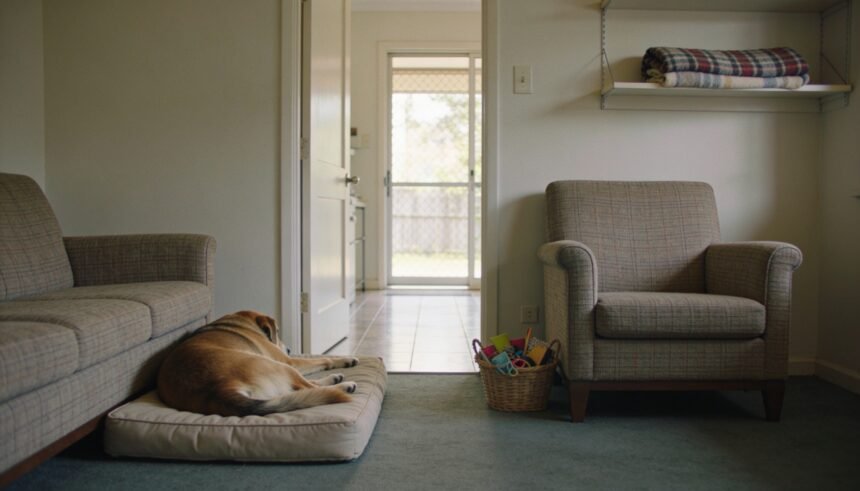
Put a dog bed in the living room where it can remain available while everyone uses the seats, walks through and settles in for the evening. Start with the bed you already have, then check the arrangement with the room in use before buying furniture or choosing a more decorative replacement.
Check the room with people in their seats
An empty lounge gives you only part of the picture. A bed might fit neatly beside an armchair until someone sits down, stretches their legs and needs that same patch of floor. A coffee table may leave a generous gap until the household pulls it closer for a board game.
Set out the room as it normally looks after dinner. Sit in each seat, open any footrests with the dog elsewhere, and walk between the doorway and the sofa. Check access to drawers and cupboards too. Reject an arrangement that requires someone to step over the dog or shift the bed whenever they stand up.
If a side table is the only thing preventing a workable layout, try moving the table first. You can put it back if the change makes the room awkward. In a rental, a freestanding rearrangement also lets you try the idea without attaching anything to the walls.
Where the problem is finding any spare floor at all, placing a dog bed in a small house covers that broader layout question. Here, the test is whether the spot works once the shared room is occupied.
Give the bed enough room to do its job
RSPCA guidance says a bed should accommodate the dog’s natural sleeping positions, including stretching out. Check the usable sleeping surface rather than judging the fit from how small the dog looks when curled up. Do not fold a bed into a narrow gap simply to make the furniture arrangement work.
There is no need to build a complete pet corner around it. Start with the resting space itself. Put spare blankets in an existing cupboard and leave the household’s general storage somewhere else. Shoes, bags and folded washing should have another destination so the bed remains available.
Colour and fabric can help the bed sit comfortably with the room, but treat those as finishing choices. An existing bed that fits the dog and the household routine is a reasonable starting point, even if it does not match the sofa.
Separate resting space from evening activities
Choose which part of the lounge will hold activities that spread across the floor. That might mean keeping a jigsaw beside one chair, a sewing basket next to another or a play mat at the opposite end of the sofa. The practical aim is to avoid having to clear the dog’s bed whenever an activity begins.
Agree on this with the people who actually use the room. A plan made by the person tidying may miss the spot someone else uses for stretching, working on a laptop or sorting school bags. Ask each person to try their normal activity before deciding that the arrangement is finished.
Keep the shared rule simple: the bed is available for resting, rather than serving as temporary storage or an extra seat. RSPCA advises that dogs should be left alone while in their beds. Put the activity basket somewhere people can reach without leaning across the resting space.
Keep a quieter option available
A living-room bed offers a place near the household, but a busy lounge cannot always provide quiet. RSPCA describes having a bed in a family room as well as an option elsewhere for undisturbed rest. Its home-environment guidance also calls for access to a place where a dog can retreat.
Keep that alternative accessible during the evening. A bed behind a closed door is not an available choice. The lounge setup need not replace an existing resting place in another room, and you do not need to move all the dog’s bedding into one coordinated corner.
Let the dog choose between the available spaces. This room-planning exercise does not require the dog to remain in the lounge to prove that the arrangement works. If the household starts a noisy activity, check that the quieter option is still reachable.
Plan for visitors before adding chairs
Work out where an extra person would sit before guests arrive. If the only answer is to put a chair on the bed’s usual footprint, try a different chair arrangement in advance. Avoid making the dog’s resting place the automatic overflow space for coats and handbags.
Tell visitors where to put their things and leave the resting area clear. You can make the room welcoming without hiding every sign that a dog lives there. For the separate cleaning task, preparing a pet household for visitors helps you prioritise the places guests will use.
If an occasional gathering requires a different layout, prepare an accessible resting option before moving furniture. Do not wait until the room is full to work out where the bedding can go.
Make the reset someone’s actual job
Decide who will put the room back after an activity and who will check the bedding when doing household laundry. In a shared home, name the task clearly: return the basket, clear the bed and check the floor around it. That is more useful than asking everyone to keep the lounge tidy.
Keep cleaning instructions with the bedding or take a photo of its care label for reference. For the wash itself, use the pet-bedding washing guide, rather than assuming the cover and filling can be treated alike.
Try the proposed layout during your next ordinary evening. Note the first conflict you encounter, such as a blocked drawer or nowhere to put a guest’s bag, and change that one part before rearranging the rest of the room.
How we checked this
Checked on 30 September 2026 against RSPCA guidance on dog beds and home environments. The room checks and household routine are editorial suggestions. No beds were tested, and this guide makes no claim to treat sleep or behaviour problems.
The one-page family week
One printable page that holds the whole week: meals, school, activities and who is doing the pickup. Free, and we send one useful email a week.
One email a week. No spam, unsubscribe in a click.