What is in this guide
A cooling-off period lets you cancel a signed agreement within a fixed window without giving a reason and without paying a penalty, but it only exists for certain kinds of sign-ups. In Australia the three that matter most for a household are doorstep and phone sales, energy contracts and insurance policies. An ordinary online or in-store sign-up usually has none unless the business chooses to offer one.
That gap surprises people. The phrase gets used loosely, so it is worth knowing exactly which rule applies to the contract on your kitchen bench before you rely on it.
Which sign-ups come with a cooling-off period
Unsolicited sales at the door or over the phone. Under the Australian Consumer Law, an agreement made after a seller approaches you uninvited, at home, by phone or in a public place, is an unsolicited consumer agreement. It carries a 10 business day cooling-off period, counted from the day after you receive the agreement in writing. The seller has to tell you about this right and give you a copy of the contract. During that window the seller is not supposed to accept payment or start supplying the service, with limited exceptions. This is the rule that covers a lot of solar, energy switching, pest control and home maintenance pitches that start with a knock or a cold call.
Energy contracts. Market retail contracts for electricity and gas have their own 10 business day cooling-off period under the National Energy Retail Law, overseen by the Australian Energy Regulator. It applies whether you signed up at the door, by phone or online, which makes it broader than the general consumer law rule. Victoria runs its own energy framework, so check the Essential Services Commission’s guidance if you live there.
Insurance. Retail general insurance, which covers home, contents, car and pet policies among others, comes with a 14 day cooling-off period under the Corporations Act. You can cancel within that time and get your premium back. The right generally ends early if you make a claim or if the policy expires before the 14 days are up, and some life products run on different terms, so read the product disclosure statement for the exact wording.
Which sign-ups usually have none
- Anything you went looking for yourself. Walking into a shop, phoning a business or signing up on a website is not unsolicited. The Australian Consumer Law cooling-off rule does not apply, and unless the contract or the industry code gives you one, you are bound from the moment you agree.
- Internet and mobile plans. Telco plans do not carry a general statutory cooling-off period. Some providers offer one voluntarily, and a doorstep or cold-call telco sale still falls under the unsolicited rule above, but the standard online sign-up is a firm contract.
- Gyms, swim schools and activity memberships. Cooling-off rights here depend on the state or territory and on the operator’s own terms. Some states have fitness industry codes with a short cooling-off window, others do not. Check the contract and your state’s fair trading agency rather than assuming.
- Cleaning, lawn, pool and other household contractors. A quote you accepted after contacting them is a normal contract. The cooling-off rule only kicks in if they approached you first.
None of this removes your other consumer guarantees. A service still has to be delivered with due care and skill and be fit for purpose, and misleading sales conduct is still unlawful. A cooling-off period is simply the one right that lets you walk away for no reason at all.
How to use one if you have it
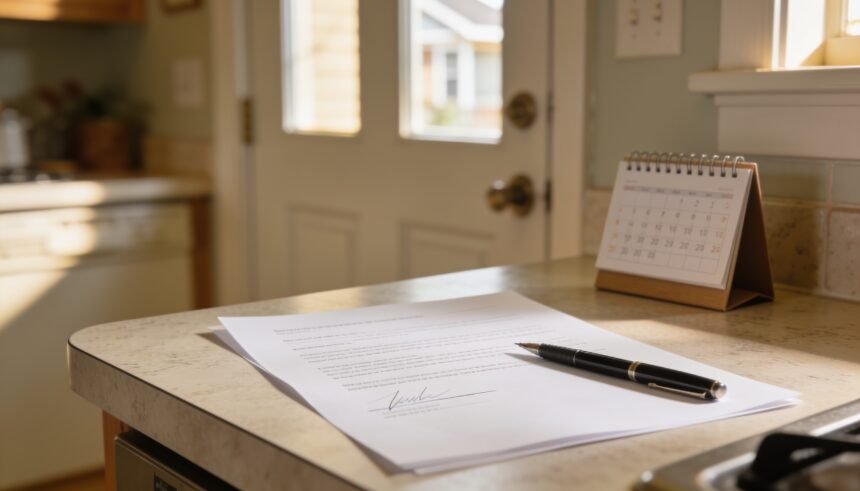
- Find the end date and write it down. Count business days, not calendar days, and start from the day after you received the written agreement. Put the date on the front of the contract and in your bill calendar so the window does not quietly close over a weekend.
- Cancel in writing. A phone call is hard to prove. Use the cancellation form or notice the contract came with, or send an email or letter that names the agreement, the date you signed it and that you are cancelling within the cooling-off period. Keep a copy with your receipts and warranty records.
- Do not pay or accept supply in the meantime. For unsolicited sales the seller should not be taking money or installing anything during the window. If they have, the cooling-off right still stands, but it is simpler to cancel before anything is delivered.
- Expect a refund of what you have paid. Where a payment was taken, cancelling within the period entitles you to it back. Note the date you cancelled and chase it if it has not appeared within a reasonable time.
- If the seller pushes back, go to the regulator. For unsolicited sales that is your state or territory consumer protection agency and the ACCC. For energy it is your state energy ombudsman. For insurance it is the insurer’s internal complaints process first, then the Australian Financial Complaints Authority.
What to check before you sign
A cooling-off period is a safety net, not a reason to sign something you have not read. Before agreeing to any household service:
- Ask the salesperson directly whether a cooling-off period applies and how long it runs, and get the answer in the written contract.
- Look for the total cost over the full term, not the monthly figure, and note any exit fee that applies after the cooling-off window closes.
- Check whether the contract rolls over automatically. Those are the ones worth filing with the once-a-year costs you review in advance.
- Store the signed copy, the cancellation form and the cooling-off end date together in your family paperwork system. If you ever need the right, you need the paper the same day.
The trade-off worth knowing
Businesses that sell at the door or by phone sometimes offer a discount for signing on the spot. The cooling-off period is the reason that pressure does not have to work: you can sign, take the paperwork inside, read it properly and still cancel within 10 business days if the deal does not stack up. The thing that undoes people is not the rule but the diary. Write the end date down the day you sign.
How we checked this
Reviewed on 6 October 2026 against the ACCC’s guidance on unsolicited consumer agreements, the Australian Energy Regulator’s guidance on energy contract cooling-off rights and ASIC Moneysmart’s guidance on insurance cooling-off periods. This package is general consumer information, not legal advice, and makes no claim about any individual contract, provider or penalty amount.
The one-page family week
One printable page that holds the whole week: meals, school, activities and who is doing the pickup. Free, and we send one useful email a week.
One email a week. No spam, unsubscribe in a click.