What is in this guide
- Gather what you already have
- 1. Check the space with someone sitting in it
- 2. Choose the smallest layout that suits your child
- 3. Put a small book selection within reach
- 4. Check the light at reading time
- 5. Keep decoration to one choice
- What if the nook does not fit or gets ignored?
- Try the layout before spending
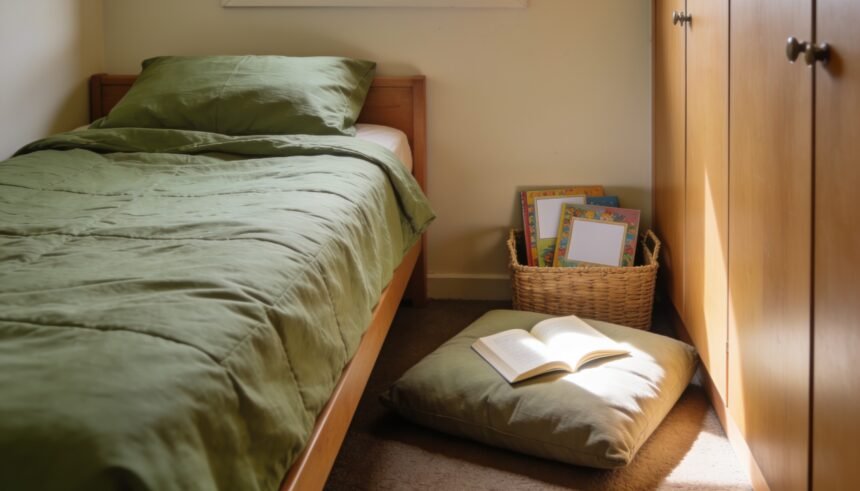
Set up a reading nook in a small kids bedroom with one comfortable place to sit, a small selection of books within reach and light that falls on the page. Start with furniture you already own, then check that the nook leaves the door, wardrobe and everyday walking space usable.
The nook does not need its own armchair, bookcase or decorative canopy. In a cramped room, a book basket beside an existing seat may be the whole setup. Give each piece a job before adding anything else.
Gather what you already have
Start with a cushion or chair your child likes sitting on, a basket or open tub, and a few books they want to read. Keep a tape measure handy for checking the space. Use the room’s existing lighting for the first layout trial.
Ask your child where they would choose to read. Offer two workable spots rather than asking them to design the whole room. Their preference might be beside the bed instead of the empty corner you had in mind.
If toys currently fill both options, make room before rearranging furniture. The guide to small bedroom storage for a child's room covers the wider storage job. Here, the aim is simply to free enough space for a reader and their books.
1. Check the space with someone sitting in it
An empty corner can look generous until a person sits down and opens a book. Put the proposed cushion or chair in place and have your child try it. Check where their legs go, where the book rests and whether they can reach the basket without moving the seat.
Open the bedroom door and wardrobe doors fully. Pull out any nearby drawer or under-bed tub that the family uses. Walk between the bed and the doorway while the seat is occupied. If you need to shift the nook for each of these jobs, choose another spot or make it a pack-away setup.
If you regularly read together, try the space with an adult as well. A corner that suits solo reading might leave the adult perched on the bed with nowhere to put the book. Decide whether shared reading will happen here or somewhere else in the home.
2. Choose the smallest layout that suits your child
Use the following options as a starting point, then compare them in the actual room.
| Layout | Try it when | Main trade-off |
|---|---|---|
| Floor cushion and book basket | Your child likes sitting on the floor and the pieces have somewhere to go afterwards | The floor space is occupied while the nook is in use |
| Existing chair and nearby books | A chair already fits and your child prefers it to floor sitting | The chair keeps its footprint even when nobody is reading |
| Book basket beside the bed | There is no spare floor area for a separate seat | Reading uses the bed, so the books need a separate home afterwards |
A floor setup is worth trying before buying a dedicated reading chair. Use a cushion you own and check whether your child actually chooses it. If they keep moving to a chair elsewhere, a larger cushion is unlikely to solve the preference.
For an existing chair, keep the book basket beside it rather than adding a side table automatically. A side table earns its space only if there is something that needs to sit on it.
The bedside option is still a reading space. Give the current book a place in the basket when reading finishes, rather than letting a stack spread across the pillow and bedding.
3. Put a small book selection within reach
Start with a handful of books: a current favourite, something your child has chosen and another option they might open. This is an editorial starting point, not a recommended reading quota. Keep the rest of the collection in its existing storage.
Try the basket with the largest book in the selection. Picture books may need a different container from novels. Check that your child can take one out and put it back without emptying everything onto the floor.
For picture books, try facing a few covers towards the reader in an open basket. For novels, try spines facing out on an existing shelf. Choose whichever arrangement lets your child find the book they want; there is no need to display every cover.
Give library books a distinct place within the setup, such as one end of the basket. Keep borrowing receipts and return reminders with your usual household paperwork. The nook should hold reading choices, not become another pile of school notices.
4. Check the light at reading time
Sit in the proposed spot at the time your child would normally use it. A corner that looks bright during a morning tidy-up may look quite different after school or in the evening.
Open a book and check whether the reader’s body casts a shadow over the page. Try turning the seat before changing the lighting. If direct afternoon sun falls across the spot, adjust the blind or compare another position.
Test the evening setup too. If it needs a lamp, plan where the lamp and its lead would go before committing to that layout. A location that relies on a lead across the doorway is a reason to reconsider the spot.
If the only useful seat is the desk chair, keep leisure-reading books in a separate basket so they can be moved when homework starts. The guide to making a kids room work as a study space covers the desk setup; this nook does not need to duplicate it.
5. Keep decoration to one choice
Let your child choose a cushion cover, a throw or another item already available at home. One choice is enough to give the nook a recognisable place without turning the setup into a decorating project.
Leave out extra rugs, floor baskets and ornaments if they make the room awkward to use. A reading corner can look inviting with books and a seat alone. Permanent shelving or other wall fittings can wait until you know the position works, especially in a rental.
In a shared bedroom, agree whether the nook belongs to both children and where each child’s current books will go. Two small selections in one basket may be more practical than two separate seats. For decisions about beds and personal zones, use setting up a shared bedroom for two.
What if the nook does not fit or gets ignored?
If the room has no spare corner, use a portable basket and the bed or an existing chair. Put the basket away in a nominated spot after reading. There is no need to remove useful clothing storage to create a permanent nook.
If your child ignores the new space, ask what feels awkward. Try one change at a time: a different seat, another position or books they have selected themselves. An unused nook does not establish anything about their interest in reading.
If books keep spreading across the floor, reduce the selection or change the container. If the cushion keeps migrating into the living room, that may be where the child prefers to read. Keep the books portable rather than insisting on the bedroom corner.
Try the layout before spending
Use one seat and one basket for a week as a suggested trial. Notice whether the spot gets used, whether the room still works and whether putting the books away is straightforward. Then change the part that causes friction. Buy an extra piece only when you can name the job it will do.
The one-page family week
One printable page that holds the whole week: meals, school, activities and who is doing the pickup. Free, and we send one useful email a week.
One email a week. No spam, unsubscribe in a click.