What is in this guide
Keep the useful furniture and put changing interests into bedding, artwork and a small display area. For kids bedroom ideas that last, aim for a room you can update in parts, with enough personality for your child now and no promise that their favourite colour will stay the same.
Start by deciding what still works
Before choosing a colour scheme, walk through the room with your child. Ask what they like, what feels too young and what gets in the way. Those are different problems. A disliked dinosaur picture calls for a different response from a drawer that no longer holds the clothes.
Make three short lists: keep, change now and decide later. Put functioning pieces on the keep list even if they do not match. On the change list, name the actual problem: the cover feels babyish, there is nowhere for drawings, or the floor is crowded. Avoid writing only “new bedroom”.
Give sentimental things their own decision. A much-loved toy does not need to disappear to make a room feel older. Your child might want it beside the bed, tucked away or displayed with newer interests. Leave that choice open.
Choose colours around what you are keeping
A flexible room does not have to be beige. Start with the existing floor, curtains and largest pieces, then choose a background colour you and your child would be happy to see beside several different bedding options. Blue, green or pink can be a background just as readily as white if you like the combinations.
As a simple planning exercise, choose one main colour and one accent. Gather the actual items you already own rather than relying entirely on pictures. Lay the doona cover beside the curtains and look at them in the room before deciding anything needs replacing.
If the carpet and curtains are fixed, work with them. For a rental refresh that leaves the walls alone, concentrate on the bed linen and objects you can take with you. There is no need to solve an existing wall colour by buying a full matching set of accessories.
Put the theme where you can change it separately
Let your child have the space theme, favourite animal or football colours. The useful question is how much of the room needs to carry it.
| Where the interest goes | What a later change involves | Editorial choice |
|---|---|---|
| A drawing or a few displayed objects | Swap the display | Start here when enthusiasm is new |
| A doona cover | Change the cover when wanted or needed | Give one prominent item the theme |
| Curtains and a rug as well as bedding | Decide what to keep across several pieces | Choose these separately rather than as a set |
| A mural or themed furniture | Rework a wall or reconsider a large piece | Choose only if the household wants that commitment |
Matching everything is an option, but it ties more decisions to the same interest. A room with a plain existing bed, colourful bedding and your child’s own artwork can feel personal without every object agreeing.
Do not replace a perfectly usable themed item just to make the room more adaptable. Use it while it is wanted. Apply this approach to the next decision, rather than turning it into another reason to shop.
Keep furniture decisions separate from decorating decisions
Ask whether the room needs a different piece of furniture or simply a different look. Keep an existing bed or storage unit that still suits its job. A mismatch in timber colours is a matter of taste, not a reason on its own to replace either piece.
For anything you are considering, describe its job without referring to the theme. “Holds books and drawing materials” is a clearer brief than “goes with the jungle room”. Also consider whether you would still want it if the surrounding colours changed.
Avoid filling an empty patch just because it appears unfinished. Leave room for what your child actually does there. If storage is the problem, work through storage options for a small child's bedroom before adding a decorative unit. If a desk is being considered, first decide whether study space belongs in the bedroom.
Give your child a choice you can follow through on
Agree on the scope before looking at inspiration together. You might be keeping all the furniture and changing only the bedding, or rearranging the display using things already at home. Say that clearly, including whether there is money available to spend.
Within that scope, offer meaningful choices. Ask which pictures stay, which colour they want to see from the doorway or which collection deserves display space. Avoid offering a whole-room makeover when the actual plan is a new cover.
For siblings, leave room for different preferences. The beds do not need identical covers. Start with each child’s own area, then agree on the shared parts; planning a bedroom for two children covers the wider layout decisions.
Try a small refresh before committing to more
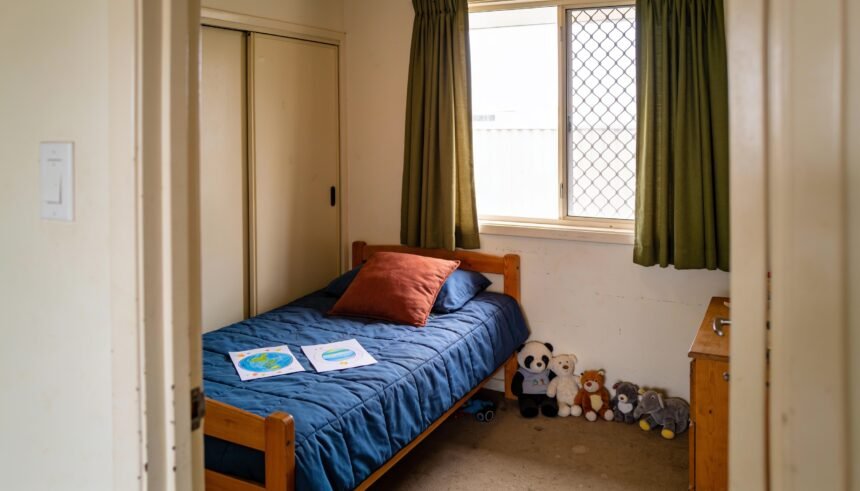
Consider a hypothetical room with a timber bed, animal bedding, assorted tubs and an existing green curtain. The child now wants a space-themed room. Keep the bed and curtain, move the animal pictures out of display and try the child’s space drawings with the bedding already there. If a cover is due for replacement, that can carry the new interest.
Then assess what remains unsatisfactory. If the floor is still crowded, another themed accessory will not address it. If getting dressed is awkward, look at organising a wardrobe children can use. If the child simply misses the old animals, put some back. The first version does not have to be permanent.
Pause once the agreed changes are done. Use the room before adding anything else, and keep a short list of problems that actually arise. A room can be finished for now while still having space for the next drawing, hobby or change of mind.
Your next step: make the keep, change now and decide later lists with your child. Choose one change you can complete with what is already in the house.
The one-page family week
One printable page that holds the whole week: meals, school, activities and who is doing the pickup. Free, and we send one useful email a week.
One email a week. No spam, unsubscribe in a click.