What is in this guide
Texture is usually the objection, not taste.
A child who will not eat cooked carrot will frequently eat raw carrot. A child who rejects a soft roasted vegetable will eat the same vegetable crisp. Wet, slimy, mushy and stringy are the properties that get refused, far more often than flavour.
That changes the whole approach. Instead of a different vegetable, try a different preparation of the same one.
One thing first: this is general mealtime guidance, not dietary or clinical advice. If a child is eating a very narrow range, losing weight, has stopped eating foods they previously accepted, or mealtimes are causing real distress, that is a conversation with a GP, a child health nurse or a dietitian rather than something to manage from an article. Feeding difficulties are common, they are treatable, and getting help early is better.
Start with the preparation, not the vegetable
Raw beats cooked for most children. Raw carrot, cucumber, capsicum, snow peas, celery and cherry tomatoes are accepted far more often than their cooked versions. Crunch is reassuring, softness is not.
Crisp beats soft. Roasted until genuinely crisp at the edges, or air fried, works where steamed does not. Roast potato, pumpkin, sweet potato and even broccoli become a different food when they are crisp.
Dry beats wet. Anything that glistens, pools liquid or comes with sauce it did not ask for gets refused. Serve components separately and let the child combine them.
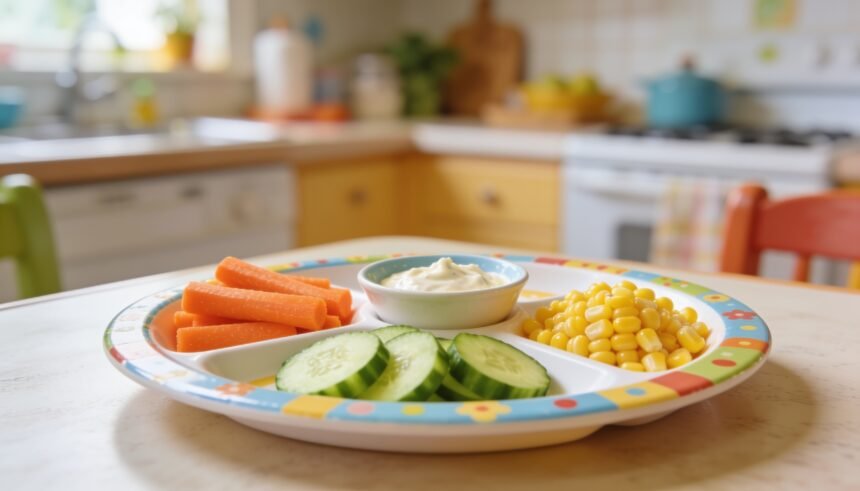
Separate beats mixed. A plate where things are not touching is not fussiness for its own sake, it is predictability. A child can eat a mixed casserole only by trusting everything in it.
Cold beats hot, sometimes. Leftover roast vegetables from the fridge are accepted by some children who rejected them hot.
Same shape every time. Cutting a cucumber into rounds when it is usually sticks is a genuine change from a young child’s point of view.
Vegetables that have the best hit rate
Not a guarantee, and a reasonable place to start.
Corn, on the cob or off it. Sweet, familiar and dry.
Carrot sticks, raw.
Cucumber, raw and peeled if the skin is the objection.
Cherry tomatoes, for children who like the pop, and rejected entirely by those who do not.
Capsicum strips, particularly red, which is sweeter.
Peas, frozen and barely cooked, or frozen and still cold, which a surprising number of children prefer.
Roast potato and sweet potato, crisp.
Pumpkin, roasted until the edges caramelise.
Broccoli florets, raw or roasted crisp, and much less often steamed.
Snow peas and sugar snaps, which are sweet and crunchy.
Corn, cucumber and carrot are the three most commonly accepted and are a reasonable base to build from.
Serving approaches that help
Put it on the plate without comment. Repeated exposure with no pressure is the approach most Australian child health guidance describes, and the absence of comment is as important as the presence of the vegetable.
Serve a known safe food alongside. A meal with nothing acceptable on it is a meal a child cannot eat, and that raises the stakes on everything.
Let them serve themselves from a shared platter. Choice reduces resistance markedly.
Dips. Hummus, yoghurt-based dips, tomato sauce. A dip is not a failure, it is a delivery mechanism.
Let them help prepare it. Washing, peeling with a safe peeler, arranging on the plate. Children eat what they had a hand in more often.
Grow something. A pot of cherry tomatoes or a few lettuce plants does more than any strategy on this list for some children.
Eat together, eating the same thing. Modelling is slow, unglamorous and genuinely effective.
On hiding vegetables
Blending vegetables into sauces, muffins and bolognese is fine as nutrition and does nothing for acceptance, because the child never learns to eat the vegetable.
Do it if you want the nutrition, and do it in addition to serving the vegetable visibly rather than instead of it. Hiding alone is a long-term dead end.
Do not hide and then reveal. A child who discovers they were tricked becomes more suspicious of everything on the plate, and trust at the table is the thing you are actually building.
Mince, chicken and lentils covers adding grated vegetables to meals, which is a budget technique that happens to do this as well.
What tends to make it worse
Pressure, bribes and bargaining. “Three more bites” makes the vegetable the price of the meal ending.
Dessert as a reward for vegetables, which teaches that vegetables are the unpleasant thing and dessert is the good thing.
Making a separate meal every night, which removes any reason to try the family meal.
Commenting on what they did or did not eat. Attention on refusal reinforces refusal.
Big changes at a bad moment. A tired child at the end of term is not going to try something new.
Expectations
It is usually a phase. Narrowing of accepted foods is common in toddlers and often eases, though not always on the timeline a parent would like.
It takes many exposures. A food refused repeatedly can still be accepted later, and the number of attempts required is larger than most parents expect.
One vegetable at a time.
A child who eats three vegetables is doing fine. Variety is a goal, not a requirement, and a household eating well overall matters more than any individual meal.
When to ask for help
See a GP, child health nurse or dietitian if: the range of accepted foods is very narrow or shrinking, foods previously eaten are being dropped, there is weight loss or poor growth, there is gagging, vomiting or choking, mealtimes are distressing, or you are worried.
Sensory sensitivities are real and recognised, and a child whose eating is driven by texture aversion across many foods may benefit from proper assessment rather than more strategies.
Australian dietary guidance is published by the NHMRC, and no supplement or dietary change should be started without professional advice.
Next: beating the 5pm what-is-for-dinner panic covers the wider dinner problem, a four-week rotating family dinner plan covers predictability, which helps here, and mince, chicken and lentils covers getting vegetables into meals.
The one-page family week
One printable page that holds the whole week: meals, school, activities and who is doing the pickup. Free, and we send one useful email a week.
One email a week. No spam, unsubscribe in a click.