What is in this guide
Unpack camping gear, dry it thoroughly and record anything missing or damaged before putting it away. Check the storage spot too: a hot or damp shed may be the wrong place for your tent and bedding, even if that is where the camping boxes normally live.
Use this storing camping gear checklist after the trip, while you can still remember which zip caught and which bag was short of pegs. The sorting steps are editorial suggestions; care instructions for your particular equipment take priority.
1. Make three groups before filling the shelves
Give each item a destination: ready to store, needs cleaning or drying, or needs attention. Use separate spaces or clearly marked containers so an unfinished job does not disappear into the ready pile.
- Empty bags and pockets, including chair pockets and the tent’s internal organisers.
- Return clothing, towels, food and household utensils to their usual places.
- Put borrowed equipment together with its owner’s name and any missing parts noted.
- Keep the carry bags with the equipment they belong to while sorting.
If you arrive home late, start by opening up the tent and bedding rather than organising every peg. Leave a short list of the remaining jobs where the next person unpacking will see it. A closed bag on a shelf should not be the signal that everything inside has been checked.
2. Open the tent and check each separate piece
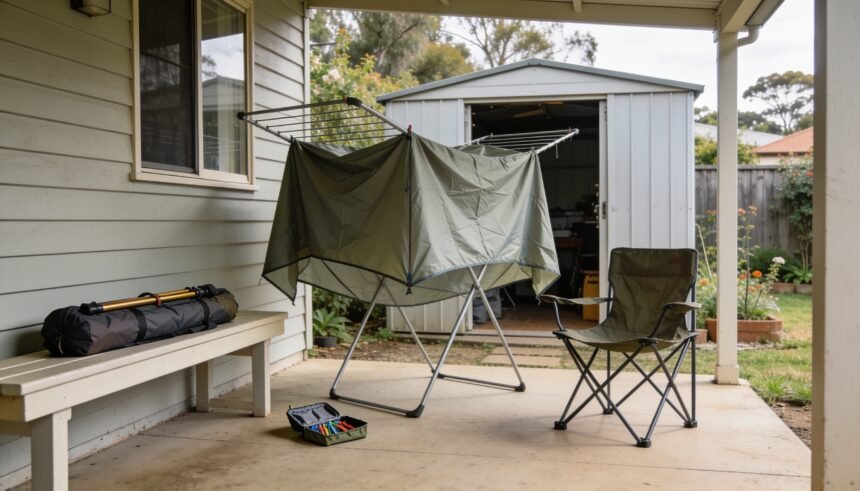
REI’s tent storage guidance recommends drying the tent completely, then storing it loosely somewhere cool and dry. It suggests pitching indoors or in outdoor shade, or draping the fabric if there is no room to pitch it. Damp storage can damage coatings as well as encourage mildew.
Work through the inner, fly, groundsheet and carry bag separately. Follow the tent maker’s cleaning instructions for dirt or marks, and inspect folded areas before repacking. Do not set an arbitrary drying deadline just because you want the hallway back.
While each piece is open, make a note of torn mesh, a troublesome zip or peeling material. Photograph the affected area and the model label for a later enquiry. Keep unresolved gear in the attention group; this is a chance to record faults, not proof that the tent will perform properly next trip.
3. Give sleeping bags and mats their own storage plan
Take sleeping bags out of their travel sacks. REI recommends thoroughly drying them and using a large breathable storage sack in a cool, dry location. Its guidance applies to both down and synthetic fill: prolonged compression can reduce the insulation’s ability to regain loft.
Check each bag’s care label before washing. Separate liners and pillows for their own care, and put anything awaiting washing with the laundry rather than back into the camping kit. If several family members have similar bags, add names to the storage bags so the next packing job is straightforward.
Mats need a separate decision. REI distinguishes self-inflating foam mats, which it recommends storing partly inflated with the valve open, from air mats. It also says the mat and its sack should be thoroughly dry. Check your model’s directions for valve position and storage shape rather than treating every mat as the same product.
Write down any mat that lost air during the trip. Include whose mat it was and what happened, without guessing the cause. If the sleeping arrangement itself needs changing, the guide to prioritising camping gear beyond the tent can help organise that decision separately from this pack-away job.
4. Reunite the small parts before closing bags
Count parts against the equipment list or instructions supplied with the item. Avoid assuming that every tent needs the same number of pegs or that similar-looking poles are interchangeable.
- Match pole bags, peg bags and guy ropes to the correct shelter.
- Pair mats with their pump sacks or supplied adaptors.
- Put chair and table carry bags with the matching furniture.
- Keep the correct charging lead or manual reference with each light’s inventory entry.
For lights and other powered equipment, consult the manufacturer’s storage instructions, including battery guidance. This checklist does not provide a universal charging or battery-removal routine.
Use a specific missing-parts note, such as “blue tent: peg bag missing”, rather than “camping bits”. Check the household’s existing spares before adding anything to a shopping list. The family camping packing list is useful for reconciling what came home, especially when equipment travelled in more than one car.
5. Choose the storage location before choosing a tub
Assess the actual space available. REI’s tent, bag and mat guidance favours cool, dry conditions; its sleeping bag and mat advice warns against temperature extremes. If your shed gets hot or damp, look for indoor room for those items instead.
A split arrangement may be easier than fitting every camping item into one place. For example, allocate cupboard space to bedding and tent fabric, then assess the remaining equipment against its own instructions. Record where the pieces live so nobody mistakes a partly empty camping tub for a missing kit.
When space is tight, decide what must fit before buying containers. Measure the shelf and doorway, allow for lifting the container out, and group equipment by the task it serves. Keep things you borrow for ordinary weekends accessible rather than underneath the entire holiday setup. These are organisation choices, not promises that a particular box will protect every material.
6. Leave a usable note for the next trip
Keep one inventory note with three headings: stored, still to do, and missing. Under stored, record locations. Under still to do, name the item, the fault and the next action, such as contacting the maker with a photograph. Under missing, list the exact part before considering a replacement purchase.
Assign unfinished jobs to someone and choose a realistic date to revisit them. Update the note when the work is done rather than leaving an old warning attached to equipment that has already been repaired.
Storage checks do not replace checking travel and outdoor gear before departure. Leave that reminder on the inventory, particularly if the kit will sit unused for months.
Your next step: open the tent bag and begin the drying check before putting the other camping boxes on their shelves.
The one-page family week
One printable page that holds the whole week: meals, school, activities and who is doing the pickup. Free, and we send one useful email a week.
One email a week. No spam, unsubscribe in a click.