
What is in this guide
Read the material and construction description before the star rating. A high rating tells you other buyers were satisfied at the time; it does not tell you whether the product will still be usable in six months with your particular pet.
Start with what the product actually touches
Chewable, washable or weight-bearing items need different scrutiny to something purely decorative. A dog bed, a collar or a food bowl is handled or chewed daily, so construction quality matters more than it does for an occasional-use item like a costume or a seasonal toy.
Decide which category your purchase falls into before you start comparing listings. That decides how much time the check below is worth spending.
Read the material description properly
Look past the marketing adjectives to the actual material named. “Premium” and “durable” are not materials. Stainless steel, solid brass, nylon webbing, closed-cell foam and machine-washable polyester cover are specific and checkable; “eco-friendly fabric” or “heavy-duty design” on their own are not.
Where a listing gives a thickness, weight capacity or gauge, that is more useful than a general durability claim. A stated weight limit for a lead or harness clip tells you something concrete about your own dog’s size against the product.
Check the parts that fail first
Most pet gear does not fail all at once. It fails at a specific weak point: a stitched seam, a clip mechanism, a zip, a glued join or a chew-exposed edge. Before buying, look for:
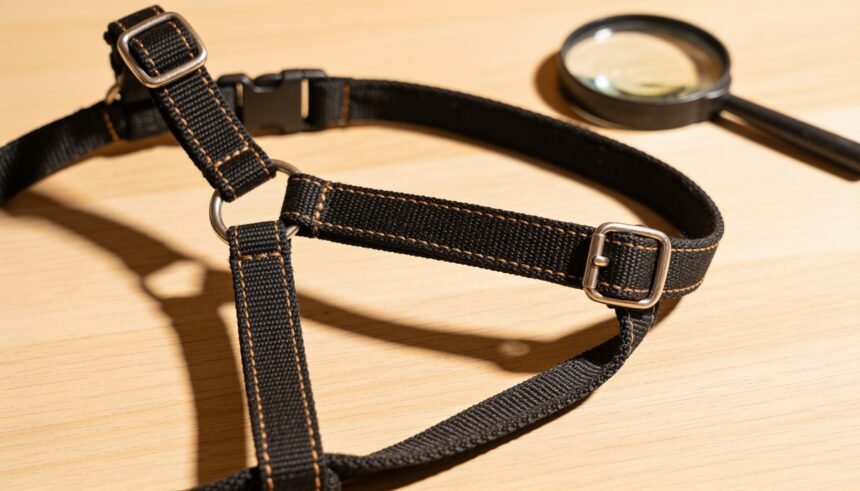
- Stitching description or close-up photos, particularly on anything load-bearing like a harness or a carrier strap
- Hardware material, since a plastic buckle on a lead for a strong dog is a different proposition to a metal one
- Seams and closures on a bed or mat, which is where stuffing usually escapes first
- Whether the design actually holds up under daily use, the same question worth asking about a slow-feed bowl designed to stop a dog eating too fast; see stopping a dog inhaling dinner in twelve seconds
Weigh washability against your household
A product that cannot be washed becomes a product you eventually throw out, regardless of how well it was made. Check whether a cover is removable, whether the whole item is machine washable, and whether the listing states a wash temperature. For anything that touches food or sits on the floor daily, washability is often more relevant to lifespan than raw material toughness.
Use reviews for failure patterns, not star counts
Skim reviews specifically for repeated complaints about a particular failure, such as “seam split within a month” or “buckle snapped.” A cluster of the same specific complaint is more informative than an average star rating, which blends fit, price opinion and product quality into one number.
Match the product to the job, not the other way around
The toughest, most expensive option is not automatically the right buy. A product bought for an occasional job, like a travel-only harness, does not need the same durability as an everyday enrichment toy that gets chewed daily. What to put in a Kong: stuffing recipes that actually work works through this same job-first thinking for a specific product category.
Your next step: before your next pet purchase, find the material name, the weak-point description and the wash instructions in the listing before checking the price.
The one-page family week
One printable page that holds the whole week: meals, school, activities and who is doing the pickup. Free, and we send one useful email a week.
One email a week. No spam, unsubscribe in a click.