What is in this guide
Puppy-proofing is a job you do on the floor. Kitten-proofing has to be done at every height in the room, because within a week the kitten will have been on the bench, the bookshelf and the top of the fridge, and will have found the one gap behind the washing machine.
The other difference is that a kitten squeezes. If its head fits, the rest follows.
The things that actually hurt kittens
In rough order of how serious and how common:
- Falls from height, particularly balconies and open upper windows
- String-like things swallowed, which is the classic and genuinely dangerous cat emergency
- Toxic plants, with lilies in a category of their own
- Being shut inside something, including appliances
- Cords and cables
String is the one to take seriously
Cats are built to pull thread-like things backwards into the mouth, which means a kitten that starts swallowing string usually cannot stop. A swallowed length of string, tinsel, ribbon or elastic can do severe internal damage, and it is one of the more common reasons a cat ends up in surgery.
So:
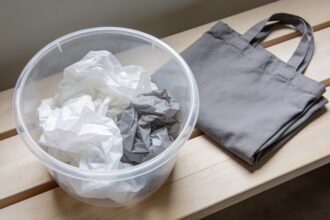
- Sewing thread, dental floss, ribbon, elastic hair ties, tinsel and cooked meat netting all go in a closed container, not a bowl on a shelf
- Cut the handles on paper carry bags, which are a loop a kitten can wear and panic in
- Toys with string or feathers on a wand are supervised play only, put away afterwards
- If you ever see string hanging from either end of a cat, do not pull it. That is an immediate vet trip
Lilies, which are different from the rest
Most toxic plants make a cat unwell. Lilies can kill them, and the amount needed is very small. All parts are dangerous, including the pollen, and a cat that brushes past and grooms itself afterwards has ingested some.
True lilies and daylilies do not belong in a house with a cat. Not in a vase, not in a bunch of flowers someone brought over, not in the garden bed by the back door. This is one of the few absolute rules in pet ownership and it is worth telling the people who send you flowers.
Other common plants toxic to cats include sago palm and cycads, oleander, dieffenbachia, philodendron and monstera, pothos, azalea, and daffodil and tulip bulbs. Safe alternatives exist, and cat grass is worth growing deliberately so there is something they are allowed to chew.
Height, and the windows
This is the section people skip until something happens.
- A flyscreen is not a fall barrier. It is designed to keep insects out, and a cat that leans or jumps at it will push it out of the frame. This is the single most common serious injury in apartment cats and it has a name in veterinary literature
- Upper windows need a proper restrictor, a security screen, or to stay closed
- Balconies need full enclosure, or the cat does not go out there. A cat can and will jump onto a railing
- Check the fall path below any window you plan to leave open even a little
Clear the high surfaces too, because the kitten will get up there. Breakables off the shelf, nothing balanced on the edge of the bench, and anything heavy on a bookshelf actually secured.
Appliances and gaps
Kittens sleep in enclosed warm places, which puts them exactly where you do not want them.
- Washing machine and dryer doors closed, always, and check inside before every load. This is worth making a household rule rather than a habit
- Dishwasher closed
- Check the oven and the space beside the fridge
- Recliner chairs and sofa beds. The mechanism underneath is a genuine crush hazard and a kitten will sleep in it. Check before operating the footrest, every time
- Block gaps behind cabinetry and under the bath, where a kitten can get in and not out
- Toilet lid down, particularly with an in-bowl cleaner
- Check the clothes dryer, the laundry basket and the ironing board cover before using them
Count the kitten in and out of every room. For the first fortnight, know where it is before you close a door.
Cords and small objects
- Blind and curtain cords secured high, which is the same requirement Australian homes already have for children. A hanging cord loop is a strangulation risk to a kitten as well
- Power cables in sleeves or behind furniture
- Phone chargers, which are chewable and live
- Hair ties and rubber bands, which are the most commonly swallowed household object in cats
- Button batteries, medication, and anything small on a bench
Set up the one room first
A whole house is overwhelming for a kitten and it makes supervision impossible.
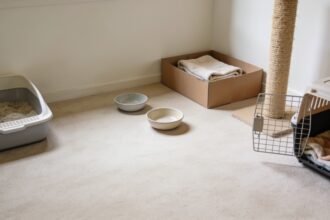
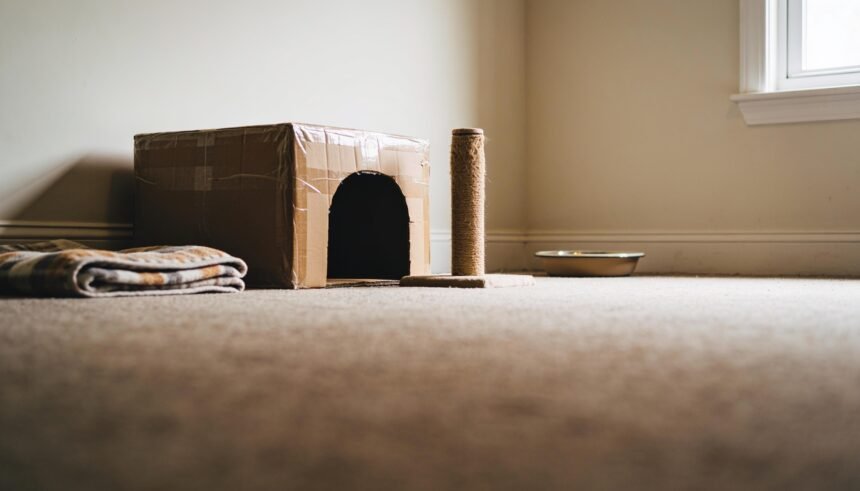
Start with one room containing the litter tray, food and water well apart from each other, a bed, a scratching post and somewhere to hide. Expand to the rest of the house over the first week or two as the kitten settles.
Where the litter tray goes matters more than people expect, and the reasons are covered properly in where to put the litter tray.
If there is already a cat or a dog in the house, the confined room is also the first half of the introduction, which is its own process and covered in introducing a kitten to a resident pet.
Summer, and the heat
Two Australian-specific points.
Do not leave a kitten confined in a room that gets hot. A closed laundry or a west-facing room in February is dangerous rather than uncomfortable, and the same fixes that work for a child’s bedroom work here: shade the glass, close the room up during the day, move air through it in the evening. Getting a room dark and cool enough covers the method.
Check the car. If the kitten has access to a garage or carport, check under and inside the car before starting it, particularly in cold weather when a warm engine bay is attractive.
Before day one
- One room set up, litter tray placed, food and water apart
- All string-like objects contained and put away
- Lilies out of the house entirely, and every other plant identified
- Every window checked, flyscreens understood as insect screens rather than barriers, balcony closed off
- Blind cords secured high
- Appliance-door rule agreed with everyone in the house
- Recliner rule agreed
- Vet’s after-hours number and the Animal Poisons Helpline in your phone before you need them
The one-page family week
One printable page that holds the whole week: meals, school, activities and who is doing the pickup. Free, and we send one useful email a week.
One email a week. No spam, unsubscribe in a click.