What is in this guide
Cut your grocery bill by reviewing what you paid for, protecting the meals your household enjoys and changing only purchases with a workable alternative. Start with your last receipt: look for duplicates, unused ingredients and pack choices before cutting the quantity or variety of food you actually eat.
1. Separate food spending from the supermarket total
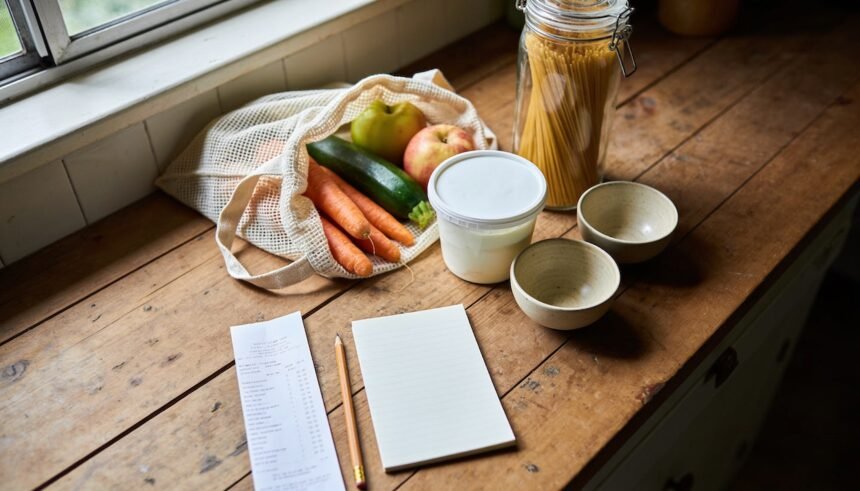
Take a recent receipt or online order and mark the food and drink items. Put cleaning supplies, toiletries and other household purchases in a separate group. Keep those expenses in your household budget, but avoid treating a detergent restock as evidence that dinner became more expensive.
Add any smaller food shops from the same period. If you only record the main trolley, the bread, milk and extra ingredients bought later disappear from the comparison.
Beside each food item, write one of three notes: used as intended, still waiting, or would not buy again. Something still in the cupboard is not automatically wasted. The question is whether it has a job before you buy another pack.
For the wider household allowance, use a family budget that survives a real month. Here, the task is to find specific purchases worth changing.
2. Decide what a cheaper shop must still provide
Write down the breakfasts, lunches, dinners and snacks needed before the next shop. Include meals away from home and nights when nobody has time for much preparation. Eat for Health recommends planning meals and snacks, using a shopping list and knowing how you will use what you buy.
Set your own requirements before comparing alternatives. These might include a familiar breakfast, enough lunch food, vegetables people will eat and a quick dinner for the late-shift night. Keep any existing dietary requirements in place.
Do not make a lower checkout total the only test. If the new basket leaves you short of lunches or requires cooking you cannot fit in, revise it. A convenience item can stay when it has a clear purpose. Put it on the list deliberately rather than treating all prepared food as a failure.
3. Give each possible change a meal-level check
Choose two purchases from the receipt to reconsider. Start with something marked unused or disappointing, or an item for which you already know an acceptable alternative. Avoid changing the whole basket at once: you need to know which choices are worth repeating.
Use this worksheet before the next shop. These are options to compare, not claims that the alternative always costs less.
| Purchase to review | Possible change | Check before buying |
|---|---|---|
| A vegetable bought for one recipe | Use a vegetable already needed for another meal | Will both recipes still work and be eaten? |
| Individual yoghurt pots | Compare a larger tub | Will the household finish it, and is portioning practical? |
| A familiar branded staple | Compare one smaller trial pack of an alternative | Does it meet the same ingredient and preparation requirements? |
| Ingredients for an ambitious dinner | Choose a familiar quick meal | Does the full meal fit the available time and spending limit? |
| A second pack already in the cupboard | Leave it off this shop | Is the existing amount enough until the next shop? |
Keep the sauce, seasoning or small extra that makes a meal enjoyable if it fits the budget. Assess the finished meal, rather than removing an ingredient solely because it seems optional. For broader meal and shopping planning, see feeding a family on a weekly grocery budget.
4. Compare the pack and the amount payable
The ACCC explains that unit prices show cost using a standard measurement, helping you compare similar products. Check that both labels use the same unit, then compare the full pack prices as well. How to compare unit prices for household basics explains the calculation when the measurements differ.
Ask three separate questions: is the alternative suitable, is its price competitive for the quantity, and can you afford and use the pack? A large tub with a lower unit price still requires paying for the whole tub today.
Check specials against your list. If an offer requires multiple packs, decide where each will go and when it will be used. Leave it behind if it displaces food needed this week.
If comparing shops, use your actual list and include delivery charges or the cost of an extra trip. With no car or little spare time, start with choices at the shop you can readily use.
5. Check whether the changes survived the week
At the next shop, review the two changes. Was the replacement eaten? Did it need extra ingredients? Did anyone need another meal because it was insufficient or unsuitable? Record those outcomes beside the price comparison.
Compare food spending over similar periods, including top-ups. Note visitors, meals out and pantry restocks rather than treating different weeks as identical. If you used food already at home, record that too: a lower checkout total during a cupboard clear-out is not proof of an ongoing saving.
Keep changes that work for your household. Reverse an unsuccessful swap without abandoning the whole exercise. Before writing your next list, take one receipt and mark the two purchases you will review.
How we checked this: ACCC and Eat for Health guidance checked on 21 September 2026. The receipt worksheet and review method are editorial suggestions. No products were tested and no retail prices or savings are claimed.
The one-page family week
One printable page that holds the whole week: meals, school, activities and who is doing the pickup. Free, and we send one useful email a week.
One email a week. No spam, unsubscribe in a click.