What is in this guide
Serve the same dinner with the green ingredients kept separate until people assemble their plates, and include something your child already eats. Reserve their share before stirring through spinach, peas or pesto, so you can offer familiar food from the meal you are already cooking.
One dinner can look different on different plates. The useful change is deciding where ingredients come together, rather than trying to pick every green fleck out after serving. This approach gives you a practical plan for tonight; it does not promise that your child will eat the greens.
Check what makes this particular dinner difficult
Ask a concrete question before cooking: “Would you like the pasta with tomato sauce beside it, or on top?” If the answer is about green pieces touching the pasta, write that down. If the sauce itself is unwanted, leaving out the parsley will not resolve the problem.
Raising Children Network notes that colour, texture, shape and taste can all feature in food dislikes. You do not need to decide which explains your child’s eating before making a serving adjustment. Work with what they tell you about this meal, without assuming all green foods will get the same response.
Choose a familiar component your child currently eats, rather than something they accepted months ago. Plain pasta, a potato, a wrap or a filling might fit, depending on the household. These are examples of components to reserve, not instructions to feed every child the same foods.
For a broader choice of meal formats, use dinners for a household with one fussy eater. Here, keep the focus on the dinner already planned.
Mark the point before the green ingredients go in
Read through your usual recipe and find the first step that mixes green ingredients into everything. That might be tossing pasta with pesto, folding spinach through a filling or scattering herbs over a finished dish.
Put the serving bowl or plate beside the cooker before you reach that step. Reserve a suitable share of the cooked familiar component, then finish the rest as planned. Follow the recipe’s cooking instructions; reserving food is a serving decision, not a shortcut around cooking it properly.
If the recipe combines everything from the start, choose a different arrangement before cooking. A spinach-filled pie cannot become a plain filling at the table. For that evening, a meal with separately served parts may be more workable than trying to dismantle the finished pie.
| Dinner already planned | What to keep separate | When to separate it | What remains available to everyone |
|---|---|---|---|
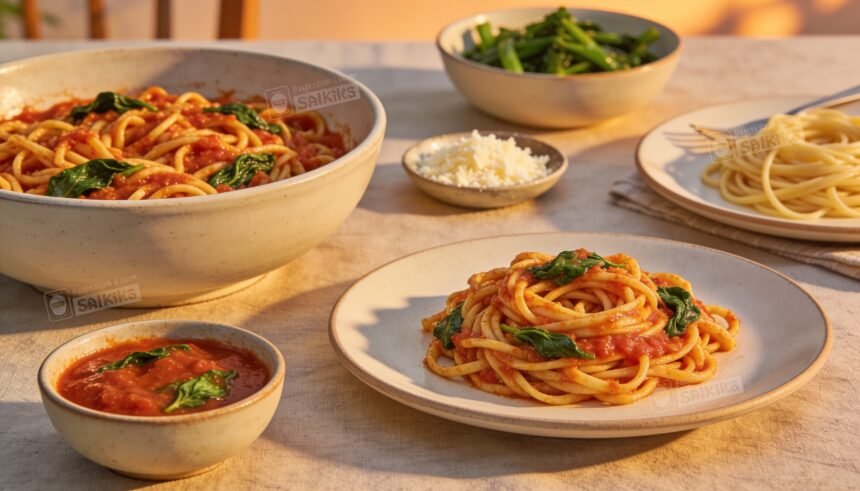
| Tomato pasta with spinach | Cooked pasta and any accepted tomato sauce | Before spinach enters the sauce or sauce coats the pasta | Finished spinach sauce and cheese in serving dishes |
| Wraps with a familiar filling | Wraps, filling and salad leaves | During assembly at the table | All fillings and salad offered separately |
| Baked potatoes with toppings | Cooked potatoes and familiar toppings | Before adding spring onion or green sauces | Toppings in small bowls for people to choose |
| Pasta with pesto | A share of cooked pasta and another familiar component already planned | Before tossing the pasta with pesto | Pesto pasta and the remaining shared components |
There is no need to add every option in the table to your shopping list. Choose the row closest to your actual dinner. If pesto pasta leaves nothing your child currently eats beyond plain pasta, reconsider that meal’s shared components before starting.
Put the greens on the table without making them the test
Keeping greens separate does not require removing them from everyone else’s meal. Serve them in the shared dish or a bowl alongside, with a spoon that makes serving straightforward.
Raising Children Network recommends the same family meal, familiar food alongside new food, and small servings or self-service. It also advises against forcing a child to try food. For tonight, that can mean offering the green component without making a taste the condition for receiving the familiar parts.
Use ordinary descriptions: “The spinach sauce is in this bowl. The pasta is here.” Avoid asking for a verdict after every mouthful or inviting siblings to comment on someone else’s plate. You can talk about the rest of the day while the food remains available.
This article addresses serving logistics. For a separate look at vegetable preparation, read ways to offer vegetables to a fussy child.
Offer a choice you can actually provide
Keep the question within the meal: “Sauce beside the pasta or on top?” is manageable when both arrangements use the same ingredients. An open-ended request for a different dinner creates another cooking decision at exactly the point you are trying to serve.
Limited choices are consistent with Raising Children Network’s guidance on food independence. You can also make a choice about presentation without promising that every requested food is available. Say what is on the table plainly and allow your child to decide what to eat from it.
If the green component is declined, leave it available without starting a bargain. If none of the offered components is accepted, review whether you had accurately identified a familiar food. This serving plan is not a reason to impose a new restriction or replace advice already given for your child.
Keep the extra washing-up proportionate
Separate components can mean more bowls, so reserve only what needs separating. A portion on an ordinary plate may do the job; you do not need a full second serving dish for every ingredient.
Likewise, leave herbs in one small bowl rather than dividing the whole dinner into multiple miniature versions. Keep the family’s usual flavours available. The cook should be able to finish dinner without preparing a replacement main while everyone else waits.
After the meal, ask whether the arrangement was practical. Did you reserve the portion soon enough? Was there a familiar component available? Did everyone else still get the dinner planned? Record the serving note beside that meal in your rotating family dinner plan, such as “reserve pasta before pesto; herbs at table”.
For tonight, choose one dinner and identify its mixing point before turning on the cooker. Put out the dish for the reserved portion then, while the decision is still easy to act on.
The one-page family week
One printable page that holds the whole week: meals, school, activities and who is doing the pickup. Free, and we send one useful email a week.
One email a week. No spam, unsubscribe in a click.