What is in this guide
Serve one shared dinner as separate components, then let children choose what goes onto their own plate. Start with a familiar base, offer a small selection of fillings or toppings, and keep sauces separate so assembling dinner is a real choice rather than another instruction to eat a particular combination.
The adult still chooses the menu and cooks it. Children get a say in how the offered food comes together. Raising Children Network suggests letting children serve themselves from the centre of the table and keeping food choices limited. That is the starting point here, rather than a buffet of every ingredient in the fridge.
Set the choices before you start cooking
Choose a dinner whose components you can put out separately without cooking several different dishes. Pasta with sauce is straightforward; taking apart an already baked lasagne is not.
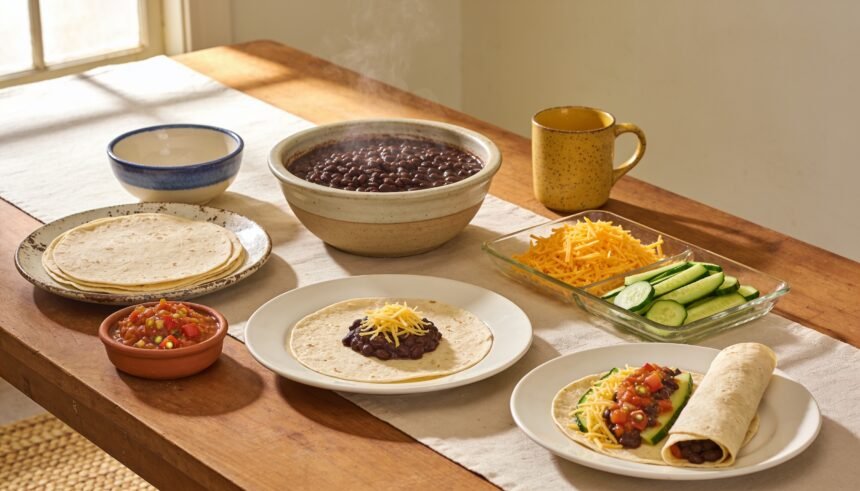
Write down the base, the main filling and two optional additions. For example: wraps, cooked beans, grated cheese and prepared cucumber. Those are menu slots for organising the cooking, not a prescribed portion or nutritional formula. Include something your child already eats rather than making every bowl unfamiliar.
Ask a specific question before preparation: “Would you like cucumber or capsicum on the table?” Avoid asking what everyone wants for dinner when the menu is already decided. You can offer a meaningful choice without promising to cook every requested meal.
If the bigger problem is cooking separate dinners for different people, start with the broader one-meal structure for a household with a fussy eater. This setup takes that idea into the serving stage.
Arrange the food in the order people will use it
Put plates first, followed by the base, filling, toppings and sauce. Keep hot cookware with the adult; children can point to a filling or ask for help serving it. Prepare ingredients in forms already suitable for the children eating them.
Use the dishes you have. One platter with separate piles can hold several toppings, and cheese can stay in its storage container. There is no need to transfer every ingredient into a matching little bowl.
On a small table, make an assembly space on the bench and help one child at a time before everyone sits down. If passing bowls causes spills, offer a choice and serve the requested item yourself. The useful part is choosing the food, not proving someone can handle a serving spoon.
Try one of these five dinner setups
Let wraps stay open if that suits the eater
Put out soft wraps, a cooked bean or mince filling, grated cheese and one prepared vegetable. Keep salsa separate. Everyone can fold a wrap, make an open version or eat the components alongside it.
Do not insist that the wrap must contain every filling. For a child who finds rolling difficult, offer to fold it after they have chosen what goes inside. Adults can add their own chilli or extra toppings at the table.
Offer pasta with sauce on the side
Cook the pasta and prepare a tomato sauce separately. Put out grated cheese and a cooked vegetable you would otherwise have served with the meal. Let each person choose whether to spoon sauce over the pasta, keep it beside the pasta or leave it off.
Start with a small amount on the plate and keep more available. This follows Raising Children Network’s suggestion to start small, without turning the first serving into a target that must be finished.
Open jacket potatoes before serving
Bake potatoes using your usual method, then have an adult split them and help with the hot centres. Offer warmed beans, grated cheese and a prepared vegetable alongside.
A child can choose a topping or keep it beside the potato. The rest of the household can pile theirs up. Keep the same fillings for everyone rather than making a special sauce for each person.
Assemble rice bowls without a compulsory mix
Serve freshly cooked rice with cooked chicken or tofu, cooked peas and prepared cucumber, keeping the sauce in a separate jug. Ask whether the child wants ingredients beside the rice or on top.
For someone who dislikes food touching, use an ordinary plate rather than a deep bowl. Calling the meal a rice bowl does not mean everyone has to eat it from one. Spoon sauce onto your own serving rather than pouring it over the shared rice.
Build small pizzas before they go into the oven
Use bases you already know how to cook, with tomato sauce, cheese and a short selection of prepared toppings. Each person assembles a base on baking paper, then the adult handles the trays and oven according to the base’s cooking instructions.
Keep track of whose pizza is whose by its position on the tray. Offer help spreading sauce or scattering cheese, while leaving the topping decision with the child. This option moves assembly before cooking, so choose it when everyone can be ready together.
Keep the choice real once dinner reaches the table
“The sauce is here if you want it” gives information. “You chose this, so now you have to eat it” turns the earlier choice into an obligation. Raising Children Network advises against forcing children to try food.
Let a child decline a topping without repeatedly offering it through the meal. You can eat your own chosen combination and carry on talking about something other than the contents of each plate.
Helping prepare dinner need not create an eating obligation either. Sydney Children’s Hospitals Network suggests letting children select and wash produce without pressure to eat it straight away. A child can help arrange the cucumber and still leave it off their own wrap.
Reduce the work when the setup gets cumbersome
If there are too many decisions, put out fewer optional toppings next time. If everyone wants a different base, choose one before cooking and let the choices happen among the accompaniments. If a child prefers you to serve, ask what goes where and assemble their plate with them.
Use the same format again before buying ingredients for five new dinners. A wrap night can fit into a repeatable family dinner rotation, while pantry and freezer staples give you a starting point for fillings without a special shopping trip.
Keep unused ingredients separate as you clear away, and plan their next use with the guide to using leftovers so they get eaten. A platter containing only what you expect to serve is easier to replenish than a table covered in opened food.
For the next attempt, choose one dinner already on your plan. Separate its sauce or toppings, put a familiar component within reach, and offer one clear assembly choice: “Would you like that on top or beside it?”
The one-page family week
One printable page that holds the whole week: meals, school, activities and who is doing the pickup. Free, and we send one useful email a week.
One email a week. No spam, unsubscribe in a click.