What is in this guide
Pack a sports day lunchbox around a familiar main, separately accessible snacks and a water bottle your child can manage. Choose the food and containers together, then check how the school will handle bags, eating breaks and drinks at the venue before adding anything that needs particular storage arrangements.
The useful change from an ordinary school lunch is the packing layout. A lunch that works at a classroom table may need a different container when the child is sitting beside a sports bag or carrying swimming gear. You can keep their usual food and make it easier to reach and eat.
Check the school note before choosing the menu
Look for departure and return times, whether lunch is provided, whether children carry their own bags and any instructions about food or drink containers. If a detail affects what you pack, ask the school rather than assuming the swimming centre or oval has the same arrangements as the classroom.
Confirm whether children will have scheduled meal breaks or access to food at other supervised times. Pack for the arrangements the school gives you. Separating a snack is useful only if your child is allowed to reach it when needed.
Check the school’s current food-allergy instructions too. NSW Food Authority specifically recommends checking school policies on food allergies. Keep your child’s existing dietary requirements in place; a carnival menu does not need unfamiliar ingredients or a special category of sports food.
Choose a main that needs little assembly
Start with something your child already wants for lunch. A familiar sandwich, filled roll or wrap is a reasonable starting point if it fits the day’s handling arrangements. Ask whether they want the usual filling inside or some components separate.
Keep the number of steps small. A lunch requiring a sauce tub, several loose components and a fork might suit a seated meal, but ask your child to demonstrate how they would manage it without a table. If there is nowhere convenient to rest the lid, simplify the arrangement.
NSW Government’s lunchbox guidance suggests leaving wet ingredients such as tomato separate for children to add later. That is an option when texture matters, but it adds an assembly job. If your child would rather have the tomato beside the sandwich, pack it that way instead.
For a child who prefers separate pieces, choose one familiar format from lunchboxes that are not sandwiches. Avoid introducing several new foods just because the venue is different.
Adapt one of these carnival combinations
These are menu suggestions, not portion prescriptions or nutritionally assessed plans. Choose quantities and preparation suited to your child, follow relevant food instructions and resolve transport requirements before committing to a main.
| Familiar starting point | Main and accompanying foods | Packing decision |
|---|---|---|
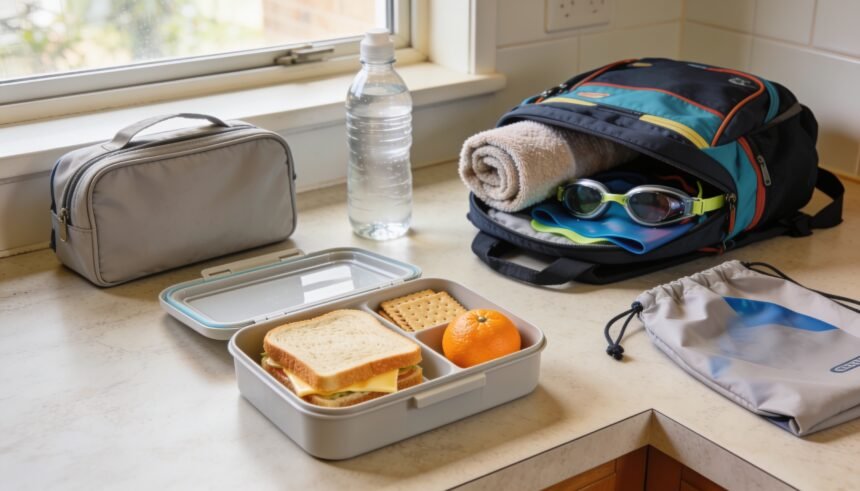
| Sandwich lunch | Usual cheese sandwich, mandarin and familiar snack | Keep the sandwich supported in a container; make the snack accessible separately |
| Roll lunch | Familiar filled roll, apple and usual accompaniment | Check the roll fits without forcing the lid down; choose fruit your child can manage |
| Wrap lunch | Preferred wrap, banana and crackers | Contain the wrap separately from the crackers; protect the banana from heavier gear |
| Separate-pieces lunch | Bread pieces, cheese, cucumber and chosen fruit | Use a familiar compartment layout that does not require balancing several tubs |
Bread, rolls, wraps, whole fruit, cheese and crackers all appear among NSW Government’s lunchbox examples. The combinations here are editorial choices. Replace anything unsuitable, and do not treat inclusion in a menu as a guarantee that food will remain suitable through the day.
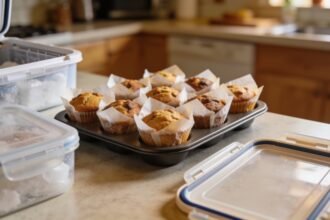
If a familiar muffin is already part of the household routine, it can be an accompaniment. The freezer lunchbox baking guide covers preparing those foods separately. There is no need to organise a baking session solely for the carnival.
Separate access without creating a pile of containers
Give the main lunch and the first permitted snack distinct places. For example, keep the main container in the lunch bag and a snack in an easy-to-find section that matches the school’s instructions. Tell your child where each item is before departure.
Do not divide everything into tiny tubs. Each extra container needs opening, somewhere to sit and a place to return after eating. One lunchbox and one small snack container may be easier for your child to manage than an elaborate set, provided they fit the food and storage arrangements.
Put crackers in their own compartment rather than loose beside a wet filling. Protect soft fruit with a container or a suitable space in the bag. These are packing choices to reduce contact and crushing, not claims about food safety or guaranteed texture after travel.
Make the swimming bag layout deliberate
For a swimming carnival, give lunch a defined place separate from the bag intended for wet swimmers and towels. Show your child where wet gear should go after swimming so it does not displace the lunch or cover the drink bottle.
For athletics, check the same layout with the hat and any spare clothing included. Pack the bag as it will actually leave home, rather than checking the lunchbox alone. Close it, lift it and see whether a heavy item presses against the fruit or makes the lunch difficult to retrieve.
Use containers already permitted by the school and venue. If the note prohibits glass, follow that instruction. Do not assume a particular restriction applies everywhere, and do not buy replacements before checking what is already acceptable.
Confirm drinks and cold transport separately
Include drinking water, as recommended by NSW Government’s school lunchbox guidance. Check whether refills are available and what the school asks children to bring. Make sure your child can open and close the bottle, and place it where they can find it without unpacking the whole bag.
For food handling and cold packing, use NSW Food Authority’s Kids lunch boxes guidance and the guide to keeping lunchboxes cold. Resolve those arrangements before selecting perishable fillings. This article’s container layout does not replace the handling requirements for the food inside.
Before departure, have your child find the snack, open the main container, retrieve the bottle and put everything back. Change whichever part is awkward. Then check the school note once more and pack the chosen familiar lunch around those confirmed arrangements.
The one-page family week
One printable page that holds the whole week: meals, school, activities and who is doing the pickup. Free, and we send one useful email a week.
One email a week. No spam, unsubscribe in a click.