What is in this guide
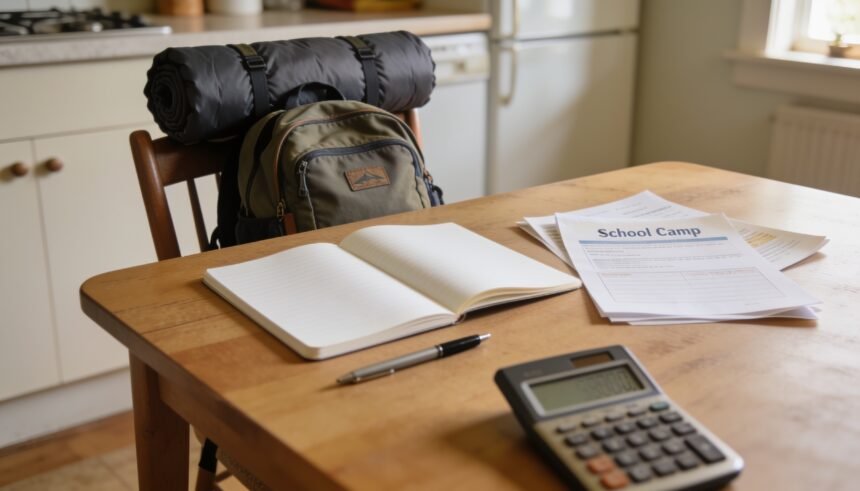
Plan excursion and camp costs by payment deadline, including any deposit due before the term starts. Put confirmed fees, unpaid balances and required extras in one short forecast, then check what is still unknown with the school before deciding how much to set aside.
The departure date tells you when your child needs to be ready. The payment dates tell you when the household needs the money. Keep both visible, especially if two children have activities close together.
Start with what the school has confirmed
Gather the activity notices, school calendar and any account statement you already have. Ask the office or year-level contact whether further excursions or a camp are planned for the coming term, and when costs are expected to be confirmed.
You are looking for enough information to make decisions, rather than a complete calendar at any cost. If an activity is proposed but the price has not been released, write “amount pending”. A blank or a zero can make an unknown cost look as though it has been covered.
Use one row per child and activity. Record the event date, total quoted fee, amount already paid, remaining balance and each payment deadline. Add a final column for the question you need answered, such as whether transport is included or whether the quoted amount is final.
Keep this forecast alongside your running list of school term spending. The forecast looks ahead; the spending list records money that has actually left the account. Move a payment into the spending record when it happens and update the balance in the forecast.
Separate the deposit from the full fee
Check whether a deposit is part of the quoted total or an additional charge. Do not add it to the total again if it is already included. Likewise, a receipt for the deposit does not mean the activity is fully paid.
For an activity with instalments, give each unpaid instalment its own deadline beneath the activity row. Keep the full fee visible once, so you can see both the overall commitment and the next amount due without counting the same money twice.
Sort unpaid amounts by their due dates across all children. A camp next term can require money this term, while a nearby excursion may have a later payment deadline. Planning only around event dates misses that difference.
If adults share the payments, agree who will make each one and where the confirmation will be kept. Mark a payment as complete after checking the receipt or school account, rather than after sending someone a reminder to pay it.
Check what sits outside the quoted fee
Read the inclusions before making a shopping list. Ask about anything unclear, particularly meals, transport, accommodation, activity equipment and spending money. These are questions to resolve for your child’s event, not assumptions about what schools normally include.
Use a short check beside each notice:
| Possible extra | What to establish before allowing for it |
|---|---|
| Food | Which meals or snacks the child must bring |
| Clothing and bedding | The actual packing requirements and what you already own |
| Equipment | What the organiser supplies and what must come from home |
| Spending money | Whether it is permitted, optional or unnecessary |
| Getting to departure | Whether the meeting place or time creates an extra household cost |
Leave out items that do not apply. A day trip with a packed lunch does not need a camp-sized allowance, and an optional purchase should not quietly become part of the required total.
Wait for the current packing list before buying specialist gear. Check cupboards first, then ask whether a suitable item can be borrowed from family, friends or the school. Confirm any equipment requirements with the organiser before substituting something you already own.
Work back from each deadline
For the first unpaid amount, note the money already reserved for it and the paydays remaining before it is due. Divide the amount still needed across those paydays as a planning calculation, then check whether that amount fits alongside essential household spending.
Repeat for the next deadline. Keep existing reserved money assigned to one payment at a time. Money earmarked for a camp balance cannot also cover an excursion unless there is enough for both.
If several payments fall together, the useful result may be spotting a shortfall early. Writing a smaller amount in the forecast does not change the school’s deadline. Contact the school about the gap and ask what arrangements are available before treating a different schedule as agreed.
Put the activity amounts into the school-cost line of your household budget, rather than adding a second copy elsewhere. Keep any allowance for unannounced activities separate from confirmed fees so you can tell which amounts are commitments and which are your own estimates.
Ask about support before relying on it
If the proposed payments do not fit, ask the school who handles confidential enquiries about activity costs. You can say: “I am planning next term’s payments. Can we discuss the deadlines, any payment arrangement and support that might apply?”
The Victorian Government’s guidance for parents says schools may be able to arrange a payment plan or consider other options. Its current policy for Victorian government schools also lists flexible payments, waivers, reductions and extensions among the support schools should consider for families experiencing hardship. Those are Victorian arrangements, not a promise about every Australian school.
For your own school, confirm what is available, who decides and when you will receive an answer. Record requested support as pending until the school confirms how it affects your balance. An enquiry or application is not a payment.
Keep the agreed schedule with your excursion and camp paperwork. Payment arrangements and permission to attend are separate tasks, so check that the required forms have also been dealt with.
Check cancellation conditions before committing
Ask what happens to the deposit and later payments if your child cannot attend, the school cancels or the activity changes. Request the conditions that apply to this event. Do not build an expected refund into the next payment until it has been confirmed.
If a refund or account credit is approved, check where it will go and whether it can be used for another activity. Update the forecast when the school confirms the adjustment, keeping the payment record so the revised balance is traceable.
Before term begins, open the forecast and identify the earliest unpaid deadline. Confirm that amount with the school notice or account statement, then resolve the question most likely to change what you need to pay.
How we checked this
Reviewed on 30 October 2026 against Victorian Government parent guidance and the Department of Education’s Financial Help for Families policy, updated on 1 October 2026. The planning method is Dovelyne editorial guidance. No school prices, individual support eligibility or refund terms were assumed.
The one-page family week
One printable page that holds the whole week: meals, school, activities and who is doing the pickup. Free, and we send one useful email a week.
One email a week. No spam, unsubscribe in a click.