What is in this guide
Before a big grocery shop, spend ten minutes checking what is already at home across pantry, freezer, bathroom, cleaning and pet supplies. A list built from what is genuinely low or out, rather than from habit, keeps a big shop matched to what the household actually needs and stops the same items piling up twice.
Moneysmart’s guidance on food spending puts this in the right order: check your pantry, fridge and freezer, then make a shopping list and only buy what you need. That sequence matters most before a bulk shop, where one missed check can mean buying a second bag of rice or a third bottle of dishwashing liquid that was already sitting in the cupboard.
Why a big shop needs this step more than a quick top-up
A quick top-up shop for bread and milk rarely goes far wrong. A big or bulk shop is different. It is less frequent, covers more categories at once and carries a larger total spend, so a duplicate bought here is a bigger loss than a duplicate bought on a two-item top-up run. Food that doubles up and does not get used in time becomes food waste, which is its own cost to the household. Checking stock first is the step that keeps a bigger grocery bill from blowing out and avoids feeding into what food waste actually costs a household.
Step 1: Walk the categories a big shop actually covers
A big shop is rarely just food. Before writing anything down, walk through each category it usually includes:
- Pantry staples: tins, rice, pasta, sauces, oils and baking basics.
- Freezer stock: meat, bread, frozen vegetables and anything bought in bulk last time.
- Bathroom and laundry: toilet paper, soap, shampoo, laundry powder and dishwashing supplies.
- Cleaning products: sprays, cloths and anything used weekly.
- Pet food and supplies, if the household has a pet.
Skipping a category is how a big shop ends up with three bottles of the same cleaning spray and no toilet paper.
Step 2: Record what is genuinely low, not just familiar
For each category, note the item, where it lives and a simple status, rather than relying on memory at the shops.
| Category | Item | Status | Note |
|---|---|---|---|
| Pantry | Tinned tomatoes | Plenty | Skip this shop |
| Pantry | Rice | Low | One bag left, add to list |
| Freezer | Frozen vegetables | Out | Add to list |
| Bathroom | Laundry powder | Low | Check pack size before buying |
| Pet | Dry food | Plenty | Skip this shop |
“Familiar” is not the same as “low”. An item bought every big shop out of habit can still be sitting unopened in the cupboard.
Step 3: Build the list from gaps only
Carry over only the items marked low or out. Anything marked plenty stays off the list, even if it is a usual purchase. If a specific brand or pack size is genuinely at a lower price than normal, a grocery price book and knowing how unit pricing works both help confirm that before adding extra to the trolley.
Step 4: Decide what is worth buying ahead
Some gaps are worth stocking beyond the immediate need, particularly non-perishables the household uses every big shop. Before buying extra of anything, check whether the price is actually lower than what you normally pay, rather than assuming a shelf sign means a saving; working out whether a discount is real covers that decision in more detail. Perishables are a different case: buying ahead only makes sense if the household will use the extra before it spoils.
What if stock gets lost track of between big shops?
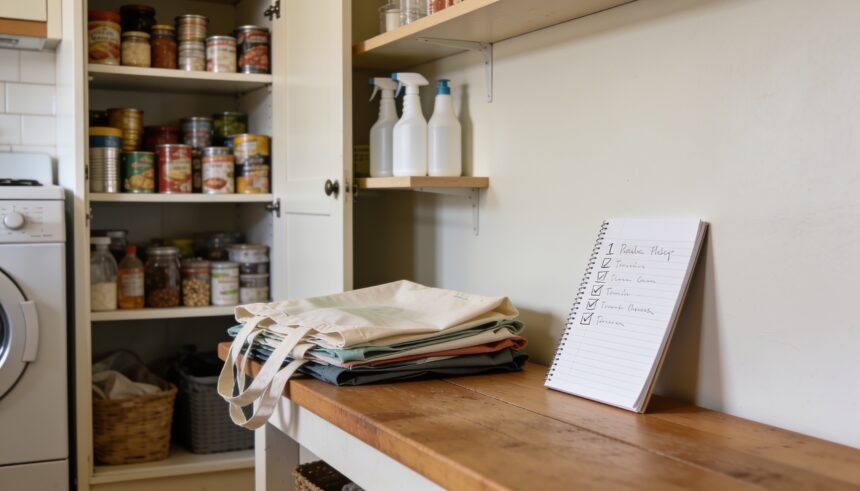
Keep the category list somewhere it gets updated as items run low, rather than trying to recall everything from memory on shop day. A note on the fridge or a shared phone list, updated each time something runs out, turns this from a one-off stocktake into a habit that makes the next big shop faster to plan.
Before the next big shop, walk one category, pantry, freezer or bathroom, and write down what is actually low. That is enough to start a list built from gaps rather than habit.
The one-page family week
One printable page that holds the whole week: meals, school, activities and who is doing the pickup. Free, and we send one useful email a week.
One email a week. No spam, unsubscribe in a click.