What is in this guide
A home party for ten children costs under $100 comfortably, and the child will not experience it as the cheap option. That is not a trick of framing. It is because almost everything that pushes a party budget up is invisible to the guests.
The useful distinction is between spending children notice and spending only adults notice. Children notice the cake, the activity, the food they like and whether their friends came. Adults notice the coordinated tableware, the backdrop, the balloon garland and the personalised favours, none of which a seven year old has ever mentioned afterwards.
Here is where the money actually goes.
The worked budget: ten children, at home
Costs vary by where you shop and what you already own, so this is a shape rather than a quote. Check current prices yourself.
Food, roughly $35 to $45. The largest genuine cost and the one worth paying. Details below.
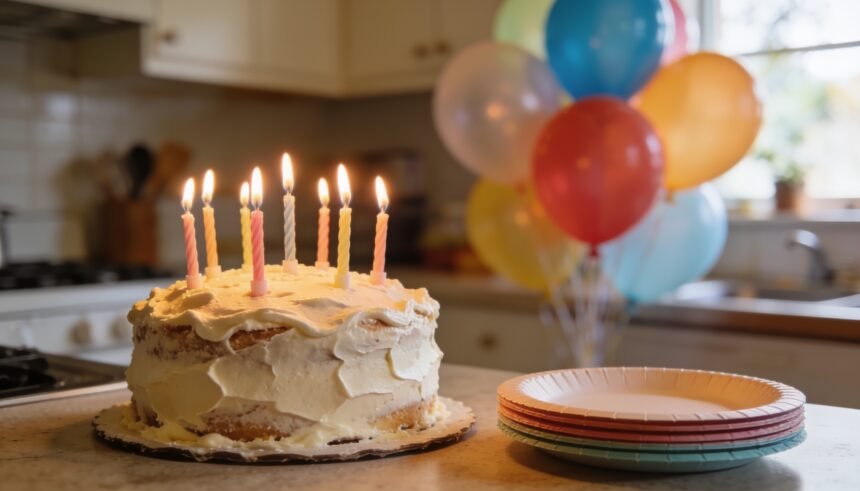
Cake, roughly $10 to $20 if homemade. A packet mix, icing sugar, butter and a few lollies gets there. A bought decorated cake can cost more than the rest of the party combined.
Activity, $0 to $15. Most good party activities cost nothing. The ones that cost something usually cost very little.
Party bags, $0 to $20. Optional, and the most over-spent item on the list. Covered below.
Decorations, $0 to $15. Balloons and streamers, and that is genuinely enough.
That is $45 to $115 depending entirely on how the cake and the bags are handled. Homemade cake and restrained bags brings a ten-child party in under $80 without effort.
The four costs worth paying
1. Enough food that nobody is hungry. Running short is the only food failure children notice. Quantity matters more than variety and far more than presentation.
2. One good activity. The party’s structure comes from this. It does not have to cost anything, but it has to be planned rather than improvised.
3. A cake that looks like something. Children care about the cake more than any other element. It does not need to be professional. It needs to be recognisable as the thing the child asked for and to have candles.
4. Shade, or somewhere to be if it rains. In Australia this is not optional and it is usually free: a shade sail, a verandah, a tree, a gazebo borrowed from someone.
The five costs worth cutting
1. Coordinated themed tableware. Themed plates, cups, napkins, tablecloth and cutlery is a genuine spend for something that ends up in a bin within three hours. Plain coloured plates in the theme’s colour cost a fraction and read exactly the same in photographs.
2. The balloon garland and backdrop. This is adult-facing decoration for photographs. A bunch of balloons at the gate and some streamers does the same job for children.
3. Personalised anything. Custom printed banners, labels, stickers and invitations. A hand-drawn sign is not a downgrade to a five year old.
4. Loot bags full of plastic. Covered below.
5. Hired entertainment, if the child is over about six. Entertainers earn their money with four and five year olds. From six up, a well-chosen activity usually goes better and costs nothing.
Food that costs $35 and works
Children at a party eat surprisingly little, eat it very fast, and eat the plain things first.
The reliable core: sandwiches cut small, fruit, plain crackers and cheese, popcorn, sausage rolls or party pies, cut vegetables that will be mostly ignored but should be there, and a bowl of chips.
The thing to under-cater: anything elaborate. Elaborate food at a children’s party is eaten by adults.
The thing to over-cater: whatever the plain option is. There is always a child who eats only plain bread.
Drinks: water and one other thing. Jugs, not individual bottles, which halves the cost and most of the rubbish.
Cost control: shop the discount grocers, buy the home brand versions, and make the sandwiches the night before. Party food is the one category where brand genuinely does not register with the guests.
Allergies change this section significantly and are not something to improvise. Allergy-aware party food covers what to ask and how to manage it.
Activities that cost nothing
The activity is the party. These all work at home with nothing bought.
Under five: pass the parcel with a prize in every layer, musical statues, bubbles, a picture treasure hunt, a sandpit or water table if it is warm.
Five to seven: an obstacle course with times recorded, a treasure hunt with written clues, decorating their own biscuit or cupcake, a piñata made from a paper bag, backyard games with teams.
Eight and up: a scavenger hunt across the park with phones for photographs, a cooking or building challenge, a water fight with rules, a movie setup with the blinds down.
Decorating their own food is the highest value party activity in the whole list, because it is the activity and the food at the same time.
More options in backyard activities that cost nothing.
Party bags, honestly
The party bag is an obligation almost nobody enjoys. It costs $2 to $5 a child, and most of what goes in it is broken or discarded within the week.
Three defensible options.
One good thing instead of six small ones. A book, a plant in a small pot, a decent bubble wand. Costs the same and lasts.
The thing they made. The biscuit they decorated, the craft they built, the seedling they potted. Free, and the activity doubles as the take-home.
Nothing, with a piece of cake. Entirely acceptable and increasingly common.
The version to avoid is the bag of small plastic items, which is the most expensive per unit of enjoyment of anything at the party.
Where to shop
Discount department stores and variety chains carry party supplies at a fraction of party-specialist pricing, and the plain-colour ranges are cheaper again than the themed ones. Supermarket home brands cover the food. The two-dollar shops are where balloons and streamers should come from.
Buy the non-perishables when you see them rather than in the week of the party, because party supplies bought urgently cost more.
The timing that keeps costs down
Late afternoon, four to six. You serve afternoon tea rather than a meal, and the heat has gone. This single choice cuts the food bill more than any other decision.
Two hours for under-sevens. A shorter party needs less food, less structure and less of everything, and it ends better.
Next: birthday party ideas by age covers what format suits the age, and backyard activities that cost nothing covers the games.
The one-page family week
One printable page that holds the whole week: meals, school, activities and who is doing the pickup. Free, and we send one useful email a week.
One email a week. No spam, unsubscribe in a click.